

Category Archives: Prevention News

LifeSkills Training Benefiting Audubon County Youth

The Audubon and Exira-Elk Horn-Kimballtion schools, in collaboration with the Healthy Teen Coalition, and New Opportunities through the Iowa Partnership for Success (IPFS) Grant, continue providing youth focused prevention services through the LifeSkills Training program.

For the past 2 years, the LifeSkills Training curriculum has been taught in the Audubon Community School 9th grade and the Exira Elk Horn Kimballton School 8th grade health classes.

LifeSkills Training has received positive feedback. Audubon health teacher, Liz Stein, commented, “Life Skills curriculum benefits our students by facilitating an organized format for learning important life skills. The program not only presents reasons why students shouldn’t use tobacco, drugs, and alcohol, but it also teaches the knowledge and skills necessary for increasing self-esteem, making decisions, solving problems, communicating effectively, managing anxiety, standing up for themselves, and resisting peer-pressure.” Exira-EHK health teacher, Lisa Dreier made the statement, “The program gives the student information and skills to resist alcohol and make good decisions. The LifeSkills curriculum is a great program that will help our students with skills for the rest of their lives!” A great deal of positive prevention skills are being developed through LifeSkills Training.

RE-1 Valley has strong focus on social emotional learning

RE-1 Valley School District in Colorado is committed to providing social emotional learning opportunities for students. Members of the district’s student support services team spoke about some of the social emotional learning services RE-1 offers at a Rotary Club meeting Wednesday.

“We know that achievement is raised by social emotional learning,” said Dr. Lois Christiansen, district psychologist.

She explained that social emotional learning focuses on important areas such as social awareness, relationship skills, self awareness, responsible decision making and self management.

In looking at concerns related to substance use/abuse, the district applied for and was awarded a grant from the Colorado Department of Education, funded by the state’s marijuana revenue, to develop a HEADS UP (Higher Educational Adolescent Development Substance Use Prevention) program.

Led by Ryan Einspahr, the program is offered to students at Sterling High School, Sterling Middle School and Caliche School, and focuses on prevention. He leads substance prevention groups and provides one-on-one substance education using Botvin LifeSkills Training curriculum. The grant has also allowed for community partnerships, trainings for staff and community speakers, such as the recent guest speaker Doc Brown.

Read full article: RE-1 Valley Has Strong SEL

Letter to the Editor: Life Skills program deserves DA funding

LEE — Life Skills is an international evidence-based substance abuse and violence prevention program developed by Dr. Gilbert J. Botvin that is utilized in early education to build a solid character foundation for youngsters. According to Botvin, “The main goals of the Life Skills Program are to give students prevention-related information, promote anti-drug norms, teach drug refusal skills, and foster the development of personal self-management skills and general social skills.”

Unfortunately, the money allocated for this early intervention program through the Berkshire County district attorney’s office is now being funneled toward the Juvenile Diversion Program. Therefore, Life Skills will no longer be available to the many schools in Berkshire County after June.

Educators in the Lee Public Schools feel it is imperative to continue Life Skills as a preventative program in our school because youngsters that complete this program learn to make healthy choices and ultimately do not need a diversion program. According to the www.lifeskillstraining.com website, “The program has been proven to cut tobacco, alcohol, and illicit drug use in half and shown to produce prevention effects that can last 12 years or more. It can also prevent aggression and violence, delinquency, risky driving, and HIV/AIDS risk behaviors. In addition, independent researchers have demonstrated Life Skills Training can also shield adolescents from the misuse of opioid and other prescription drugs. This is accomplished by offering an eight week program for Grades 3-5 and a 15-18 week program for Grade 6. The trainers actively involve and elicit meaningful conversation and role play in an age appropriate manner for and with the students.

The valuable additional hands-on activities, games and educational materials that the educators from the Berkshire County DA’s office have developed support this effective and engaging program. They understand that reaching all students requires a multifaceted teaching approach. It is also imperative for the students to have additional members of their community taking an active interest in them and in teaching these concepts so that the students do not clump the message with their academics.

EXAMPLES OF SUCCESS

Recently, a third grade student at Lee Elementary School shared that Life Skills Training will help him make wise and healthy choices because he learned facts to support why he should not smoke and strategies to socialize with his classmates and relax if he is stressed. He further explained that the trainer described how smoking can cause a person’s fingers and nails to discolor. He connected this knowledge to an ad on TV showing similar distasteful effects. The ad informed people that Juul Pods, a form of e-cigarettes, will lead to a person who tries them to become four times more likely to start smoking. Furthermore, this student described the third hand smoke concept learned in Life Skills by telling us that if someone smokes a Juul Pod near a desk or other surface, the nicotine will sit on the surface and if a person touches the surface, the nicotine will enter the body of that person! He said, “Life Skills made me think stronger about not smoking or using Juul Pods.

Another student convinced his mother to stop smoking, while a third student recognized that a family member was an alcoholic. The student was able to reach out through the Life Skills team to get the support he and his family needed.

As you can see, Life Skills is a program that is valuable to our youngsters in helping them develop a healthy character foundation. If Life Skills continues to be taught in elementary and middle schools, it will cut the need for the Diversion Program by at least 50%, if we follow the supportable statistics regarding its success.

According to Alan Chartock in his Eagle commentary, “With bail reform, Berkshire DA holds true to progressive platform” on March 1, “Of course, criminal justice reform is not the same thing as the reform of society in general, and we have a long way to go in that department.” Doesn’t it make sense to focus on early intervention in order to prevent the need for diversion for juveniles? If we are to attempt to reform society, our youngest members are our best hope. Why take away a program meant to help children make healthier choices before they reach an age when risky behavior is a temptation?

We have seen first hand just how valuable this program is at supporting the youth in our community. Please help us to save the needed funds for this program.

Ruth LeCompte, a Grade 3 English/Science teacher at Lee Elementary School, writes on behalf of the school’s Grade 3-6 team.

As featured in the Berkshire EagleLifeSkills program deserves DA funding

Indian River County Florida and Botvin LifeSkills Training- Prevention is a partnership

Written by: Christina D. DeFalco, Prevention Director, Substance Awareness Center of Indian River County, FL

The Substance Awareness Center of Indian River County is proud to introduce Carrie Lester as the new Executive Director, whose passion, dedication, and expertise and will lead the agency in its mission: “To lead the community towards a healthier lifestyle by reducing the incidence of substance abuse in Indian River County through prevention, treatment, and recovery support.”  Botvin LifeSkills Training (LST) program is an integral part of the Center accomplishing this important mission.
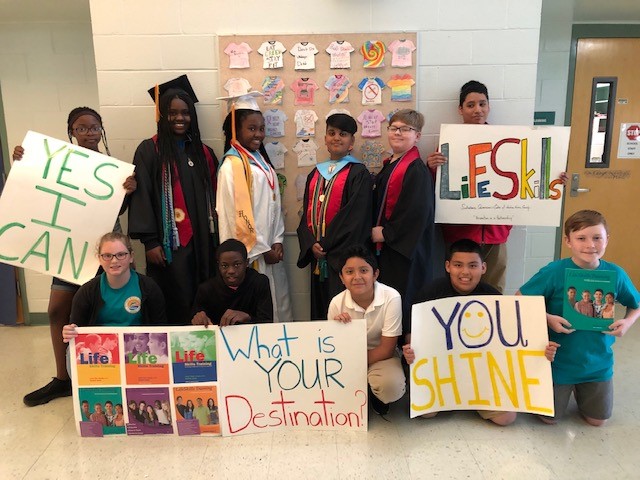
The Substance Awareness Center offers Botvin LifeSkills Training to approximately 5,000 Indian River County students each year in 5th, 6th, 7th, and 8th grades. Our LST Team consists of five trained facilitators who teach with passion, care, commitment, empathy and love for each child; establishing a positive relationship, wrapping them in the protective factors they need to be safe and healthy.

Botvin LifeSkills Training continues to be embraced by not only by everyone in the school district (from students to faculty to district administrators and board) but also by the parents, county businesses, and residents of our community at large. LST is offered in seven middle schools and nine elementary schools.  When our Sherriff’s office cancelled D.A.R.E. for the 2018-2019 school term for 5th grade, LifeSkills Training was brought in, and the outstanding results speak for themselves.

The Substance Awareness Center recently partnered with National Health Promotion Associates to organize focus groups for the new LST prescription drug abuse prevention module. These focus groups took place in two local participating high schools, with students, faculty, and administrators offering positive feedback.  We look forward to delivering this new material to our students.

We emphasize strict adherence to the fidelity of the LST curriculum, but we also make it fun.  Students love behavior rehearsal; they call it acting! Each LST Facilitator has a director’s clip board for the student director to call “quiet on the set” and “action” for each rehearsal.  School district teachers ask to be involved in each lesson, too. They enjoy taking part in what we are teaching and observing the students’ response to the lessons.  Teachers share that they themselves are also making changes in the areas of self-management/self-improvement and general social skills–many have even stopped their addiction to smoking—thanks to the skill-building lessons they have observed.

LifeSkills Training is not just a class; it is a way of life in our schools and it changes lives.

Prevention is a partnership; and prevention works!
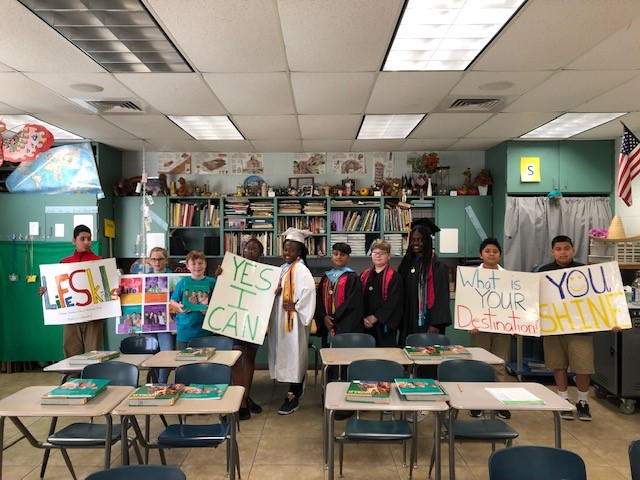
 

Local school districts offering LifeSkills Training

Danielle Poe, Director of the Rural Health Opioid Project (RHOP), hopes to instill an important life lesson about self-sufficiency and self-esteem in students across Adams County’s three school districts.

To accomplish that goal, Poe’s office, with assistance from the Adams County Health Department and the Coalition for a Drug Free Adams County, has introduced the evidence-based Botvin LifeSkills Training Program in all three county school districts in Ohio.

The program has won high praise from school districts across the country for its effectiveness in promoting drug abuse prevention.

“This training is designed to give the students a mindset that leads them to make healthy decisions for themselves,” says Poe. “It’s not a curriculum that simply talks about not using drugs, it teaches them how to build an internal attitude that will naturally lead them to say no to substances and other risky behaviors that could put their lives at risk.”

The course consists of eight modules focused on life skills like setting goals, building relationships, and developing the ability to cope with stress.

The program is grant funded by the Rural Health Opioid Program (RHOP) through the Adams County Health Department.

This school year the Ohio Valley School District is fully implementing the Botvin program while the Manchester Local School District is using it in fifth and sixth grade classes, and the Adams County Christian School with high school classes only.

Poe, who is both a certified Trauma Practitioner and certified Prevention Specialist with degrees in Human Services and Counseling, says we need a movement that helps the public understand what children are experiencing today in their home environments.

“This program allows me to work with community members to provide education on what substance abuse really is and how it works on the brain and impacts children who are exposed to it,” she says. “When kids are facing trauma in their homes we need to know what that looks like – why aren’t they learning like they once did, why are they being diagnosed with things like Oppositional Defiance Disorder and ADHD at record rates, and how are those diagnoses linked to the trauma they experience living in poverty, or in violent households.”

Read full article: Local school districts offering Life Skills training

Letter to the Editor: Lee Elementary students make a case for LifeSkills

The Berkshire Eagle –
To the editor:

The Life Skills Program developed by Dr. Gilbert J. Botvin and offered through the Berkshire District Attorney’s office has been taught for three years at Lee Elementary School. The program is an evidence-based substance abuse and violence program. The program teaches students important life lessons that kids will use throughout their lives. However, Life Skills might be coming to an end after this year.

Some of the skills taught are making wise choices not to smoke, do drugs, how to build up self-esteem and being kind to others. Many teachers and students think the program is beneficial and don’t want it to end. “We think that Life Skills is a terrific program that teaches the children valuable life lessons,” stated Lee Elementary School physical education and health teachers Julia Warner and Jen Carlino. According to a fifth-grader, “Life Skills teaches us not to make bad decisions and be more aware of the decisions we do make!” A fourth-grader explained, “Life Skills helps us to make good decisions, like not doing drugs or smoking and learning strategies to help make wise choices.” Finally, a sixth-grader explained, “Life Skills teaches us to make choices that are healthy, and if Life Skills program continues it will make the world a better place.” Every student we spoke to said they want Life Skills to continue because they learned skills and strategies to help their self-esteem and how to interact with peers. They also enjoy the way the DA Life Skills’ teachers presented the program and treated everyone with respect.

Principal Kate Retzel said, “The DA Life Skills program teaches kids a deeper knowledge than what parents teach. This program also helps build relationships between the kids and an outside teacher.” Life Skills has a three-year history at the school, the first year being only sixth-graders, followed by adding grades 3 through 6 the following year.

Life Skills program seems to work very well. The DA Life Skills teachers are experts at modeling and explaining strategies to help students make good decisions throughout their lives. Therefore, students at Lee Elementary School really need this program to continue at our school.

Reeva Patel and Elyse Thomson,

Lee

The writers are grade 5 members of the Wildcat Tales Newspaper staff at Lee Elementary.

Gladstone Area Schools in Michigan Keep and Eye on Bullying

Schools in the Gladstone area of Michigan are focusing on reducing bullying from a proactive and preventative approach. Dave Ballard, the Gladstone Junior High School principal, said overall bullying is handled similarly in each school.

For over a decade all sixth graders go through the Botvin LifeSkills Training Program. Ballard said the program provides strategies for students on how to handle peer pressure and other social situations that occur. He said it is a very successful program and they are looking to expand the training to include other grades too.

The Botvin program has been proven to reduce violence and delinquency as well as substance abuse. The evidence-based prevention program used in schools and communities throughout the US and in 39 countries around the world. LST has been extensively tested and proven to reduce tobacco, alcohol, and illicit drug use by as much as 80%. It is effective when implemented with different delivery formats, when taught by different providers, and when delivered to different populations. It also works with elementary school, middle school, and high school students. Long-term follow-up studies show that it produces prevention effects that are durable and long-lasting.

Read full article: Gladstone keeps eye on bullying – Daily Press


Macon County School Teaching More than the Three R’s

Teachers at Union Academy (UA) in Macon County, GA teach the requisite reading, writing and arithmetic, but with some new programs recently implemented teachers are now being trained to teach “life skills” or “soft skills.”  

Thanks to several grant programs, the Botvin LifeSkills Class is helping students learn how to deal with real world issues, such as drugs and alcohol use. 

This program is helping students become aware of how real life situations can affect them and ways to cope with them.

Read full article: Union doing more than teaching three R’s – The Macon County News

An ounce of prevention: Project Prevent aims to stop underlying causes for addiction

Project Prevent is a grant program of the Heritage Fund — The Community Foundation of Bartholomew County and the Alliance for Substance Abuse Progress, made possible by the Mark and Wendy Elwood Substance Abuse Fund.

Project prevent grant applications are due by the first business day of each month through April…


About half of the $1 million in matching grant funding to prevent local opioid abuse has been allocated to agencies ranging from preschools to those working with retirees.

The Project Prevent grant program, meant to encourage local residents to avoid drug addiction and abuse, is funded through the $1 million Mark and Wendy Elwood Substance Abuse Prevention Fund. It was created when the Elwoods agreed to donate $500,000 if the community matched that amount, which community members did…

One of the school programs already underway is the Botvin LifeSkills Training program which builds students’ self esteem and positive personal development.

“The idea: Those with solid self-esteem and a healthy outlook on life will be less likely to make poor choices that can lead to recreational drug use and addiction. LifeSkills also is meant to reduce violence and other high-risk behaviors, according to its promotional material.

The high school version of the class cuts teen drug abuse in half, according to a study in the World Journal of Preventive Medicine.

ASAP organizers say a recent national study shows that for each dollar invested in the LifeSkills curriculum, a community saves $45 in future mental health, substance abuse help, and criminal justice efforts.”

Read full article: An ounce of prevention_ Project Prevent

Abstract smoke Weipa. Personal vaporizers fragrant steam. The concept of alternative non-nicotine smoking. Blue smoke on a black background. E-cigarette. Evaporator. Taking Close-up. Vaping.

Botvin Health Connections™: Addressing the E-cigarette and Vaping Epidemic

Electronic cigarettes (e-cigs) and vaping have become a wide-spread health crisis among youth. According to the latest Monitoring the Future Survey, teens reported a dramatic increase in using vaping devices in just a single year. Among high school seniors, 37.3% reported using a vaping device in the past year, compared to 27.8% in 2017.

vape-pen

It is imperative that we maintain our focus on implementing evidence-based programs that demonstrate the strongest reductions in youth smoking. The Botvin LifeSkills Training (LST) program, proven to reduce youth smoking by up to 80%, addresses the risk and protective factors associated with a variety of substances. In response to this crisis, we designed a resource to strategically enhance specific lessons in LST focusing on this health crisis.

Sign up below for access to the new Botvin Health Connections™ Vaping Resource.

Click here to fill out a short form to download this new resource.