


Category Archives: Prevention News

Proven School-Based Prevention Programs: One Key to Tackling Addiction to Opioids & Other Drugs

Alex Cohen is the Director of Learning and Evaluation for the Richard M. Fairbanks Foundation.


Substance use is a significant problem in Indianapolis and across the state, and it often begins early. Intervening during school-age years, even as early as elementary school, has the potential to prevent substance use and put children on a path for success in school and as adults.

Fortunately, there are a number of school-based substance use prevention programs backed by strong, scientific evidence for lasting impacts on alcohol, tobacco, prescription opioids and other drugs, too. Many of these programs have also been shown to improve outcomes like academic achievement and attendance and address behavior issues like bullying, violence, fighting, delinquency and risky sexual behavior.

Studies of LifeSkills Training, for example, a program for middle school students, find students who receive the program are 28 percent less likely to smoke in a six-year follow-up and 66 percent less likely to use marijuana in a three-year follow-up. The program has also been shown to cause a 32 percent drop in delinquency and 26 percent drop in fighting in three-month follow-up. Positive Action, a program for elementary and middle school, has been shown to not just reduce drug use but also improve performance on state math tests by 51 percent and lower absenteeism by 15 percent.

To expand the use of these programs and others like them in Marion County schools, the Richard M. Fairbanks Foundation just launched Prevention Matters. Through this $12 million grant initiative, we’ll provide support to help schools identify, implement and sustain proven substance use prevention programs across elementary, middle and high school grades.

For the initiative, we worked with prevention experts to identify those programs with the strongest evidence for lasting impacts on substance use and other outcomes, too.

Through Prevention Matters, we’ll provide both funding and expert guidance from technical assistance providers to help schools identify evidence-based prevention programs that are a good fit for the students and staff in their buildings and develop a feasible plan for integrating these programs into the school curriculum.

By effectively and sustainably implementing proven prevention programs, schools can help improve academic and behavioral outcomes for their students and have lasting impact on substance use in Marion County. Learn more at RMFF.org/PreventionMatters.

Read full article: Proven School-Based Prevention Programs

Hanley Foundation partners with Broward County School District for 2018 Teen Summit on diversity, prevention and intervention, peer counseling

WEST PALM BEACH, FL – Hanley Foundation, a community leader in substance abuse prevention programming throughout Florida, recently partnered with the Broward County School District’s Diversity, Prevention & Intervention Department (DPI) to present the 2018 Teen Summit, the second of a planned annual event designed to bring educators and student leaders together to work on programs to prevent substance abuse and conflict, and to foster greater understanding of cultural diversity and enhance positive school environments.

More than 260 students from 40 middle and high schools throughout Broward County attended the 2018 Teen Summit, held at Pompano Beach High School and organized by Kimberly Young-Oliveras, Peer Counseling,

Character Education & Prevention Liaison Coordinator for DPI. The students who attended are participants in their schools’ Diversity, Prevention & Intervention and Peer Counseling programs.

“The mission of the Summit is to empower our youth to effect positive change in their school and communities,” said Young-Oliveras. “Students participated in engaging breakouts sessions provided by Diversity, Prevention & Intervention and other outside district supports, including Hanley Foundation.  These breakouts students help to build the foundation and provide resources for students to create a platform for prevention throughout their school community.”

Hanley Foundation, established more than 30 years ago by Mary Jane and Jack Hanley, is a charitable 501(c)(3) organization with a mission to give hope to individuals, families and communities affected by substance use disorders. The Foundation provides programming and grant support throughout Florida for advocacy, prevention, education and access to quality addiction treatment. The organization’s prevention programming is available to schools, churches and community groups through grant funding provided by the Florida Department of Children and Families, office of Substance Abuse and Mental Health.

“At this exciting and innovative summit, students learned about available substance abuse and conflict prevention concepts,” said Diamond Ho-ward, Regional Prevention Coordinator for Hanley Foundation in Broward County, who attended the summit on behalf of the Foundation with Prevention Specialists Amanda Aiken, Michelle Duret and LaQueda Lewis, as well as East Coast Regional Prevention Coordinator Kathryn Grace. They presented the Alcohol Literacy Challenge (ALC) to students and provided an overview of ALC and the Botvin LifeSkills Training (LST) programs to teachers.

The 90-minute ALC program is designed to correct erroneous beliefs about the effects of alcohol, decreasing positive and increasing negative expectancies. These shifts in expectancies have been shown to predict lower levels of alcohol use. ALC also demonstrates to students the advertising and marketing formula’s alcohol companies use to market to younger users. LST is a research-validated substance abuse prevention program proven to reduce the risks of alcohol, tobacco, drug abuse, and violence by targeting the major social and psychological factors that promote the initiation of substance use and other risky behaviors. This comprehensive program provides adolescents and young teens with the confidence and skills necessary to successfully handle challenging situations.

Read full article: Hanley Foundation partners with Broward County Schools


Defeating Despair Through Social-Emotional Learning Programs

By Julia Sabrick, EDUCATION WEEK

America is in the midst of a public health crisis that is disproportionately affecting our young people. The opioid crisis and growing rates of suicide are examples of the rise in so-called “deaths of despair.” The statistics are harrowing: deaths from alcohol-induced fatalities, drug overdoses, and suicide have skyrocketed over the last 10 years. Deaths from suicide among youth under 18 grew 84 percent in the past decade, and in 2016 alone, more than 1 million adolescents aged 12 to 17 had a substance use disorder.

These deaths of despair have touched many of us, with devastating effects on families, communities, and schools. Curbing the epidemic will require a multi-faceted approach. In the recently published Pain in the Nation: Education Brief, Trust for America’s Health offers concrete strategies for educators to address this crisis, particularly through incorporating social and emotional learning into their curriculum.

This work starts with understanding the relationship between mental health and academic success: mental health influences students’ ability to learn, while learning success influences mental health. Kids come to school with all kinds of stresses, trauma, sadness, and depression that put them at higher risk for not only academic failure, but also substance misuse and suicide. Most young people have not yet developed the capacity to handle these emotions which makes it difficult and–in severe cases–almost impossible for them to learn. Integrating programs throughout the school day that promote positive mental health and social and emotional development for students have been proven to strengthen students’ resilience and academic outcomes.

Educators need (and want) training in evidence-based strategies that can help them meet students’ mental and academic needs, including social and emotional learning. I’ll offer just two of the many examples that make me excited about these strategies.

The Good Behavior Game (GBG) is a universal classroom prevention intervention for elementary school students where teachers establish classroom expectations and reward students who display positive behaviors. Students develop self-regulation and teamwork skills, and long-term studies have shown that the program reduces alcohol and illicit drug use and suicide ideation. Programs such as GBG have advantageous benefits for teachers, who are able to spend less time redirecting student behavior (as much as 50%) and more time teaching and attending to students’ needs.

When Yamhill County schools in Oregon received funding and training to implement GBG in the 2016-17 school year, they noticed an immediate impact. Sixteen teachers from three participating elementary schools underwent GBG classroom training and then implemented the program in their classrooms. One teacher reported that she “has seen a difference in the majority of my students’ behavior, making our class a better place.” Overall, rates of disruptive behavior diminished, teachers were less likely to report their students as being hyperactive, and the rate of total difficulties in the classroom significantly dropped. Due to the success of the pilot program, the majority of classrooms in the three participating schools implemented the program for the 2017-18 school year.

The LifeSkills Training prevention program for elementary, middle, and high school students promotes healthy student development by teaching drug awareness and resistance alongside self-management skills, and has been shown to reduce student alcohol and drug use by up to 87 percent. In North Quabbin schools in Massachusetts, the program has been well-received by students, teachers, and administrators. One teacher reported that LifeSkills “hits every note of adolescence: decision making, dealing with strong emotions, goal setting, resolving conflicts, and more.”

Because of the success of the LifeSkills program in select North Quabbin schools, all local school districts in the area are working on implementing the program in their middle schools. Those schools that have already implemented the middle school program are in the process of adding the elementary school and high school programs to their curriculum.

Investing in these social-emotional programs makes good business sense too. GBG and LifeSkills yield as much as $72.07 and $17.35 respectively in benefits for every dollar invested, saving money from K-12 special education and grade repetition, health care, and costs associated with crime.

Teachers can’t be expected to implement these proven measures without support. Districts should support professional development that equips teachers with the skills to integrate social-emotional learning strategies effectively within existing classroom curriculum.

Read full article: Defeating Despair Through Social-Emotional Learning Programs

Compact 2020 officials discuss progress, new leadership

HOOVER, AL –  Compact 2020 officials reviewed progress at the partnership’s two-year mark and introduced new leadership and initiatives at a Governance Council luncheon on Wednesday, Oct. 24.

Shelby County District Attorney Jill Lee welcomed those in attendance at Jefferson State Community College’s Shelby-Hoover campus, including representatives of the Shelby County Commission, Shelby County Drug Enforcement Task Force, school systems, municipalities, police departments, fire departments and other local leaders.

Lee recalled a weekend phone call from Shelby County Manager Alex Dudchock that put into motion the formation of Compact 2020: “We have a drug problem; we have to do something.”

Lee said Compact 2020 has “done a lot of good work” in two years, but drug dealers “are light years ahead of us.”

“We have to work hard and be assertive,” Lee said. “Our goal is to not have drugs. Is that a lofty goal? Absolutely. But our children are dying.”

Compact 2020 Director Alan Miller said the organization addresses the full spectrum of substance abuse, and discussed several efforts over the past two years, including:

  • Compliance checks. It used to be that a drug court participant who did not show up for court was not contacted by police for weeks or even months. Now, someone who does not attend court at 9 a.m. can be tracked down by 11 a.m. and brought before the judge later the same day.
  • Adolescent substance use interventions. In 2017, Compact 2020 identified 136 juveniles likely involved in drug use and notified 31 parents. In 2018, those numbers have grown to 411 juveniles and 176 notifications.
  • Partnering with parents. Miller highlighted the use of the Botvin LifeSkills Curriculum, Parent University events, the utilization and training of School Resource Officers, social media campaigns, school counselor training, responsible vendor programs and community-based prevention teams.

Miller said parent notifications should be a primary focus for Compact 2020’s future and announced that he was stepping down as director as part of this effort because Capt. Clay Hammac with the Shelby County Sheriff’s Office and Shelby County Drug Enforcement Task Force is uniquely equipped to handle that aspect of the program.

“This has been one of the most important assignments I’ve ever had,” said Miller, who will return to his role as chief assistant district attorney.

Hammac, who will assume the director’s responsibilities as of Nov. 1, then began his address to those in attendance by sharing a story of his toddler running toward a body of water as he screamed for the child to stop.

“That is the position we are in in this season, in this generation,” Hammac said. “We are screaming out, listen to us, the direction you are going has dire consequences.”

Hammac said Compact 2020’s goal will remain the same under his leadership. One of the partnership’s most significant needs is the active participation of residents across the county, Hammac said.

“We want our citizens walking alongside and serving their neighbors,” he said.

Dudchock said the death of an 18-year-old in the Greystone community two years ago served as a catalyst for Compact 2020’s formation.

“I can give you example after example of what was going on right among us,” Dudchock said.

Municipalities with populations of 5,000 people and above were the first to be approached about partnering with Compact 2020, and others will be coming on board, including all four local school systems.

Behavioral health services must be a focus going forward, Dudchock said.

The number of Shelby County deaths due to drugs ranged from 29 to 36 from 2012 through 2017, while in 2018 the number is nine with 10 pending toxicology reports to determine cause of death. Meanwhile, the Shelby County Drug Enforcement Task Force handled 433 investigations in 2017 and has already handled 709 in 2018.

Shelby County Sheriff John Samaniego called Compact 2020 “one of the most aggressive and on-point efforts” to combat drug use and urged continued support.

“It has grown, and we need to keep growing it,” Samaniego said.

Read full article: Compact 2020 officials discuss progress, new leadership

Gabriel Abbott School Starts Off School Year With Anti-Bullying Blitz
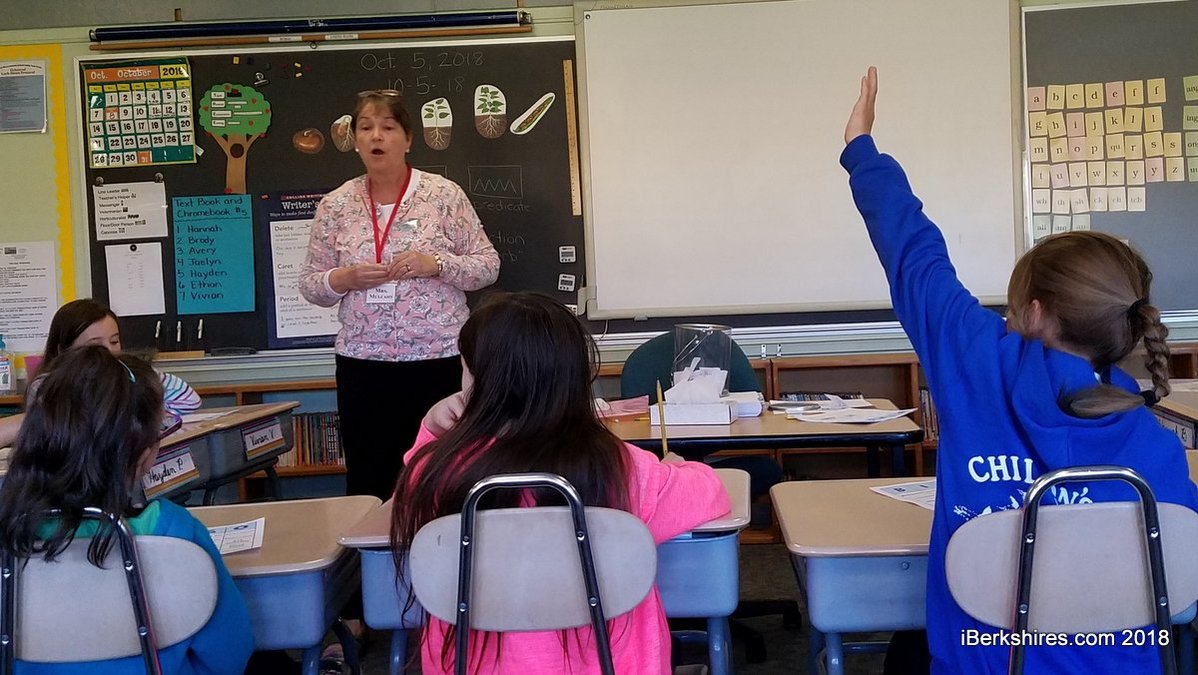
image description
FLORIDA, Mass. — The class of third-graders at Gabriel Abbott Memorial School were quick to raise their hands on Friday as their bingo square was called out.
This game wasn’t about numbers but about attitudes, empathy and safety.
Each block had a word or phrase related to bullying and relationships like verbal and emotional, trusted adults, walk away, kindness and “think before you click.”
“Our words can really hurt someone,” said Carol Mulcahy, director for community outreach and education for the Berkshire district attorney’s office, describing the feeling of being bullied as “feeling it in your heart.”
The children had a good handle on the different components of the game, readily answering questions about the aspects making up the bingo card. It’s not surprising because the bullying prevention program has been part of their curriculum since kindergarten.
The program through the district attorney’s office has been a part of the school’s educational program since 2009, said Principal Heidi Dugal.
“It’s a great program that has grown through the years so there’s multiple layers,” she said. “They’re doing our life skills training as well.”
Students in Grades 3 through 8 receive the Botvin LifeSkills Training Program, a substance abuse prevention program, as part of their curriculum. The program also offers certification and training for teachers and a companion evening presentation for parents.
Dugal said there’s a number of layers in the collaboration with the district attorneys office, such as the school’s participation in the state’s Project 351 student leadership program that dovetails with the district attorney’s Strive Leadership Program.
“I am just so fortunate to have these ladies,” she said of the team working in the school on Friday morning. “We have a very personal connection, the students as well as the staff, with the district attorney’s office. They have been wonderful for us.”
Mulcahy said the office likes to do a daylong “blitz” at the beginning of each school year in participating schools to set the tone. The age-appropriate presentations are designed to get kids thinking about how their words and actions can affect others.
“Evidence-based prevention education basically diverts kids from making bad choices and that’s what we’re trying to do: support schools in social-emotional learning that will help kids make good decisions,” she said.
“This is a good example of a school not just calling us in when something happens as an intervention.”
The trainers explain that there’s going to be some teasing or jokes or students sometimes feeling excluded. The goal is to get the children thinking about how others feel so these actions don’t get repeated.
“We explain to them if it happens over and over again, it’s bullying, but why would you treat another person like that,” Mulcahy said. “Just try to be kinder to one another and if we do that our school, our community would be a better place.”
Across the hall, kindergartners were making lion and mice puppets to go along with the Aesop fable story about “The Lion and The Mouse,” a lesson about kindness and friendship. Farther down the hall a quieter group of seventh- and eighth-graders were discussing the perils of social media, such as oversharing private information or cyberbullying.
Kimberly Blair, a youth education and prevention specialist, was sharing a video with the older students showing how easy it was for an individual named “Jack” to find and pose as acquaintances to teenagers by repeating what he’d read on their Facebook pages.
Dugal said she can tell the program’s had an impact largely by the language used in the school.
“I think the language that students use that’s what you see, the carryover of the language students use with each other or their mediation of incidents and their understanding of what’s really bullying,” she said. “We know there’s teaching that goes on here and there.”

Stanly schools, YMCA form partnership

Stanly County Schools and the Stanly County Family YMCA have formed a partnership to help high-risk students and their families make a positive change in their health, academics and life skills.

The 21st Century Community Learning Centers grant approved in September will fund a program called Students and Parents in Academics, Relationships and Knowledge (SPARK).

The grant-funded partnership is designed to assist 250 elementary school students in grades 2-5 during 34 weeks after-school and six weeks in the summer.

SPARK will take place both in schools and at the YMCA, according to the proposal.

Jeff James, superintendent for Stanly County Schools, said the 21st Century Community Learning Centers grant is open both to schools and nonprofits, adding that he was encouraged to partner with a non-profit organization when applying.

“SPARK ties right into our vision and mission statement here in Stanly County,” James said. “Our goal was, when we wrote the grant, to try to serve as many kids as possible, and, of course, that’s the goal of any grant.”

The grant is for about $400,000 per year for four years, coming to a total of about $1.2 million “by the time you take the in-kind contributions of everyone involved,” he added.

The grant proposal outlines the need for the program in Stanly.

“Parents in our district face barriers to helping their children succeed in school and life,” it says. “These barriers include but are not limited to: a lack of education (almost 84 percent of adults in Stanly do not have a bachelor’s degree), limited financial resources (the cumulative poverty rate among the feeder schools is 73.62 percent), predominant use of a non-native English language (our feeder schools saw a 13.5 percent increase in Limited English Proficient enrollment over last school year), a lack of affordable afterschool programs (Stanly County has no free afterschool programs that provide transportation), and limited time to engage with their child (over 30 percent of our youth are living in single parent homes.)”

The proposal notes that the feeder schools also have their challenges, adding that a large percentage of students in feeder schools failed to meet North Carolina College and Career Readiness standards in reading and math. Students also face a heightened crime rate.

“To address the need for increased wellness, we have chosen to use the evidence-based Botvin Lifeskills Training program, mentoring, certified physical education instructors to provide structured activities, and the YMCA’s Passport to Fitness program that provides a free health screening and access to the YMCA facilities to improve long-term health and wellness outcomes for our students and their families,” the proposal says.

Read full article: Stanly

County Agency on Front Line of Substance Abuse Fight

VERO BEACH, FL – According to a Surgeon General’s Report on Facing Addiction in America, “the number of people with a substance use disorder exceeds the number of people diagnosed with cancer –any kind of cancer.” Even more frightening, opioid overdose deaths were five times higher in 2016 than in 1999. But substance abuse is just a big city problem, right? Wrong. Indian River County has its fair share – from alcohol abuse to opioid overdoses.

The Substance Awareness Center of Indian River County, the lead agency of SAFIR (Substance Abuse-Free Indian River Coalition), is doing all it can to keep numbers down through its prevention, treatment and recovery programs.

“We, as an agency, follow the science that says that prevention works; that we can prevent substance abuse disorders,” says Carrie Lester, LMHC, CAP, who was appointed executive director in July when Robin Dapp retired.

“It’s our mission to lead our community to a healthier lifestyle by reducing the incidence of substance abuse,” says Lester. “Nationally, the problem is that a significant number of people who have a substance abuse disorder, whether alcohol or opiates, don’t see that they have the disorder and so don’t get treatment.”

They clearly have their work cut out for them. According to Assistant Chief Cory Richter, IRC Fire Rescue Division, there were 139 drug overdose deaths in 2017; 74 of those in the first six months. Yet as of mid-September 2018, there were already 130 overdose deaths; 96 in the first six months.

As in most of the country, the majority of those deaths involved heroin laced with either fentanyl or carfentanil, extremely powerful synthetic opioid analgesics. Richter explains that fentanyl is 200 times more potent than morphine. Carfentanil – “what they use to knock out elephants” – is 5,000 more potent than heroin and 10,000 more than the same unit of morphine. These devastatingly destructive drugs depress the vital portions of the brain that control breathing, heart rate and body temperature, causing them to stop functioning.

“That’s why it’s killing these people,” says Richter. “It’s a huge sedative that is knocking out their respiratory drive; they die of hypoxia.”

In 2010, the Substance Awareness Center began instituting a Prevention Works initiative primarily aimed at adolescents. Currently, every sixth- through eighth-grade student receives 30 weeks of the evidence-based, comprehensive Lifeskills Training (LST) curriculum, a national substance abuse and anti-violence prevention program that builds through grade levels. It was extended this year to include fifth-graders in the majority of elementary schools. An additional ReDirect Counseling Program targets youth who have indicated risky behavior.

“Science says that it’s really about skill building, behavior rehearsal, social skills training. Oneshot presentations aren’t proven to have long-term effectiveness,” Lester explains. “The research behind Lifeskills Training is that it is going to have long-term impact, carrying our students all through high school.”

The results are encouraging as far as young people are concerned. In 2017, as tragic as they were, there were just 5 deaths under age 21, versus 75 drug overdose deaths between the ages of 21 and 54 and a surprising 50 people aged 55 and older.

Additionally, prior to LST, Indian River County’s reported 30-day use of alcohol was ranked one of the highest in Florida for underage drinking. It is now at about state average, according to a Florida Youth Substance Abuse survey. However, alcohol abuse is still the county’s No. 1 problem for adolescents and adults, says Lester.

“Some people believe that alcohol isn’t as harmful, or kids are going to drink anyway so we might as well have them drink at home. A lot of parents do it with the best of intentions, but science says a consistent ‘no’ message reduces substance use. Teens who are allowed to drink in the home will actually drink more outside of the home than teens who aren’t allowed to drink.”

Adults and teens are sometimes referred to SAC as a result of DUIs, says Lester. “People come in not identifying at all, and then as we really peel it away, they maybe start to look at the truth. They see the way the alcohol was impacting different areas of their life.”

And, like a bad game of whack-a-mole, while tobacco use among young people is down, vaping has become a problem, says Lester. “Our big concern with vaping is that what ultimately happens is once you’re addicted to something you’re going to go to the cheaper alternative, which might ultimately be cigarettes.”

Read full article: County agency on front line of substance-abuse fight

Marlborough Schools ‘Game Changers’: Bully Prevention Month

MARLBOROUGH, MA—We hope you’ve noticed over the past year that we’ve been focusing on bullying and cyberbullying, a confounding national crisis that turns youths’ lives upside down with unimaginable angst and dread, sometimes with deadly consequences. With each story, we’ve heard poignant stories from Patch readers in Massachusetts and others who were bullied and overcame it, but also many who continue to struggle with the damage done by bullies to their self-esteem.

Many common threads emerged in emails from our readers: Teachers and other educators have suggested everything from first-period decompression time to classroom contracts with students on how they’re expected to treat one another. But for all the readers who said schools need to do more to foster an anti-bullying culture, as many said parents should talk more with their kids about bullying and keep closer track on their social media habits.

And in a loud chorus, they said Americans need to stop wringing their hands and work at all levels to create a world safe from bullying.

That’s one of the purposes of National Bullying Prevention Month, observed annually during October to bring attention to the problem and involve people in Massachusetts and nationwide in a conversation on how to create a world safe from bullying.

“Marlborough uses the bullyproofing curriculum, and additionally there are anti-bullying lessons in the Botvin LifeSkills Training program,” said Superintendent Michael Bergeron. “In addition, we are part of the ‘Game Changers’ grant from the Attorney Generals office, an anti-violence partnership in conjunction with the NE Patriots and the Attorney General’s office.”

A PUBLIC HEALTH ISSUE

Once viewed as a childhood “rite of passage” that toughened kids to handle the pressures of adulthood, bullying and its more insidious digital twin, cyberbullying, is seen by many experts as a major public health issue — on par with heart disease, cancer and diabetes — with devastating and often long-term effects like the loss of self-esteem, heightened anxiety and depression.

Statistics vary, but an aggregate of 80 different studies on bullying suggests one in five American students between 12 and 18 is bullied at some point during their middle or high school years. Traditional bullying — name calling, public humiliation, isolation, physical violence and that sort of thing — occurs most often, with 35 percent of kids reporting they’ve been targeted in one of those ways. The studies cited by the PACER Center, which established National Bullying Prevention Month, show that 15 percent of kids surveyed report being cyberbullied.

And though it occurs less often, cyberbullying — which has resulted in a disturbing string of suicides by adolescents and teenagers — is especially hard to stop. While experts say most cyberbullied kids don’t kill themselves, the long-tailed internet makes a taunt live longer than one flung on the schoolyard. Kids can escape traditional bullying in the safety of their homes, but because social media is so intertwined with how kids communicate, they never really escape it.

And because cyberbullies have the stealth of anonymity, “empathy tends to fade to zero,” NoBully.org founder Nicholas Carlisle told Patch.

He was knocked around 40 or so years ago as an awkward 12-year-old. The torment persisted through high school, but as tough as it was, his experience was markedly different from the torture kids endure today, he says — and it’s not just that he was attacked in a physical as opposed to online space.

“Online, you can’t see the whites of their eyes,” Carlisle said. “If you can see someone, that’s often a break upon people’s aggression — not always, but it does seem to have some break upon crossing the line.”

The full consequences of bullying on the brain aren’t fully understood, but kids who are targeted by bullies in childhood and adolescence are at increased risk for psychological problems that can stretch into adulthood, according to experts. In the moment, bullied kids may be unable to sleep or suffer a range of stomach issues and headaches. Later on, they’re at risk for depression, anxiety, and alcohol and drug use.

Read full article: Marlborough Schools Game Changers- Bully Prevention Month


Dr. Gilbert J. Botvin Gives Keynote Address at Utah Fall Substance Abuse Conference

WHITE PLAINS, NY – Dr. Gilbert J. Botvin, internationally known expert in the field of prevention, delivered the keynote address at Utah Fall Substance Abuse conference on September 20th, in St. George. Dr. Botvin is the developer of the highly acclaimed LifeSkills Training (LST) evidence-based substance abuse and violence prevention program. More than 1,200 psychiatrists, psychologists, social workers, substance abuse / mental health professionals, law enforcement, and educational staff gathered for the educational and networking event in the Mountain West sponsored by the Division of Substance Abuse and Mental Health.
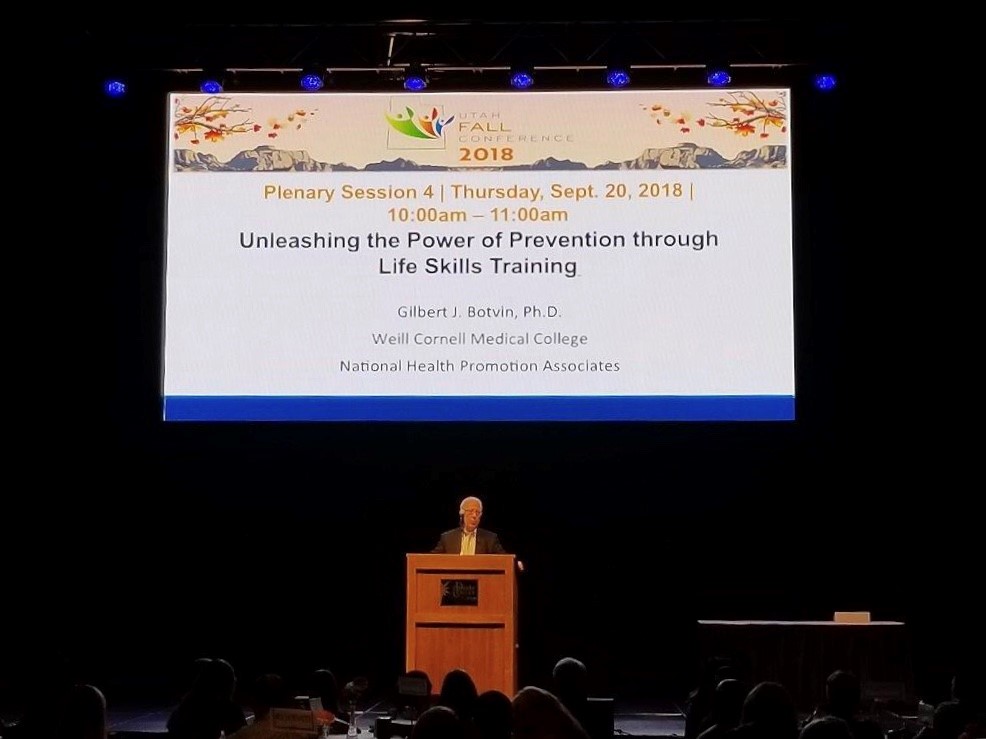
 

Dr. Botvin‘s keynote address described advances in prevention science over the past 35 years and the development of effective prevention approaches, with a focus on the LST approach. The main goals of the LST program are to teach students prevention-related information, promote anti-drug norms, teach drug refusal skills, and foster the development of personal self-management skills and general social skills. Dr. Botvin described LST and the theory supporting it, as well as evidence from over 35 peer-reviewed publications documenting its effectiveness. The program has been proven to cut tobacco, alcohol, and illicit drug use in half and shown to produce prevention effects that can last 12 years or more. It can also prevent aggression and violence, delinquency, risky driving, and HIV/AIDS risk behaviors. In addition, independent researchers have demonstrated the LST can also shield adolescents from the misuse of opioid and other prescription drugs.

According to Dr. Botvin, “The opioid crisis has created a new sense of urgency in the prevention field. To help combat this epidemic, under two federally funded studies we are testing novel prevention approaches that include online e-learning programs for middle school and high school students that are designed to further strengthen the impact of LST on the prevention of opioid and prescription drug misuse.”

Dr. Botvin is also the founder and president of National Health Promotion Associates (NHPA) and Professor Emeritus at Cornell University’s Weill Medical College. He noted that a breadth of research has led to the development of LST and a growing number of prevention approaches that have been tested and proven effective in combating a variety of behavioral health problems. Yet despite the availability of effective prevention programs, many schools still turn to the ineffective or untested programs that use scare tactics or “just say no” messages. Dr. Botvin urged conference attendees to work to replace ineffective programs with ones proven to work.

“Thirty-five years of research have given us effective prevention approaches,” Dr. Botvin said. “We have the tools to prevent substance abuse and other behavioral health problems. We just have to use them.”

About Botvin LifeSkills Training      

Botvin LifeSkills Training (LST) is an evidence-based substance abuse and violence prevention program. LST has been extensively tested and proven to reduce tobacco, alcohol, and illicit drug use by as much as 80%. Long-term follow-up studies show that it produces prevention effects that are durable and long-lasting. Visit www.lifeskillstraining.com for more information.


Contact:

Paulina Kalaj

Director, Communications & Media Relations

1-800-293-4969 ext. 214 | pkalaj@nhpamail.com

County council urged to ‘Go Purple’

The Sussex County Council this week was urged to ride a purple wave, as activists sought to officially add Sussex County to the areas of the state taking part in the “Goes Purple” campaign to address the opioid addiction epidemic.

“There’s a significant national opioid epidemic,” said Peggy Geisler, the executive director of the Sussex County Health Coalition. “Every county, every city in the state… But, specifically, hardest hit is the rural community,” she noted.

“We have the same opioid epidemic rates as Wilmington, Del. Approximately 4 percent of the Sussex County population is addicted to opioids, and that is an underrepresentation.”

Geisler informed the council that the non-profit — whose mission is to “engage the entire community in collaborative family-focused effort to improve the health of children, youth and families in Sussex County — works with 172 non-profit partners, itself has 606 members and makes outreach to more than 15,000 people through varying partnerships.

“We’re here to make sure Sussex Countians are the healthiest in the state and in the nation,” she told the council.

Geisler said the coalition has a comprehensive plan to address the opioid epidemic but wanted to bring the council’s attention to their awareness plan.

“What they’re not aware of is how we’re doing prevention services for our kids in the school districts, how are we doing treatment. Do we have enough beds? Do we have enough treatment providers? The answer is ‘No’ to all of that. You have to be aware of the problem, aware of the solutions before you can do anything about it.”

The organization is working with a number of school-related programs, including 4H.

She noted that the coalition has a mental-health collaborative established in four school districts in the county, with the Laurel School District not participating.

Currently, Botvin LifeSkills Training — an evidence-based substance abuse- and violence-prevention program used in schools and communities worldwide — is being used in some Sussex schools.

“We are increasing prevention services. We’d like to see every school have Botvin. A lot of schools are mandated by the school districts, and they do not follow through,” she said.

The group is hoping to increase awareness, increase services for addiction and recovery, and increase prevention activities and community support. They seek to decrease the use of substances by both youth and adults, and decrease opioid prescriptions.

The non-profit received a $10,000 grant from Discover in 2017 and rolled it into a $100,000 grant from Highmark. They later received a $50,000 grant from the Division of Substance Abuse & Mental Health.

Using Talbot County, Md., as a model, the coalition started working on a “Seaford Goes Purple Campaign,” urging people to “Take a stand against substance abuse.”

“Before we knew it, not only was Seaford ‘going purple,’ we had Sussex wanting to ‘go purple.’ Kent ‘went purple,’ and now New Castle wants to ‘go purple.’ So, we’ve ended up saying, ‘Delaware Goes Purple,’” said Geisler.

Delaware has the 13th highest fatal opioid overdose rate in the United States, and Geisler said something needs to be done.

“It’s a complex problem, and we need a complex solution,” she said. “Every sector is engaged — hospitals, law-enforcement — but we need more. We only have three staff members, and this is one project for our organization, so we need all of your help.”

Council President Michael H. Vincent said the County would discuss and possibly vote on having the county formally “go purple” at its next meeting.

“The message needs to get out,” he said. “It’s important that we step out and try to help.”

“Any way you want to be involved, we welcome you,” added Geisler.

For more information on Delaware Goes Purple, visit delawaregoespurple.org. For more information about the Sussex County Health Coalition, visit www.healthysussex.org. Anyone who is themselves or knows someone who is suffering from a substance-use disorder can visit www.helpisherede.com for resources and programs offered throughout the State of Delaware.

Read full article: County council urged to ‘Go Purple’ _ Coastal Point