


Category Archives: Prevention News

$2.5M grant announced to provide proven drug and alcohol reduction curriculum in schools

Gov. Tim Walz and Lt. Gov. Peggy Flanagan announced that the State of Minnesota was awarded a $2.5 million grant to implement a groundbreaking, evidence-based social-emotional learning curriculum in middle schools across the state.

The grant, awarded by Arnold Ventures, will allow as many as 40 middle schools to offer the LifeSkills Training program. Based on more than 35 years of scientific research, the LifeSkills curriculum includes skills in resisting peer and media pressure to smoke, drink or use drugs while also informing students of the consequences of substance abuse.

“We see every day the impact of substance use on Minnesota, and on our young. Too many deaths, too many damaged lives—we need to invest in evidence-based policies that have strong record of success,” said Governor Walz in a press release. “This grant from Arnold Ventures will help provide schools with a powerful tool to promote prevention and positive, long-term health of our kids.”

The LifeSkills curriculum is proven effective at helping reduce rates of anxiety, depression and physical aggression, and prevent substance abuse.

Read full article: $2.5M grant to provide proven drug reduction curriculum in schools

LifeSkills Training Continues into 2019-2020 School Year

IOWA – The Audubon Middle-High School and Exira-Elk Horn-Kimballtion Middle Schools, in collaboration with the Healthy Teen Coalition, and New Opportunities through the Iowa Partnership for Success (IPFS) Grant, have provided youth focused prevention services through LifeSkills Training (LST) curriculum. LST is an evidence-based substance abuse and violence prevention program that teaches skills of personal self-management, general social skills, and drug and alcohol resistance.

LST has been taught for the past two years in the Audubon Community School and will continue into the up-coming 2019-2020 school year health classes. Teachers have commented on how LST has been a great curriculum for their classes, as well as a helpful resource for students in learning how to resist alcohol and make good decisions.

Read full article: LifeSkills Training Continues into 2019-2020 School Year

Prevention’s Importance in the Opioid Crisis

SAFE GC Coalition: Prevention’s Importance in the Opioid Crisis

Keeping people who do not have an opioid use disorder from becoming addicted is equally important as treating individuals who do.

By SAFE (Substance Abuse Free Environment), Nonprofit  (reposted from Glen Cove, NY Patch)

…Prevention programs can take many forms, but all in one way or another address these risk factors and/or bolster factors like self-control, peer relationships, or other age appropriate skills. These forms of resilience may make all the difference in the young person’s life when faced with the opportunities and temptations to begin smoking, drinking, or using drugs when they are adolescents, despite whatever adversity they may have experienced when younger.

Because risk factors for drug use are common to other behavioral problems, most prevention interventions do not focus solely on preventing drug use or on preventing a single type of drug use. A wide range of problems can be addressed or averted by addressing core risk or protective factors.

An important research priority is finding out how to widen the use and implementation of effective evidence-supported prevention programs. The menu of such interventions is diverse, but few of the options are widely used. Part of the problem is that high quality intervention programs are costly, and communities may be reluctant to invest the needed resources when the payoff may be years or more in the future.

However, studies have strikingly shown that many programs more than pay for themselves. Like other investments—saving for retirement, for instance—primary prevention of substance use and addiction requires long-term thinking and balancing the short-term costs in money and time against the long-term benefits of a healthier society down the road.SAFE is the only alcohol and substance abuse prevention, intervention and education agency in the City Of Glen Cove. SAFE provides evidence-based LifeSkills Training (LST) to elementary and middle school youth and bilingual LST to parents throughout the year. LST incorporates interactive learning, social skills building and specific drug use prevention-related information, providing adolescents and young teens with the confidence and skills necessary to successfully handle challenging situations.The program teaches general self-management skills, social skills and drug resistance skills, such as the ability to challenge misconceptions about drug use and the ability to resist media pressures to use drugs. LST for parents includes substance use and violence prevention program components designed to help strengthen communication with their children and prevent them from using drugs. The program also helps parents prepare their children for a successful and safe transition from adolescence to early adulthood…

Read full article: SAFE GC Coalition_ Prevention’s Importance in the Opioid Crisis


Botvin LifeSkills Training Being piloted in Kent County, MI

The Kent County Health Department in Michigan plans to expand a program meant to promote positive development and prevent substance use in grade school students.

The department has been piloting the Botvin LifeSkills Training program to ninth- and 10th-grade students at Sparta High School and Cedar Springs High School.

The program is an interactive, skills-based program designed to promote positive health and personal development to help students achieve competency in the skills that have been shown to prevent substance use, violence and other health risk behaviors, the county said.

The expansion of this program is included in the work plan by the Kent County Opioid Task Force, according to a letter sent to the board by Teresa Branson, Kent County deputy administrative health officer.

There is a waitlist of schools interested in offering the program, and the department is ready to meet the “vital opportunities to expand our reach to youth with the knowledge and skills they need to make healthy choices,” Branson said.

Read full article: Kent County to expand positive health directive

North Central Health Services awards $3.8M to 19 school corporations in Indiana

North Central Health Services awarded over $3.8 million in Resilient Youth Initiative implementation grants to 19 school corporations in Indiana. The grants will support schools in seven counties launching evidenced-based youth resiliency programs, reaching an anticipated 33,000 K-12 students by the 2021-22 school year.

NCHS’s investment in the Resilient Youth Initiative totals over $6 million in direct funding and support for schools in its eight-county service area to explore, pilot and evaluate the impact of evidenced-based social-emotional competency, drug resistance and mental well-being curricula.

Read full article: NCHS awards $3.8M to 19 school corporations

Montgomery County Public Schools getting grant funding for heroin and opioid prevention

Montgomery County Public Schools in Maryland will be getting grant funding for heroin and opioid prevention.

The Heroin and Opioid Prevention grant totals up to more than $540,000 and will provide students, their families, and the community with information and resources on substance abuse through training, and workshops.

In FY 2019, Governor Larry Hogan included an appropriation of funds for the Maryland State Department of Education and awarded grants to local school systems to implement policy and conduct training for Heroin and Opioid addiction. Montgomery County Public Schools received grant funding under this program.

Funding will be used to purchase The Botvin Lifeskills Training Program to teach students in elementary, middle, and high schools the skills they need to navigate life’s challenges and to effectively manage stress. According to officials, research on the Botvin Lifeskills Training Program has demonstrated long-term effects on reducing youth substance use, as well as decreasing aggressive and delinquent behavior. Botvin Lifeskills Training also includes parent/guardian education and workshops. Funding will be used to bring in speakers to present up-to-date information and resources on substance use to students, families, and staff members.

Read full article: MCPS TO RECEIVE GRANT FUNDING FOR HEROIN AND OPIOID PREVENTION

Dr. Gilbert J. Botvin Gives Keynote Address at “A Day of Hope” Summit
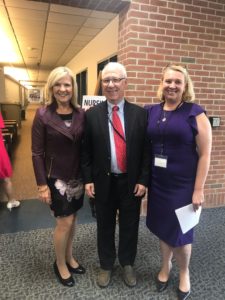
Dr. Gilbert J. Botvin, an internationally known expert in prevention, delivered the keynote address at “A Day of Hope” Summit, on June 12th in Georgetown, DE following opening comments by Lieutenant Governor Bethany Hall-Long. The conference was attended by Senator Bryant Richardson, prevention specialists, mental health professionals, educational staff, and local high schools students. The event tackled multiple angles of addiction in hopes of promoting prevention and recovery.
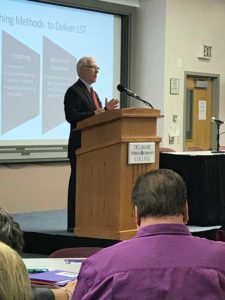
Dr. Botvin‘s keynote address described advances in prevention science over the past 35 years and the development of effective approaches, including an evidence-based prevention program that he developed, called Botvin LifeSkills Training (LST). Currently, LST is being implemented in some Sussex schools, and the goal is to increase prevention services in every school. LST promotes healthy student development by teaching personal self-management skills to improve decision-making and problem-solving abilities, and cope with stress and anxiety; general social skills to overcome shyness, communicating clearly, and building healthy relationships; and skills to resist social influences to smoke, drink alcohol, and use marijuana and other illicit drugs.

“Our legislators heard the message and now have a strong platform to stand on in support of placing LifeSkills in all of our elementary/middle school classrooms. This is our goal,” said Lisa Coldiron, grant manager for the Sussex County Health Coalition, the non-profit organization that hosted the event. The Sussex County Health Coalition is part of a community effort to end substance abuse through awareness and prevention.
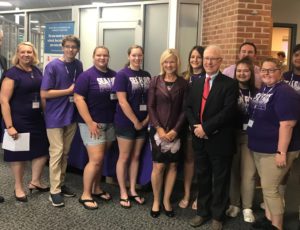
Another part of the community effort is “Sussex Goes Purple” which is a peer-to-peer implementation of the LST program in Seaford High and Middle schools. Under the project–supported by the Delaware Division of Substance Abuse and Mental Health, Highmark, and all three hospitals in the community–11 Seaford High School students were trained in the LST program and are now known as “Purple Ambassadors.” For this summit, the Purple Ambassadors introduced the speakers, ran errands, took pictures, set up a table to share information, and ran registration.

“What a great group and a wonderful experience! Meeting the Purple Ambassadors, and seeing our research come to fruition are what make all of our years of hard work worthwhile,” said Dr. Botvin, Professor Emeritus at Cornell University’s Weill Medical College. “I was very impressed with everyone I met and their commitment to prevention and the healthy development of Delaware’s youth. They are fortunate to have such a knowledgeable group of dedicated champions. I’m confident that this is just the beginning of great things to come in Delaware.”

Adams County youth participate in ‘We Are The Majority’ Rally

Five Adams County teens were among approximately 2,000 Ohio middle and high school students that marched in downtown Columbus on April 30 for the eighth annual We Are The Majority Rally (WATM Rally).

The rally is held yearly to celebrate healthy lifestyles and advocate for youth-led prevention. It also raises awareness about the fact that the vast majority of young people do not use drugs or alcohol.

Produced by Prevention Action Alliance (PAA) with funding from the Ohio Department of Mental Health and Addiction Services (OhioMHAS), the WATM Rally is led by the Youth Council of the Ohio Youth-Led Prevention Network (OYLPN).

The OYLPN Youth Council is comprised of teen leaders in high schools from across Ohio. They promote mental health wellness and the prevention of substance misuse in their schools and communities.

Danielle Poe, Director of the Rural Health Opioid Project (RHOP) at the Adams County Health Department accompanied local students to Columbus.

Poe introduced the evidence-based Botvin LifeSkills Training Program in all three county school districts. The program has won high praise from school districts across the country for its effectiveness in promoting drug abuse prevention.

Poe says she believes every county should have a youth-led coalition attend the rally.

“Data shows peer-to-peer interaction and prevention is more effective than anything we can do as adults,” Poe told the Defender. “This rally empowers students. They come back with new goals and strategies they can put in place to promote drug abuse education and prevention.”

The Adams County Youth-led Coalition also met with Representative Brian Baldridge (R-Adams Co.) who gave the group a tour of the statehouse and an invitation to shadow a representative for a day.

Read full article: Adams County youth participate in ‘We Are The Majority’ Rally


PROSPER conference convenes experts and youth to help prevent substance abuse

UNIVERSITY PARK, Pa. — The 2019 PROSPER conference brought together representatives from Penn State and Pennsylvania state agencies and school districts to share recent developments in addressing substance misuse among middle school youth.

“They are inhaling e-liquids into their lungs and bloodstream, and they may have no idea what is in them,” said Craig Zettle, vice president of Botvin LifeSkills Training.

“Vaping, cigarettes and e-cigarettes are harmful. We need to keep our foot on the gas pedal by addressing youth smoking overall, not just going in the direction of vaping.”

Read full article: PROSPER conference

Prevention Program Cuts Sexual Misconduct by Nearly 50%

WHITE PLAINS, NY – Sexual assault awareness and prevention is an important public health issue affecting young adults across the United States, especially those in civilian colleges and service academies. According to the Centers for Disease Control and Prevention, one in three women and one in four men experience sexual violence involving physical contact during their lifetimes.

To address this issue, researchers at National Health Promotion Associates (NHPA) conducted one of the most rigorous studies testing a primary prevention approach to sexual assault and harassment at a US service academy. The study found that an adapted version of prevention program called LifeSkills Training (LST) can cut sexual acts without consent by nearly half.

Dr. Gilbert J. Botvin, developer of the LST program and president of NHPA, presented the new findings last month at a two-day conference held at the US Naval Academy in Annapolis, MD. The conference, called the National Discussion on Sexual Assault and Sexual Harassment at America’s Colleges, Universities and Service Academies was co-hosted by the secretaries of the Navy, Army, and Air Force, brought together leaders and subject matter experts to better understand and address the challenge of eliminating sexual assault and sexual harassment on college, university, and military service academy campuses across the nation.

“The adaptation of LST to the problem of sexual assault and harassment is a major leap forward in addressing this important problem in a more positive, holistic way,” said Dr. Botvin, Professor Emeritus at Cornell University’s Weill Medical College. “LST is an evidence-based prevention approach based on over 30 years of research proving it to be effective in reducing substance abuse, violence, and delinquency.”

As part of a panel presenting the results of prevention studies, Dr. Botvin shared the findings of a study testing an adapted version of LifeSkills Training called CHiPS (Cadet Health and Personal Skills) with incoming cadets at the US Air Force Academy. Results indicated that the new prevention program cut sexual acts without consent by nearly half (4.4% versus 7.4%), when comparing cadets who participated in the program with those who did not.

According to Dr. Botvin, “the extension of LST to the problem of sexual assault and harassment builds on progress we’ve made in the field of prevention science and represents an exciting advance concerning how we approach this important public health problem. Rather than lecturing cadets on what not to do, this innovative new approach emphasizes the mastery of important life skills in order to enhance resilience and promote healthy personal relationships.”