

Category Archives: Prevention News

Substance abuse awareness efforts expand statewide in Delaware

Excerpt from Delaware State News

“GEORGETOWN,— At the local, county and now, state level, Delaware is going purple against substance abuse and opioid addiction that is claiming lives and devastating families in epidemic proportion.

Sussex County Council Tuesday’s agreed to ante up $5,000 — matching last year’s pledge — for the Sussex County Substance Abuse Prevention Project, part of the growing Delaware Goes Purple campaign.

“Let’s not let people get addicted to begin with,” Peggy Geisler, executive director of the Sussex County Health Coalition said in her presentation to council.
“There was close to 400 (overdose) deaths in the state last year. This year we are losing people at a rate of about one per day.
“This is a tragedy that can be avoided and prevented. That is what the Delaware Goes Purple initiative is about.”
Delaware Goes Purple is a statewide initiative spearheaded by the Sussex County Health Coalition based in Georgetown.

In 2018, SCHC led efforts in Sussex County to begin to reduce the stigma of addictions, inspired by The Herren Project and the Talbot County Go Purple campaign in Maryland.

This initiative, which initially included the city of Seaford and Sussex County, now encompasses groups working in New Castle, Kent and Sussex counties.

Lt. Gov. Bethany Hall-Long is honorary chair of Delaware Goes Purple and a strong advocate and supporter of behavioral health care access and substance abuse prevention in the state.

There are approximately 200 business partners onboard statewide, with close to 100 of those partners in Sussex County, Ms. Geisler said.

Partners include all four major healthcare entities — Beebe Healthcare, Bayhealth, Christiana Care Health System and Nanticoke Health Services.

“It is not just about an awareness campaign. It is really about using that information so people to understand where they can treatment, where they can get support, where they can get help,” said Ms. Geisler.
She added the goal is prevention and getting “everybody on the same page when it comes to taking a stand substance abuse.”

Prevention is structured around education and one option is implementation of the Botvin LifeSkills Training developed by Dr. Gilbert J. Botvin, an internationally known expert on prevention and health behavior, in schools.

“Personally, I would like to see Botvin in all of our schools,” said Ms. Geisler.

She noted Dr. Botvin, a longtime Cornell University professor, was in Seaford last May for Botvin Day of Hope and a special salute to the coalition and Sussex County in the Go Purple movement.

“He recognized us nationally as the first organization and community to use youth to teach other youth how to stay clean and prevent using any kind of substance …,” Ms. Geisler said. “Sussex County is a pioneer in this arena.”

Read full article: Substance abuse awareness efforts expand statewide

Positive trends seen with regional program to cut substance abuse

CONNECTICUT – Northwest Corner organizations have come together to seek solutions to the increasing problem of substance abuse. Several groups have, in fact, developed an initiative that is already seeing some positive results.

The Botvin LifeSkills Training Program was described to a host of local residents during an event held at the Hotchkiss School’s Fairfield Farm on Saturday.

The Berkshire Taconic Community Foundation’s Northwest Corner Fund and the Foundation for Community Health, under the leadership of the McCall Center for Behavioral Health, invested in two strategies to address what they see as a crisis affecting families and communities in the region.

The program is now entering its fourth year. Participants are students in grades six, seven and eight who follow a curriculum that provides confidence, knowledge and resilience to deal with social and psychological factors that cause risky behavior.

Instructors also outline the dangers of alcohol, narcotics and vaping. According to those involved, Botvin has reduced drug use by up to 75%, alcohol use by up to 60% and aggressive behavior by up to 50%. The material put out says, “In Region 1, initial surveys indicate positive trends in skills relating to relaxation, drug refusal and self-control.”

Read full article: Positive trends seen with regional program to cut substance abuse

LifeSkills ‘transforming outcomes’ for children in Dublin, Ireland
Image

As featured in The Irish Times-

“A schools-based programme, operating in one of the most disadvantaged areas in the State, is teaching children to make good decisions, cope with stress and feel good about themselves.

LifeSkills, an early-intervention programme, is “transforming outcomes” for children in Ballyfermot, west Dublin, according to its co-ordinator, Bernie Laverty.

Ms Laverty runs Family Matters, the local area-based childhood (ABC) programme – part of a national network of ABC programmes to improve outcomes for children in disadvantaged areas.

LifeSkills, which was brought to Ballyfermot and Cherry Orchard in 2017 on the initiative of the local drugs task force working with Barnardos, is delivered by teachers and youth workers in the eight local primary schools, and secondary school, to children between the ages of 8 and 14. Its impact on attitudes, critical thinking and confidence is reinforced and cumulative.

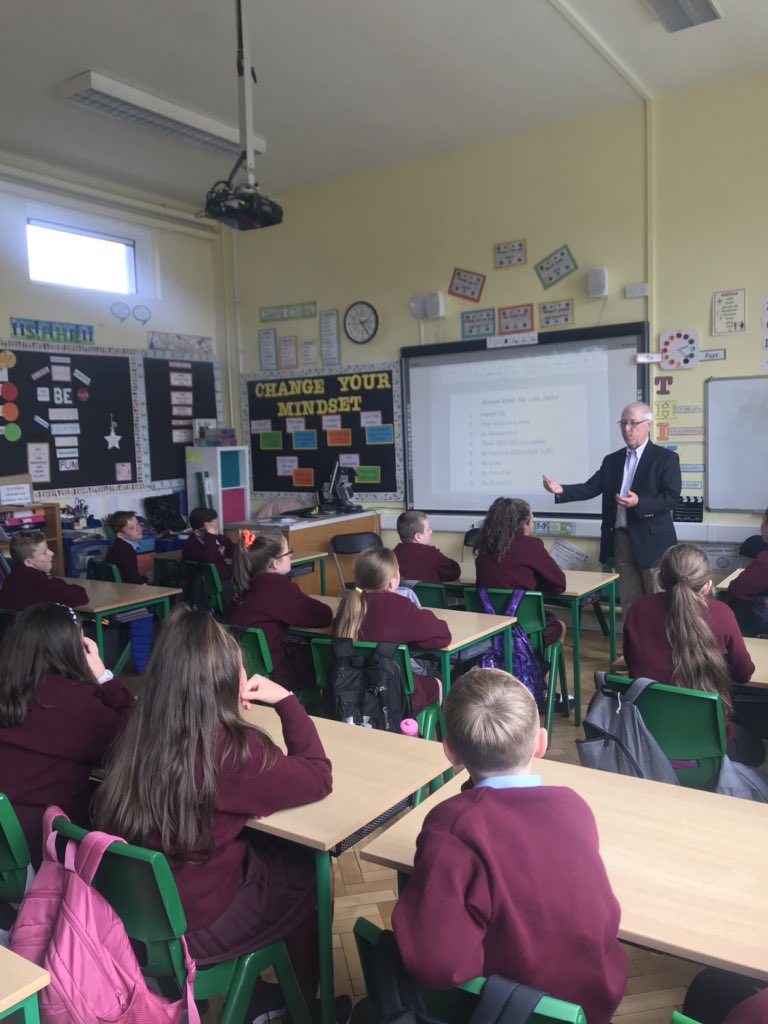
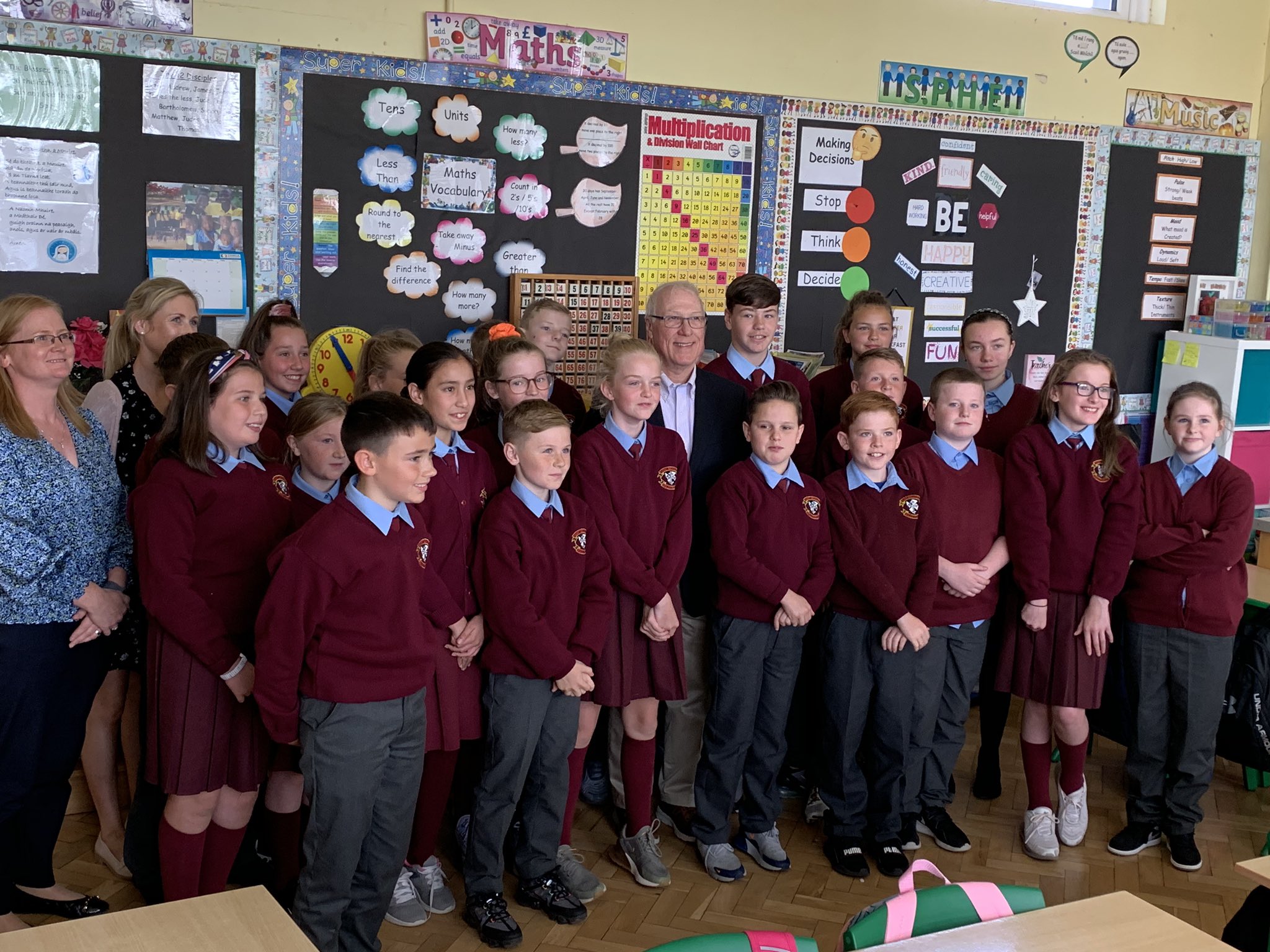
Dr Gil Botvin, who developed the programme at New York’s Cornell University medical school more than 30 years ago , took a day out of a holiday on Friday to visit St Michael’s national school in Ballyfermot and talk to sixth-class children.Image

The 11 and 12 year olds enthusiastically described learning to “stop, think and decide” when faced with a difficult decision and to be confident about making the right choices for them.

‘Get into trouble’

Evan (11) said a friend had wanted him to go to a place with him he knew he shouldn’t go. “I stopped to think about it and I said, ‘No, because I don’t want to get into trouble.’” Asked if he was happy with his decision he smiled: “Yeah, because my ma came out two minutes later.”

Tristan (12) said the programme showed him there were ways of saying no without having to just refuse. “You can say, ‘I have to go home for my dinner’, or ‘My ma said I have to be home now’, because if you stop and think it might be something you’ll regret, it’s best to say ‘no’ and be calm.”

The children talked about being assertive, and recognising when their bodies were telling them they were anxious or stressed, whether it was good stress or bad stress. “You can get butterflies in your tummy, or you get nervous,” said one girl. And when asked how to respond they had several solutions.

“You can breathe slowly,” said one. “You can go and talk to someone you trust”; “Go somewhere quiet”; “Write about it”, “Close your eyes and think about something nice”, and, “Meditate” were suggestions.

Smoking

Initial research on LifeSkills’ impact in Ballyfermot’s primary schools, published by Barnardos, finds children’s attitudes to smoking, alcohol and risk-taking were improved by an average of 73 per cent compared with scores before participating.

“I learned if your friend smokes you don’t have to,” one child told researchers. “It’s okay to stand up for yourself,” said another.

Dr Botvin said he would like to see the programme in schools beyond Ballyfermot, describing the children he met there on Friday as “terrific”.”

Read full article: LifeSkills school programme ‘transforming outcomes’ for children

LifeSkills Training & Curriculum Middle School Grants in Washington

The Office of the Superintendent of Public Instruction (OSPI) is providing funding for implementation of the highly regarded and effective prevention program, Botvin LifeSkills Training to address marijuana and other substance use in your school or youth-serving organization that works with middle school age children.

The grant will pay for all student and teacher materials for all three levels for all students in your school or site. It will also pay for required instructor training.

Grant application deadline is Thursday, October 3, 2019 at 4:00 p.m.


The LifeSkills Training (LST) Substance Abuse Prevention Grant allows schools and youth serving organizations to implement the evidence-based Botvin LifeSkills Training (LST) Middle School Program which teaches youth how to:

  • Cope with and manage stress and anxiety
  • Build positive relationship and communication skills
  • Develop refusal skills to prevent and reduce substance use and abuse.

The grant is open to all public schools, school districts, and community organizations who serve middle school age youth. The grant will cover the cost of teacher and student material; costs; which may include travel, lodging, per diem and substitute fees to send educators to the mandatory training, as well as a data collection stipend.

An alignment map has been created to show what WA Health and PE standards are met in this curriculum. Click here for the Health Education Standards aligned with LifeSkills Training.

For more information please visit the OSPI website: https://www.k12.wa.us/policy-funding/student-health/lifeskills-training-lst-substance-abuse-prevention-grant

USD 383 to hear report on district’s substance abuse prevention programs

KANSAS – The Manhattan-Ogden school board will hear a report Wednesday evening on the district’s substance abuse prevention program. While overall drug use is down since 2000, frequent e-cigarette use has increased in the past few years.

According to a 2019 Kansas Communities That Care survey of the district’s 6th, 8th, 10th and 12th graders, approximately one in six students (16.7%) reported having used e-cigarettes, vaping devices or electronic hookahs at least once during their life. That figure is the same as in 2016, the first year the survey asked about use of those substances.

The school district’s substance abuse prevention program will focus on increasing opportunities for involvement, social and cognitive skills, and student recognition as buffers to keep students away from illicit substances.

Additionally, the district’s social workers will implement the LifeSkills Training program to teach students personal management, general social and drug resistance skills.

Congratulations to the Newly Certified LifeSkills Trainer of Trainers

Congratulations to the participants of the White Plains, NY -Training of Trainers (TOT) Workshop. During this two-day course led by Caitlyn Simmons, National Health Promotion Associates (NHPA) Trainer, participants from all over the U.S. learned how to deliver and conduct LifeSkills Provider Training Workshops for their respective organizations.
Don’t discount your teen’s use of alcohol or marijuana

OHIO – Mary Makley Wolff, the coalition director for a Drug-Free Clermont County is reminding parents that alcohol and marijuana abuse can adversely affect brain development, which continues until age 25.

Community leaders formed the Coalition for a Drug-Free Clermont County in 1995 with the mission of providing education about the dangers of drugs and alcohol to those 18 and younger. The coalition focuses on alcohol, marijuana, tobacco and prescription drugs.

Wolff points out that the Coalition for a Drug-Free Clermont County mainly works on Primary Prevention and environmental strategies “way up stream to change the environment,” hopefully preventing the nightmare of addiction later in life. Research shows that the earlier the use of any substance in developing brains, the higher the chance of addiction.

Coalition members devote their prevention energies to youth 18 and under. They track data regarding non-use in the past 30 days, perception of parental disapproval, perception of peer disapproval and perception of risk.

“The data allows us to see where we’re making headway and how we stack up nationally,” Wolff says.

In 2011, the coalition received funding to expand its efforts from the Clermont County Mental Health and Recovery Board and Ohio Mental Health and Addiction services and, in 2015, the coalition obtained a federally funded Drug Free Communities Grant (DFC). This allows the coalition members to work with 12 sectors such as youth, parents, businesses, schools, law enforcement, government and civic organizations. The focus is on local conditions in the local community with local solutions as the most effective way to provide prevention of substance use among youth in Clermont County.

Current activities include the implementation of Botvin LifeSkills Training, an evidence-based health curriculum for middle schoolers with a high school refresher, a parent version for incarcerated moms and dads.

Read original article: Don’t discount your teen’s use of alcohol or marijuana

‘At war’: Families who lost children to overdose helping others

MICHIGAN – For the fifth consecutive year, Mitchell’s Hope will host an event for International Overdose Awareness Day, including a training on how to use Naloxone. The event, including a resource tent and candlelight vigil, takes place from 5:30 p.m. to 8:30 p.m. Saturday at the Fowlerville Mission House at 224 S. Church Street.

Mitchell’s Hope, founded by Michele Wagner, is an organization that advocates for more and more accessible drug treatment and to help others learn about the signs of overdose and how to prevent it.  Wagner’s son Mitchell died of a heroin overdose in 2014.

In addition to advocating for changes in the laws and more treatment, as well as empowering people to have their own voice, Wagner wants more to be done.

She contacted Botvin LifeSkills Training in an effort to have the program taught in elementary, middle school and high school classrooms in Livingston County.

The program is an evidence-based substance abuse and violence prevention program. Studies testing the program’s effectiveness have shown it can reduce the prevalence of tobacco, alcohol and illicit drug use by as much as 80% and reduce multiple drug use by up to 66%.

However, Wagner said none of the school districts in the county she’s talked to have entertained the idea of implementing it.

Read full article: At war- Families who lost children to overdose helping others

Carteret County, NC Partners with Schools to Provide LifeSkills Training for Drug-Free Youth

Carteret County is partnering with Carteret Public School System to begin offering classes through the Botvin LifeSkills Training for Drug-Free Youth during the coming school year. They say it’s an evidence-based program designed to address key risk factors that may lead young people to start smoking, drinking and taking drugs.

Sue Kreuser, the school system’s Director of Healthful Living, says teachers and counselors have completed the required training and plan to start classes in October. The program will focus on personal self-management, general social skills and drug-resistant skills.

CU Boulder center knows how to prevent violence, but it’s not simple

“Metal detectors. Bulletproof backpacks. School resource officers.

These are technical solutions given to an adaptive challenge: gun violence.

But adaptive challenges need adaptive solutions, not technical fixes, according to William Woodward, director of training at the Center for the Study and Prevention of Violence at the University of Colorado Boulder.

The center has created a model to improve school safety using adaptive leadership and solutions, and it has analyzed programs to discover what would work to reduce violence overall, which would also reduce gun violence. If those kinds of programs were put in place, violence would decrease by 20% to 30%, according to Beverly Kingston, director of the center.

Still, the violence continues. Just this past weekend, at least 22 people were shot to death Saturday at a Walmart in El Paso, Texas and nine people were shot to death Sunday in a nightclub district of Dayton, Ohio. There have been 253 mass shootings this year, according to the Gun Violence Archive, an online archive that collects data on gun violence.

Researchers need to bridge the gap between the research itself and putting it into practice to start making progress, Kingston said.

The answer to the problem doesn’t rely on a “silver bullet,” she said. While better mental health services, gun control and things like metal detectors could be part of the solution, larger cultural and climate changes need to happen to effectively address violence, she said.

Leadership failures

Woodward trains schools on how to use the center’s model, Safe Communities Safe Schools, to change their climates to prevent and reduce violence.

This model is being used in 44 schools across the state as part of a study on its effectiveness. The study will end in the next school year, and so far the data shows it improves schools’ motivation and capacity to address safety issues, Kingston said. They’ll know whether it reduced violence when the study is complete.

The center wrote the Colorado Safety Guide for the Attorney General’s Office and found out of 2,000 school programs, about 80 were proved to be effective.

Some of the programs include LifeSkills Training, Olweus Bullying Prevention and Sources of Strength for Suicide Prevention.”

Read full article: CU Boulder center knows how to prevent violence, but it’s not simple