


Category Archives: Prevention News

Universal Addiction Prevention Education is Vital

As the opioid epidemic sweeps over the nation killing thousands in its wake, parents and families should be concerned about their children’s ability to avoid substance use. Are we doing our best to provide the next generation with the resources they need to avoid addiction and make healthy decisions at critical moments in their lives?

Drug Free Manatee recognizes that one strategy to address the opioid epidemic is to introduce universal prevention education into schools. While the nation is understandably funding intervention and treatment options for those who are suffering addiction, prevention education has dwindled over the last decade. Although materials still exist in the classroom, the curriculum is varied, inconsistent and fluctuating, often only reaching a portion of students.

This year, the School District of Manatee County recognized this shortcoming and is in the process of bringing researched-based, universal prevention curriculum back into community schools.

During the 2016/2017 school year, the district will introduce Botvin’s Life Skills Training (LST) to its entire sixth grade. LST has been proven to reduce the risk of alcohol, tobacco, drug abuse and violence by helping to identify risky behaviors that often lead to substance misuse and providing teens with the skills they need to handle challenging situations. The district is planning to expand the program to seventh and eighth grade in the upcoming school year.

However, the lack of prevention education is still an issue in other counties across the state. Drug Free Manatee is currently encouraging Florida legislators to fund and mandate a universal prevention platform that would not only include prevention education, but also promote positive youth development while addressing behavioral issues and fundamental life skills. Programs such as these have fallen to the wayside due to the state’s focus on testing, under-funded state mandates, time-management issues and budget cuts.

Today, many of those programs are optional for students or available for them to take online. Drug Free Manatee feels that online courses rob students of conversations and lessons that dig deeper into critical topic areas like healthy lifestyle choices, bullying prevention etc.

The coalition believes the best way to provide children with a balanced education is to ensure that every child receive prevention and character courses. The coalition posits that prevention and character development should be mandated for all students, just as academic courses are required.

The coalition would like to take this opportunity, during National Drug and Alcohol Facts Week, to invite citizens to help us accomplish our goals. Residents who would like to be involved in our platform can reach us by calling 941-749-3030 or emailing info@drugfreemanatee.org .

Sharon Kramer is the executive director of Drug Free Manatee.

More Information: Read Full Article

Fighting the Drug Epidemic Takes a “We” Response

Fighting the Drug Epidemic Takes a "We" Response

The opioid epidemic affects everyone and will require community solutions, Ronna Yablonski told members of Johnstown Area Regional Industries’ health care consortium on Tuesday.

“We want them to understand the state of affairs is: Drug addiction is a ‘we’ issue and it will take a ‘we’ response,” Yablonski said following her presentation on the Cambria County Drug Coalition’s efforts to facilitate collaborative response.

Yablonski is executive director of the coalition she said was formed to bring together existing programs and develop new resources to battle the epidemic.

“We are really trying to be a hub for the county.”

Yablonski said Cambria County Drug Coalition has identified a continuum of areas involved in fighting the opioid epidemic: law enforcement, health care, education, prevention, treatment and the media.

On the education front, all Cambria County schools are using the nationally recognized Botvin LifeSkills Trainingcurriculum.

More Information: Read Full Article

VIDEO: LifeSkills Training, Making Education Fun for Children

Watch Kat Allen from the Communities that Care Coalition, a Partnership for Youth Program of the [Massachusetts] Franklin Regional Council of Governments, and Kate Blair from the Frontier Regional School in Deerfield, MA, as they discuss their successes with implementing LifeSkills Training to help reduce teen drug (alcohol, tobacco and other drugs including opioids) use in their community.

“It’s dynamic. I find that it’s an easy curriculum to teach because it’s easy to get enthusiastic about it! And as a teacher that’s really what makes a lesson and a curriculum so worthwhile. When I can be enthusiastic about it easily, so can the kids,” said Kate.

Mass Appeal

Studies show that students who go through this program are much less likely to engage in drugs and other forms of dangerous behaviors later in life. Tobacco use was also shown to be reduced by 87% and alcohol use by 60%.

The LifeSkills Training program involves a set curriculum with interactions and role-plays between teachers and students. The teachers have been using the curriculum for more than a year now, and are seeing the results.

More Information: Watch Video

Paskenta Band of Nomlaki Indians to Implement LST

The Paskenta Band of Nomlaki Indians were awarded a more than $14.6 million Promise Neighborhood Grant on Dec. 20 to be dispersed over the span of five years from the US Department of Education to serve the Corning elementary and high school districts.

The Paskenta will reorganize their community’s elementary and high school programs to ensure all students are prepared to master grade-level content, according to a media report by the Department of Education, which awarded five other grants as part of the 2016 Promise Neighborhood competition.

The program was set up to help communities launch, scale and sustain educational supports and community-based services to meet the complex needs of children and families, according to the report. The program is meant to serve and support at-risk children in these communities.

Schools that will benefit from the grant are Olive View, Rancho Tehama and West Street elementary schools, Maywood Middle School, Corning High School and Centennial High School.

The Everett Freeman Promise Neighborhood Initiative grant will go toward six solutions, or programs, that will significantly improve the educational and developmental outcomes of children and youth within various schools in Corning, said Matthew Russell, grant project director.

Those programs include the Healthy Families America program for ages 0-5, a Research Based Instruction program for kindergarten through eighth grade, Navigate program for high school students, College and Career Readiness program, LifeSkills Training for sixth to twelfth grades and a Cognitive Behavioral Therapy program for children and parents, Russell said.

The Paskenta are the only tribal group to be awarded the grant, Russell said.

The Healthy Families Program includes working with the Tehama County Health Services Agency for health education purposes, the research program will focus on improving reading, writing and math skills for elementary and middle school students, the Navigate program will aim to create a culture of college preparedness that focuses on academics and post-secondary programs, the LifeSkills Training will focus on education about substance abuse and violence prevention.

More Information: Read Full Article

Mount Greylock School Committee Considers Health Program

WILLIAMSTOWN, Mass. — This winter, the Mount Greylock School Committee likely will be asked to support a budget that adds a full-time position to the school’s wellness department.

School nurse Nicole Russell and teacher Larry Bell told the committee about the current state of the wellness curriculum and explained there is a significant gap in the program that prevents it from serving the students properly.

Bell explained that Mount Greylock students currently get one quarter of a year of health classes in seventh and eighth grade and another quarter in sophomore year.

“You could have a two-year gap between the fall of eighth grade and the spring of sophomore year,” Bell said.

And that gap could make a big difference for some students.

“I’ve learned a lot from the [Northern Berkshire Community Coalition’s] Needs Assessment survey,” Bell said. “According to our surveys year after year, it’s middle school through sophomore year when most students are making their important decisions with substances and sexuality.”

In other words, some students are not getting help making important life decisions at the time they may need that help the most.

“If there’s a way to make sure we get health as often as we can — particularly in middle school through sophomore year — we should do so,” Bell said. “It teaches kids how to make these decisions on a daily basis because they’re making them every day.”

Bell, who taught biology and anatomy at Mount Greylock for 24 years, said his science background helped him see the efficacy of Botvin LifeSkills Training curriculum, which has a track record of helping teens to cut down on drug and alcohol use and risky sexual behavior, among other questionable lifestyle choices.

The health instruction and life skills training in proper decision making are more important than ever in a world where teens are exposed to new temptations like sexting that their parents did not confront when they were in school.

“Being intelligent doesn’t mean you don’t deal with this stuff,” Bell said. “It’s just part of growing up. It’s part of being human.

“We need to be there when our kids get there.”

More Information: Read Full Article

Surgeon General Names LST One of the Most Effective School-based Programs

WHITE PLAINS, NY – Earlier this month, the U.S. Surgeon General released a new report on the addiction epidemic in this country asking communities to focus on evidence-based prevention. The report titled Facing Addiction in America: The Surgeon General’s Report on Alcohol, Drugs, and Health named the Botvin LifeSkills Training (LST) program as an effective prevention program for adolescents aged 10 to 18.
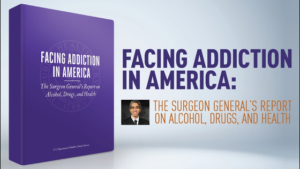
The Surgeon General’s Office reviewed nearly 600 programs and cited only 42 programs as evidence-based, that is – proven scientifically effective. LifeSkills Training was highlighted as one of three of the most effective school-based program for kids ages 10-18.

According to the report, effective prevention programs can delay early use, stop the progression to addiction, and avoid the need for treatment. After an extensive review of published research studies, the Surgeon General identified LST as a prevention program that successfully reduces the number of people who start using alcohol or drugs.  “One well-researched and widely used program is LifeSkills Training, a school-based program delivered over 3 years. Research has shown that this training delayed early use of alcohol, tobacco, and other substances…”

Over 30 years of rigorous research show LST as a method for preventing multiple problems—such as alcohol, tobacco, and illicit drug abuse, as well as delinquency and violence—using a single prevention program.  The centerpiece of the LST strategy is a curriculum designed to be taught by classroom teachers, health educators, prevention specialists, or student peer leaders.

“We know that effective prevention programs can produce a powerful public health benefit by reducing tobacco, alcohol, and illicit drug use. But this report also shows that evidence-based programs are highly underutilized,” said Dr. Gilbert J. Botvin, professor emeritus at Cornell University’s Weill Medical College and developer of the LST program. “Increased attention must be given to promoting the use of programs that work. A relatively small upfront investment in a proven prevention program such as LST can yield tremendous health and economic benefits.”

More Information: Read Full Article

Delaware Launches Addiction Prevention Campaign in 2017

Delaware ranks No. 1 for the rate at which doctors prescribe high-dose opioids compared to the rest of the country, according to the Centers for Disease Control and Prevention.

It’s a statistic that is both alarming to state officials and indicative of a larger problem in Delaware, where more than 100 people continue to die of drug overdoses each year.

It’s also one of the many reasons the state Division of Public Health will launch a $250,000 educational community outreach campaign in early 2017 aimed at prescribers, residents and the community at large to fight opioid addiction on the front lines.

“I think there’s a consensus among the prescribing community that we have an issue” in Delaware, said Dr. Karyl Rattay, director of the state Division of Public Health. “The reality is that practice change is happening too slow.”

The state Division of Substance Abuse and Mental Health, which the Division of Public Health works closely with, will also use just over $2 million per year for the next two years in federal grants to work on primary prevention and education regarding the misuse of prescription drugs, according to the state.

Drug overdose deaths have continued to grow, and experts openly denounce “scared straight” tactics often used in this programming. Rattay said the state is actively reviewing “LifeSkills Training,” a school-based program delivered over 3 years that is considered an evidence-based approach to educating and preventing addiction. The program was also cited in the Surgeon General’s report released last month.

More Information: Read Full Article

Marlborough: Schools Apply for Opioid Prevention Grant

MARLBOROUGH – Aiming to educate students on the dangers of opioid use and addiction, school officials are applying for a state youth opioid prevention grant to fund a life skills program and a part-time drug and alcohol counselor.

As the opioid epidemic continues to ravage the state and country, the Massachusetts Attorney General’s Office will award $500,000 in grants to support school-based prevention education initiatives to address opioid dependence and addiction.

Marc Kerble, executive director of secondary education, told school officials Tuesday the district is seeking a $23,694 grant to bring the Botvin LifeSkills program and curriculum to more than 1,500 students in grades 4-8. The program helps teaches students the necessary skills to resist peer pressure to smoke, drink and use drugs, as well as enable them to cope with anxiety and increase their knowledge of the consequences of substance abuse.

The students would participate in 15 weekly life skills sessions as part of the district’s wellness program, said Kerble.

An adult life skills program and parent training will compliment the student program. Kerble said the workshops will focus on opioid addiction and substance abuse.

The grant funds would also allow the district to hire a part-time licensed alcohol and drug counselor that would primarily be stationed at Hildreth School and Marlborough High School. The counselor will work with at-risk students. All students suspended for being under the influence of illegal substances must see the counselor as a condition of re-entry to the school, said Kerble.

Any potential grant funds would be used during the 2017-2018 school year, according to Kerble.

“If we didn’t have the need, we wouldn’t apply,” he said. “It’s going on in Marlborough. It’s going on in all communities.”

More Information: Read Full Article

Student Survey: Alcohol Use Down

CRESSON — Survey results of 4,100 Cambria County students indicate students aren’t drinking alcohol as much as they were in 2013, but on the other hand, they indicate parent disapproval of alcohol and drug use erodes from sixth grade to 12th grade.

“This is what kids are telling us. The trend is they aren’t drinking as much, but for seniors in high school all bets are off,” Cambria County President Commissioner Tom Chernisky said Tuesday during a presentation at the Cresson American Legion.

Chernisky chairs the Cambria County Prevention Coalition, which has been analyzing results of the 2015 Pennsylvania Youth Survey,’ or PAYS.

The analysis presented Tuesday suggests parents should safely dispose of prescription pills because they are not perceived as risky by some students. A majority of students who said they experimented with prescription pills said they found them at home.

Every two years the Pennsylvania Commission on Crime and Delinquency conducts a survey of students in sixth, eighth, 10th and 12th grades statewide to learn about their behavior, attitudes and knowledge concerning alcohol, tobacco and other drugs. The 2015 Pennsylvania Youth Survey, or PAYS, was taken by about 4,100 students from all 14 school districts in Cambria County.

Encouraged by a decline in alcohol and tobacco use, coalition members credited an evidence-based prevention program implemented in Cambria schools.

Sean Simler, research and data analyst for the United Way Laurel Highlands, said the Botvin LifeSkills Training program has been implemented in all middle school curriculum across Cambria and Somerset counties.

More Information: Read Full Article

Utah’s Opioid Crisis, Potential Solutions Take Center Stage at Ogden Summit

OGDEN — The data surrounding prescription opioid abuse in Utah is staggering. The State was fourth in the nation for prescription opioid overdose deaths between 2012 and 2014, according to the Utah Department of Health. In 2014, an average of 24 Utah adults died every month as a result of prescription opioid overdoses.

On Friday, the Weber County-sponsored Utah Prevention Summit highlighted substance abuse prevention services in Utah and included a presentation on the state’s opioid crisis.
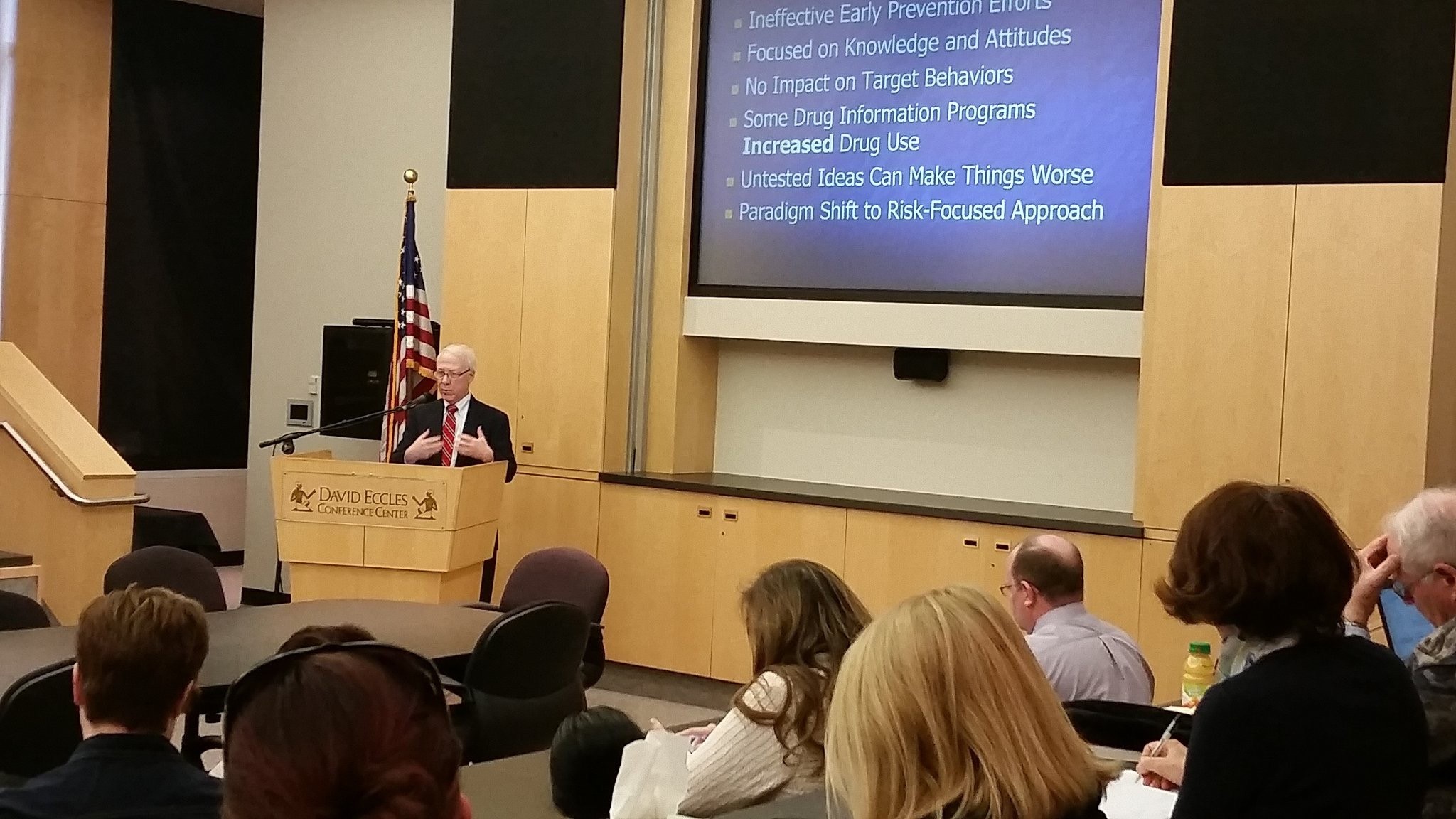
Friday’s summit also featured presentations from East Coast substance abuse experts Dr. Gilbert J. Botvin and Kat Allen.

Dr. Botvin is the developer of a student tobacco, alcohol and drug abuse prevention program called LifeSkills Training. He spoke Friday about the importance of rigorously tested, evidence-based prevention programs.

Dr. Botvin said it’s necessary to go beyond just teaching information and principles about the dangers of drug abuse. He says students must learn skills related to resisting social pressure, developing self-confidence, coping with stress and anxiety, and increasing knowledge of the immediate consequences of substance abuse.

More Information: Read Full Article