





Category Archives: Prevention News
Congratulations to the Newly Certified LifeSkills TOTs
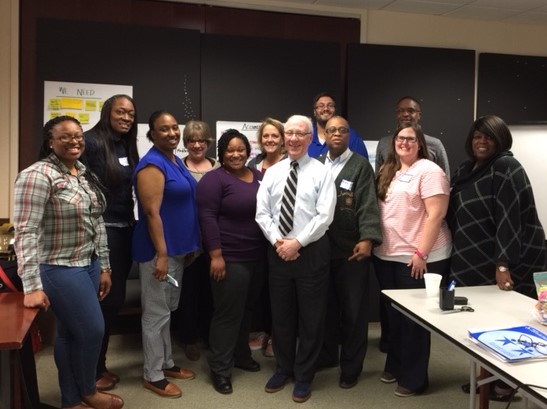
Congratulations to the participants of the White Plains, NY Training of Trainers (TOT) Workshop. During this two-day course led by Alayne MacArthur, National Health Promotion Associates (NHPA) Lead Trainer, participants from all over the U.S. learned how to deliver and conduct Lifeskills Provider Training Workshops for their respective organizations.
Customizable training services are available through National Health Promotion Associates, Inc. (NHPA), a health consulting, research, and development firm founded by Dr. Botvin, the developer of the Botvin LifeSkills Training (LST) program.
LifeSkills Provider Training Workshops prepare teachers, school counselors, prevention specialists, police officers, community youth educators, and other program providers to effectively implement the state-of-the-art prevention education activities and teaching strategies found in the LST program.
Each workshop plays an important role in enhancing the confidence and skill capacity of participants, resulting in optimal implementation of the LST program. While training is not required, it is highly recommended in order to achieve optimal program results. Training increases the effectiveness of the program and assists providers to develop implementation strategies for the programs comfort and fit in individual sites.
Teaching Marijuana Prevention – Professional Development workshop
Join us for this 2-part professional development workshop on 4/17 & 4/19. Space is limited!

The status of marijuana has undergone rapid legal and cultural shifts in recent years. These changes present specific challenges to school and community health educators. According to recent data, marijuana use exceeds cigarette use among 8th, 10th, and 12th grade students(1) and the perception of its harmful effects have lessened. This alarming trend represents a shift that many health educators seek to reverse and address with the youth they serve. In this workshop, participants will explore the social and legal trends in acceptance, the pharmacology of marijuana, and effective strategies for responding to the misconceptions adolescents hold about marijuana.
COURSE OBJECTIVES
- Examine trends in the social and legal acceptance of marijuana in the United States.
- Improve basic knowledge of the pharmacology of marijuana, including distinctions between medicinal and recreational uses.
- Consider effective strategies for responding to learner biases and misconceptions about social and legal trends.
- Develop specific responses to challenging questions that arise in school and community settings.
FORMAT: This course uses a combination of facilitator-led activities and independent-study.
SUGGESTED AUDIENCE: School or community-based educators providing instruction to learners in grades 6 – 12.
DATES AND TIMES:
- FACILITATOR SESSION 1: April 17, 2017 (3PM ET)
- FACILITATOR SESSION 2: April 19, 2017 (3PM ET)
(Independent study is to be completed between facilitator sessions.)
COST: $300.00 per participant (A certificate of completion will be provided at the conclusion of the workshop. Participants must attend all sessions and complete all work.)
More Information: Download registration form
North Oakland Community Coalition brings LST to Lake Orion, MI
North Oakland Community Coalition (NOCC) in Lake Orion, Michigan completed the inaugural session of their BotvinLifeSkills Training program, EmPOWER5 at Paint Creek Elementary School. Thanks to a grant from the Oakland County Community Mental Health Authority-Substance Use Disorder Services, NOCC was able to offer the program to all four 5thgrade classes during winter of 2017.

Based on preliminary data from the Botvin LifeSkills Training survey, most of the students said they learned about making good decisions, they learned to think about advertising in a different way, they learned how to confront a bully or to say no when offered drugs or tobacco and most said they “enjoyed the hour long sessions and learned a lot”
Mrs. Lauren Smith, Paint Creek principal, said “We are so appreciative of North Oakland Community Coalition to offer our 5th grade students this opportunity to expand and deepen their thinking for when they are faced with making difficult decisions. All students, at one time or another are in situations when the decisions they make will either help or hurt them as individuals. We believe in providing the best information for our students so they choose to make the decisions that will benefit themselves and others in their peer group.”
NOCC plans to offer the program to the new 5th grade students at Paint Creek in winter of 2018 but also plans to include another Lake Orion elementary school in autumn of 2017.
How Social Emotional Learning (SEL) is Supported through Botvin LifeSkills Training
Webinar: This webinar is designed to look at the LifeSkills Training (LST) program and the outcomes related to the five core competencies of social and emotional learning (SEL).
 Under the federal education law, Every Student Succeeds Act (ESSA), schools can expand their SEL programs that teach children self-control, to resolve conflicts, and to make responsible decisions and avoid risky behaviors. Research shows that these “soft skills” benefit children for their entire lives and can have a positive impact on schools.
Join us to learn how LifeSkills Training (LST) not only supports SEL competencies but also promotes healthy alternatives to risky behavior through activities designed to teach students the necessary skills to resist social (peer) pressures. LST helps students develop greater self-esteem and self-confidence, enables students to effectively cope with anxiety, and enhances their decision-making and problem-solving skills.
Duration: 60 minutes
About the presenter: A graduate of Penn State University, Kim Williams is committed to enhancing the lives of youth with her extensive background in evidence-based prevention program implementation. A dynamic professional who has worked in schools, non-profits, and university statewide support organizations, Kim currently trains future implementers of the LifeSkills Training program as part of the National Health Promotion Associates national training cadre. Kim has focused on social and emotional learning through her work with the Promoting Alternative THinking Strategies (PATHS®) program as a national and international trainer. Her focus concentrates on translating evidence-based program research practices into best practices in community and school setting program implementation.
Register for this webinar: Tuesday, April 11, 2017 3:00 PM – 4:00 PM EDT . After registering you will receive a confirmation email containing information about joining the webinar. Space is limited.
Botvin LifeSkills Training Goes to Kenya
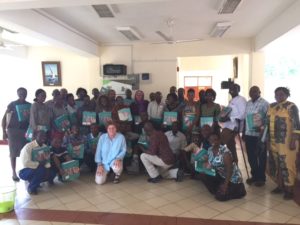
Congratulations to the teachers who recently trained to deliver the Botvin LifeSkills Training (LST) program in Kenya last month!
The United Nations Office on Drugs and Crime (UNODC), Regional Office for Eastern Africa (ROEA) along with theNational Authority for the Campaign against Alcohol and Drug Abuse (NACADA) helped bring the LST program to the teachers and children in Kenya. LifeSkills Trainer Alayne MacArthur trained the teachers on how to effectively implement the state-of-the-art prevention education activities and teaching strategies found in the LST program. The teaching techniques of facilitation and feedback, coaching of cognitive and behavioral skills, and behavioral rehearsal ensure that students fully understand and can demonstrate the key skills taught in the curriculum.

Middle School students in Kenya are learning to develop skills that help them enhance their self-esteem, develop problem-solving abilities, reduce stress and anxiety, and manage anger. The middle-schoolers are also learning how to meet personal challenges such as overcoming shyness, communicating clearly, building relationships, and avoiding violence. These skills combined with the drug resistance skills found in the LifeSkills Training program help students build effective defenses against pressures to use tobacco, alcohol, and other drugs.
“The fact that teachers halfway around the world are bringing the LifeSkills Training program to life in their classrooms and the profound impact our work can have on the lives of so many children…that’s what makes our work so important and so rewarding,” said Dr. Gilbert J. Botvin, professor emeritus at Cornell University’s Weill Medical College and developer of the LifeSkills Training program.
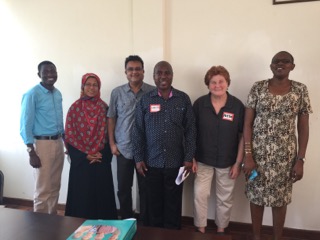
Project leadership team:
Boniface Wilunda – UNODC
Dr. Saade Abdallah – UNODC
Dr. Fayzal Sulliman – UNODC
George Karisa – NACADA
Alayne MacArthur – LifeSkills Trainer
Susan Maua – NACADA
Deerfield District 109 Implements LST with Students AND Parents
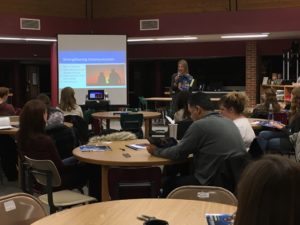
Prevention works when communities come together like this! Deerfield Public Schools District 109 in partnership with CTAD – Community: The Anti-Drug have been implementing the Botvin LifeSkills Training program with their students AND parents thanks to The Jordan Michael Filler Foundation.
After losing their son Jordan to a heroin overdose in early 2014, Mark and Julie Filler made the courageous choice to bring the family’s eight-year battle into the open with the hope of preventing similar tragedies.
“The parents have to have the same tools, the same communications skills, the same language as the student,” said Julie Filler. “I was that parent and I didn’t have those skills. You think you are doing everything right.”
More Information: Watch video