


Category Archives: Prevention News

Supporting Drug-free Communities in South Dakota

“The Drug-Free Communities Support Program make a vital difference at the community level – reaching out to people where they live with the help they need to prevent substance use,” said Substance Abuse and Mental Health Services Administration (SAMHSA) Principal Deputy Administrator Kana Enomoto. “SAMHSA is honored to join the Office of National Drug Control Policy in working with community coalitions across the nation to create healthy and drug-free environments for children, youth, and families.”

Locally, the SCC’s main focus is on substance prevention and youth leadership development in middle and high school students.

“While the SCC mainly targets all of the middle and high school age kids, we also include messaging and prevention initiatives towards parents, businesses, elementary age children, and college age students,” Melissa Currier, SCC executive director, said. She listed some of the events and activities that the SCC organizes and supports, including the Downtown Friday Nights ID Tent, Middle School Youth Leadership Conference, the Youth and Family Resource Guide, LifeSkills Training Prevention Curriculum, Red Ribbon Week, and more.

The grant will assist with these projects, which impact many area youth. For example, Currier said, Red Ribbon activities take place at all Spearfish schools; the Youth Leadership Conference has typically 100-120 per year from all local middle schools; the LifeSkills TrainingCurriculum is given to all students in Creekside Elementary and Spearfish Middle School.

More Information: Read Full Article

Opioid Awareness Education Plan Passes Senate in PA

HARRISBURG — Legislation to create a new opioid awareness program for students in middle and high school was approved unanimously by the state Senate and is now headed to the House of Representatives for consideration.

Sponsored by Pennsylvania Senator John N. Wozniak, the proposal would require the Department of Education in consultation with the state departments of health and drug and alcohol programs to craft an opioid awareness curriculum for public and private schools. The program is targeted to students in grades six through 12.

“Given the opioid crisis, we need to do all we can to ensure that students are well aware of the dangers associated with opioid abuse,” Wozniak said. “My hope is that age-appropriate materials can be developed that clearly explain opioids and how they can be misused.

“We need to start the education process early and keep reminding students of the risks of opioid abuse.”

Wozniak’s proposal is a part of a legislative package offered by Senate Democrats to address opioid abuse. He said that his efforts were bolstered by a piece written in the Johnstown Tribune-Democrat that reported on the success of Botvin LifeSkills Training.

“The article highlighted a study indicating that area youth were retaining education related to teen substance abuse,” Wozniak said. “That is encouraging and helps underscore the need to promote education for students.

“In addition, in multiple hearings the Center for Rural Pennsylvania received clear direction about the need and success of an education program aimed at students in middle school.”

More Information: Read Full Article

LifeSkills Trains Players and Coaches in Guam
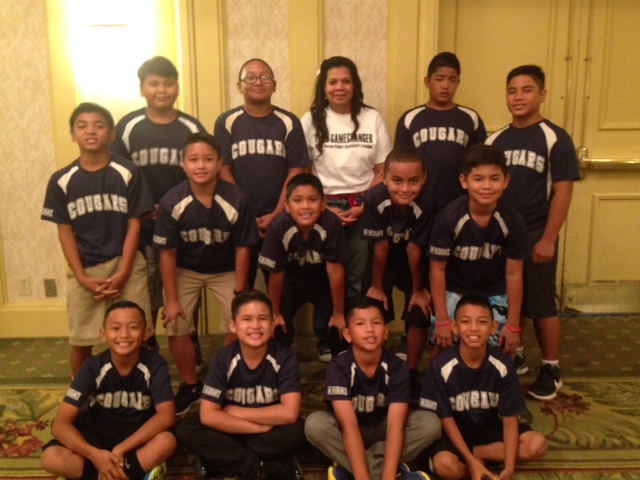
Liz Silva Guam

Guam – PONY Baseball closed out its inaugural season with a weekend of LifeSkills Training and a banquet at the Pacific Star Resort in Tumon, recognizing and honoring this year’s participants and top performers.

The awards banquet highlighted a two-day LifeSkills Training workshop led by LifeSkills Trainer Liz Silva, for the PONY league players and coaches. The Guam Amateur Baseball Association is a member of the Prevention, Education and Community Empowerment, or PEACE, Partnership for success. Using the PEACE plan, Guam Amateur Baseball and the PONY league emphasize the importance of an alcohol- and tobacco-free lifestyle.

“We’re excited to continue to grow our GABA/PONY footprint in the important area of healthy youth sports activities,” said Bill Bennett, lead instructor with Guam Baseball Academy. “At GBA, we believe that sports matter and providing access to sports is a key priority for us. The recent affiliation of Guam PONY Baseball and Softball will help us to deliver an unparalleled quality experience for Guam youth baseball.”

Editorial: Support United Way’s Mission to Enhance Region

The United Way of the Laurel Highlands has set a lofty goal: raising $1.5 million during the 2016 campaign.

But the organization has always had a significant mission – making our region better by addressing issues such as education, hunger and addiction through the work of local agencies.

The United Way announced its campaign goal last week while confirming that the 1889 Foundation would again provide a $500,000 matching grant to help kick-start the effort.

“The United Way … is changing our communities for the better and making them places people want to live in, places people want to come back to, and places where people want to continue to raise their families,” Craig Zettle, vice president of Botvin LifeSkills Training, said during a presentation about his United Way-supported program.

United Way CEO Bill McKinney reiterated that the organization would use money raised to help fund evidence-based programs, and especially those serving three key areas: early childhood development, parental engagement and drug-and-alcohol abuse prevention.

Botvin works to strengthen students in areas such as self-management, social skills and drug resistance, Zettle said.

McKinney said the Botvin curriculum is now used for middle school students in 24 school districts across Somerset and Cambria counties. The long-term goal is to expand its impact to third through eighth grades.

“In my opinion, we need to do everything possible to make our community safe, and starting to focus on young people, early in life, is a good thing,” said Ed Sheehan Jr., president and CEO of Concurrent Technologies Corp. and former chairman of the United Way of the Laurel Highlands board of directors.

More Information: Read Full Article

Somerset Students Taught to Avoid Drugs, Tobacco, and Alcohol

Craig Zettle, vice president of Botvin LifeSkills Training in White Plains, New York, told sixth-graders at Somerset Area Junior High School Wednesday that decision-making, peer pressure and advertising all work together.

“My challenge to you is to pay attention to everything around you,” he said to a class taught by Ashley Oglevee and Bill Correll. “When you go home tonight, pick an ad and find one thing that they are trying to convince you. Advertising for alcohol and tobacco will try to convince you that it is a good idea to try that. Find the techniques that they use and become smarter when people try to convince you of something.”

More Information: Read Full Article

United Way of Laurel Highlands Aims to Raise $1.5 Million for Prevention

United Way of the Laurel Highlands announced a $1.5 million 2016 fundraising goal Wednesday – and pointed to one of its top programs as an example of how donations are helping the community.

United Way of Laurel HighlandsDuring a campaign kickoff at the University of Pittsburgh at Johnstown, United Way CEO Bill McKinney said money raised would be used to fund evidence-based programs in support of the charity’s three main focuses: early childhood development, parental engagement and drug-and-alcohol abuse prevention.

In particular, United Way plans to continue expanding the impact of Botvin LifeSkills Training, a substance abuse prevention program, in schools across Cambria and Somerset counties.

Keynote speaker Craig Zettle, vice president of Botvin LifeSkills Training, said his company’s program is a step ahead of anti-drug campaigns of yesteryear such as the famous 1980s spot that showed an egg cooking in a pan, accompanied by the slogan, “This is your brain on drugs. Any questions?”
Early campaigns were memorable and had some value in that they raised awareness, but ultimately did little to change behaviors. They were largely ineffective at reducing drug use, Zettle said.

In contrast, he said, Botvin LifeSkills Training is a broad-based curriculum – not an assembly or a series of lectures – designed to teach students personal self-management skills, general social skills and drug resistance skills. Data suggests that students with these skills are less likely to abuse drugs, drive recklessly, commit sexual assault and bully others, Zettle added.

“The United Way… is really leading the charge in terms of evidence-based prevention,” Zettle said. “It’s changing our communities for the better and making them places people want to live in, places people want to come back to, and places where people want to continue to raise their families.”

McKinney said when his charity started looking for a substance abuse prevention program to implement in the Laurel Highlands, leaders learned that Botvin LifeSkills Training was the top-ranked evidence-based program in the United States.

Right now, McKinney said, Botvin LifeSkills Training is being taught to middle school students in all 24 school districts in Cambria and Somerset counties. In the future, funded in part by this year’s fundraising campaign, the program will be expanded to elementary and high schools, he said.

McKinney said that it would cost about $850,000 to institute the program in third through eighth grades throughout Cambria and Somerset counties.

Based on the “promising” data his charity has collected since 2011, when Botvin LifeSkills Training program was first introduced, McKinney believes the program has been just as successful in the Laurel Highlands as Zettle said it has been throughout the country.

More Information: Read Full Article

Christine Gardner Comes Out of Retirement to Fight the Heroin Epidemic

“If we’re going to solve this problem, it’s through grassroots community involvement,” Christine Gardner says. “Since we held our first town hall meeting in October, people have been activated and they’re in touch with each other. The community is involved because they know now they can do something about addiction. And we’re moving forward. This is only the beginning.”

It was standing room only in the courtroom last October, when 384 people came to the Greene County Courthouse, drawn by their concern about the epidemic that was bringing addiction and death into their lives. They came to ask what could be done, and Coalition for a Brighter Greene was formed. But the months of planning, perseverance and happy coincidences that brought Gardner out of retirement to help organize that meeting and move beyond into a more hopeful future is a story in itself.

After retiring in 2011 from a career managing economic development programs and business incubators in Greene County and elsewhere, Gardner still did occasional private consulting from her home. Three years ago, she and husband Rex were living on their 200-acre farm near Jefferson and traveling whenever the mood struck when the addiction epidemic came calling. Gardner’s organizing smarts and spiritual strength were about to be put to good use.

“I helped organize a meeting of about 70 people from churches and families and we began meeting regularly,” Gardner says. “So many people have been personally touched by this epidemic. I don’t have children, but I lost a nephew to heroin. He was a straight A kid. It breaks your heart.”

Superintendents in all five school districts have made drug prevention part of the curriculum for third through ninth grades beginning with the 2016-17 school year, Gardner says. “We did the research. LifeSkills Training is the number one program in the country for results, now we have it.”

Coalition for a Brighter Greene holds quarterly meetings at the courthouse to keep the momentum going. “Our input has reached state and federal levels and additional resources are being mounted, including private and corporate dollars. The next town hall meeting is October 6, and everyone is welcome.”

More Information: Read Full Article

An Open Dialogue at NPN on Issues in Substance Misuse Prevention Research
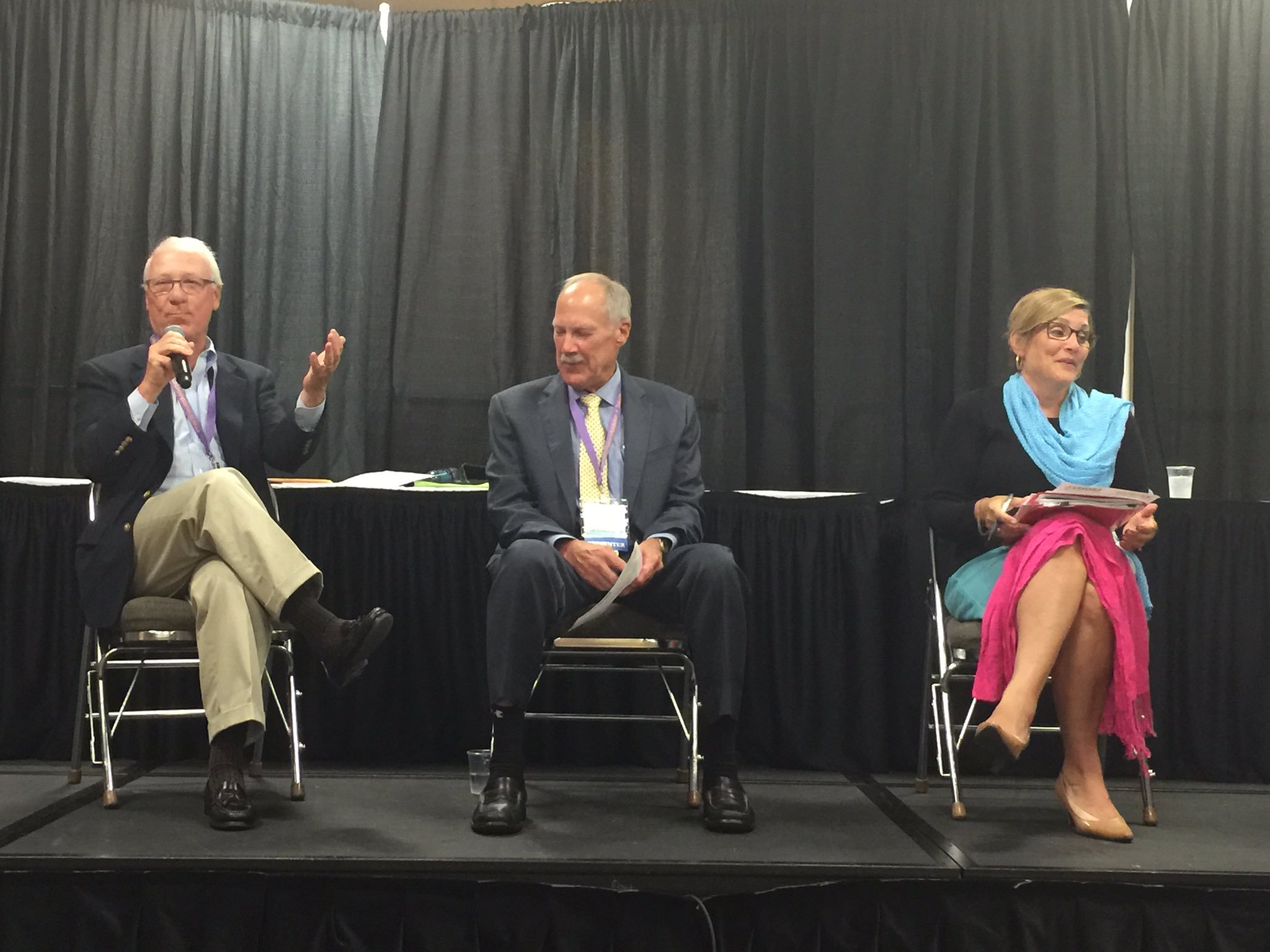
NPN

BUFFALO, NY – National Prevention Network Conference, Power Session

Panelists:

  • Frances Harding, Director, CSAP, SAMHSA/CSAP
  • J. David Hawkins, Ph.D., Professor, Social Work Endowed Professor of Prevention, University of Washington School of Social Work
  • Gilbert J. Botvin, Ph.D., Professor Emeritus, Department of Healthcare Policy and Research, Weill Cornell Medical College, Cornell University

Moderator:   Jorielle Brown, Ph.D., Division Director, CSAP/DSD, SAMHSA

In the substance misuse prevention field, progress is being made to reduce underage drinking, tobacco and marijuana use among youth, and nonmedical use of prescription pain relievers among adolescents, but we need to enhance and maintain prevention research efforts to sustain our gains and continue to move the needle in the right direction. This interactive session followed a talk show- type format, in which the panelists each provided opening remarks related to current and emerging issues in substance misuse prevention research, followed by a facilitated discussion with the moderator, and a question-and-answer period with the audience.

Fall River Middle Schools’ See New Health Curricula Incorporating Opioid Prevention

FALL RIVER, MA — Students in grades 6 through 8 will see a standard health curriculum across all schools, beginning this fall. That curriculum will include substance abuse prevention education.

The School Committee last week voted to approve the change, which had been proposed by school officials.

In the past school year, only two schools serving middle school grades, Kuss and Morton, had health curricula that were taught. John J. Doran Community School, Henry Lord Community School, Talbot Innovation Middle School and Resiliency Middle School did not.

Now all schools will have health taught during physical education periods at least once a week, during the second and third terms of the school year, according to the curriculum.

The district’s push to bring health back into middle schools dovetails with the state’s action plan to combat the ongoing opioid abuse epidemic.

The health curriculum the School Committee adopted incorporates a substance abuse prevention program called “Botvin LifeSkills.” It’s based on teaching students about self-esteem, decision-making skills, stress, peer pressure and assertiveness.

More Information: Read Full Article

Sexual Assault Prevention Summit Offers Multiple Tactics to Prevent Sexual Assault

Dr. Andra Tharp, Dr. Gilbert Botvin, and Dr. Dorothy Edwards spoke to 150 Airmen about sexual assault prevention models, as well as strategies to overcome prevention barriers and risk factors through life skills and effective bystander intervention and training.

The speakers represent the many leaders and experts who presented current research and perspectives to participants during the five-day summit designed to engage Airmen of varying ranks and career fields in a conversation about sexual assault in the Air Force.

“Sexual violence is a significant public health problem,” said Tharp, a health scientist in the Centers for Disease Control and Prevention’s Division of Violence Prevention. “It really does have a ripple effect through individual lives and through an entire community.”

According to Tharp, a public health approach to sexual assault prevention includes defining the problem, identifying risk and protective factors, and developing effective strategies to stop sexual violence before it starts.

Sexual violence and related problem behaviors are the result of the complex interaction of risk factors, such as alcohol and drug use, poor decision making, peer pressure and media influence, said Botvin, a Ph.D. at Weill Cornell Medical College.

“There is no single cause of violence,” Tharp emphasized. “It’s the confluence of risk factors that causes violence.”

Edwards, the executive director of Green Dot Etcetera said the external risk factors are compounded by individual barriers to taking action. Every person has their own personal barriers to overcome, such as shyness or fear.

Successful prevention strategies will leverage protective measures, such as emotional health, empathy and connectedness to offset risk factors, Tharp said. Comprehensive approaches will impact individuals to communities for a “surround sound effect.”

Botvin expressed that each intervention designed to offset these external and internal risks should be developed to impact attitudes, knowledge and behaviors. The life skills approach decreases vulnerability to risks by bolstering social skills, teaching self-management, and increasing resilience.

“We do not assume that people know how to cope with stress and anxiety, and we provide them with specific skills,” Botvin said. “The skills I’m talking about are not taught in any systematic way. All of us kind of blunder through life, learning some of these things if we’re lucky.”

All the speakers agreed that an effective sexual violence prevention strategy will be multi-faceted. There is no single magic bullet that will work. Consequently, each of these strategies will only be effective if Airmen own the process.

“There is no policy, order or directive that can force an Airman to find some way to step in and do something,” Edwards said. “Prevention only works, we’re only going to get where we want to be, if we can engage intrinsic motivation.”

Read full article: Sexual Assault Prevention Summit offers multiple tactics to prevent sexual assault