

Category Archives: Prevention News

Dr. Botvin Keynotes International Congress in Barcelona

Dr. Gilbert J. Botvin delivered the keynote address at the 2nd International Congress of Clinical and Health Psychology on Children and Adolescents on November 17, 2016, in Barcelona. More than 700 participants from 50 countries gathered for the scientific meeting hosted by AITANA, a research group from the Department of Health Psychology at Miguel Hernández University in Elche, Spain.
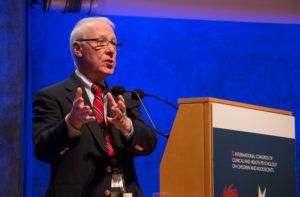
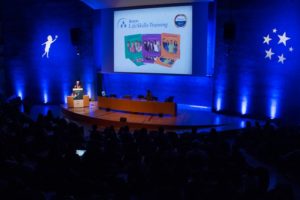
 

Clinical and health psychologists from all over the world learned what makes the Botvin LifeSkills Training (LST) program the top-rated prevention program in the United States.  Dr. Botvin, professor emeritus at Cornell University’s Weill Medical College, is an internationally renowned prevention expert and developer of the highly acclaimed LST substance abuse and violence prevention program.

In his keynote, Dr. Botvin described the LST prevention approach, explained its theory, and summarized over 30 years of rigorous research documenting its effectiveness. He also discussed the unique benefits of LST as a method for preventing multiple problems—such as alcohol, tobacco, and illicit drug abuse, as well as opioid misuse, violence, and delinquency—using a single prevention approach.  The centerpiece of the LST strategy is a curriculum designed to be taught by classroom teachers, health educators, prevention specialists, or student peer leaders.

“It was a great honor and privilege to visit Barcelona and participate in a conference committed to improving the health and well-being of the world youth,” said Dr. Botvin. “I also want to commend AITANA for their support of the conference and dedication to life skills education.”

Youth Substance Use Survey finds Reasons for Optimism

The region’s drug epidemic might seem like an ever-growing problem as overdose totals continue to climb in the Cambria-Somerset region.

But five years into an evidence-based program aimed at educating students about the real-life consequences of drugs, new survey results indicate the message is reaching the at-risk middle schoolers who were initially targeted.

Compared with results collected during Botvin LifeSkills’ 2011 launch, there was an across-the-board drop in drug and alcohol use for Cambria and Somerset county eighth-graders, Pennsylvania Youth Survey data show.

That’s assuring news, given that United Way of the Laurel Highlands and project partners have expanded the Botvin program locally from reaching hundreds of students to more than 7,000 this year across the two-county area, United Way Research and Data Analyst Sean Simler said.

He said Botvin program supporters had been awaiting 2015 results because it was the first time they had a sample group – in this case last year’s area eighth-graders – that included thousands of students who participated in three consecutive years of the “life skills” training.

Among the highlights: Somerset and Cambria county eighth-graders reported more than 50 percent drops in binge drinking compared to counterparts in 2011 and 49 and 37 percent drops comparing those indicating they had drunk within a month of taking the survey

In Somerset County, where 564 student surveys were reviewed, the number of eighth-graders who indicated they’d previously used inhalants was below 3 percent, compared to more than 11.7 percent in 2011, the data showed. The drop was nearly as steep in Cambria County, where 936 students were surveyed. Five percent indicated they’d tried inhalants, compared to 11.2 percent five years earlier.

Drug ‘gateways’

Statistics tied to prescription drugs and “other drugs” – a category that includes heroin, crack cocaine and ecstasy – also dropped significantly in both counties from 2011 to 2015.

The high-percentage reductions, however, also reflect that only 1 percent or so, at most, indicated they’d tried those drugs in 2011. In most cases, new results showed lifetime and 30-day use dropped by a fraction of a point.

In Cambria County, for example, the lifetime use of “other drugs” dropped from 0.4 percent to 0.2 percent, the data showed.

The surveys are anonymous to encourage students to feel comfortable taking them.

But Pennsylvania Youth Survey creators also recognize some students might not take the questionnaire seriously or may decide to embellish their life histories, Simler said.

Questions were added with erroneous answers to flag suspicious surveys.

“There’s questions with false drug names. Answers that couldn’t be possible,” he said.

“There’s a number of completed surveys that end up thrown out.”

Simler said local drug prevention officials were encouraged to see the reported use of heavy drugs is on the decline, rather than an upswing at that early age.

“We’re trying to reach them before those drugs enter the picture … but a lot of these drugs we’re concerned about at this level are considered gateways to that next level,” Simler said.

‘A long process’

Far too many people in the region, particularly those in their 20s to 40s, are already struggling on that path.

Simler and project partners are hopeful programs such as Botvin LifeSkills Training will make a difference as time goes on and those taking the courses go through school and become adults.

Botvin was created by a Cornell University professor and prevention expert who developed the program around fostering confidence, self-esteem and the ability to make good decisions – traits youths need to resist the peer pressure to abuse drugs, leaders say.

Students are taught coping mechanisms to combat stressful situations.

Simler said he visited a Somerset County class recently and observed middle schoolers actively engaged in a Botvin course, looking for hidden messages in TV commercials and interpreting their “buy it” or “try it” messages.

This year’s Pennsylvania Youth Survey Results are an indicator that a program that has shown results in other regions can work here, too, Simler said.

“You can really see a glaring difference between the 2011 and 2015 surveys, and that’s great,” he said.

But Simler has no doubt it will take years to reverse a drug trend that didn’t spark overnight.

“It’s a long process. But we’re just getting started – we’re still growing (Botvin) in schools as much as possible,” he said.

‘They become advocates’

Currently, more than 7,500 sixth- through eighth-graders in 23 of 24 Cambria and Somerset counties’ schools – Northern Cambria is the lone exception – have implemented the weekly program into one or more grade levels.

But plenty of gaps remain within grades 6 through 8, leaders said.

Some schools are still working to expand the plan from one grade level to three levels, Simler said. He estimated nearly 70 percent of the two-county area’s grades 6 through 8 students will receive Botvin training this year, and he hopes to see all 11,000 receiving the training a few years from now.

If all goes well, the United Way-funded program would be expanded to other grades, if additional funding can be found for the move, Simler said.

United Way of the Laurel Highlands CEO Bill McKinney said efforts to make it happen are already underway.

“We are working with many community organizations, including all 24 school districts (in Cambria and Somerset counties), to expand this programming from third grade through eighth grade,” McKinney said, adding that Botvin’s “proven results” make it worthy.

“We have tracked and measured this program’s success with our youth, and our early analysis indicates a significant reduction in risky behavior including tobacco alcohol and drug use.”

The earlier the message can be given to students, “the sooner they are going to start to realize this is something important,” Simler said.

“When that happens, they become advocates, too,” Simler said. “They can go to friends and say ‘Hey, you shouldn’t do that.’ ”

David Hurst is a reporter for The Tribune-Democrat. He can be reached at (814) 532-5053. Follow him on Twitter @TDDavidHurst and Instagram @TDDavidHurst.

More Information: Read Full Article

Just Say ‘Know’: Drug Education Changing with the Times 

‘Grow and develop’

More than a half-dozen prevention-related programs are now offered in the Pennsylvania region by partners such as The Learning Lamp, Remembering Adam and the Alternative Community Resource Program.

Often funded by state grants and supported by nonprofits such as the United Way and the 1889 Foundation, many of those programs were developed and tested for specific age groups.

Botvin LifeSkills Training has become the area’s most visible example since it was implemented in 2011-12. The Learning Lamp, ACRP and district teachers in some schools deliver Botvin to the sixth through eighth grades, focusing on ways to build self-esteem and self-confidence, how to cope with anxiety and how to better comprehend the wide-reaching consequences of substance abuse, Cambria County Drug and Alcohol Case Manager Fred Oliveros said.

The middle school years can be difficult with or without the lure of drugs, he said.

Botvin LifeSkills builds traits that help students form a positive self-image and make sound decisions, Shanksville-Stonycreek Superintendent Samuel Romesberg said.

“The structure of the program is ‘hands-on’ and experimental,” he said, noting that rather than listening to lectures, students actively participate in role-playing activities and strategy sessions to navigate potentially stressful situations.

“It is a multi-tiered program that addresses many aspects of a student’s life as they grow and develop into an adult,” he said.

All 11 Somerset County schools participate in the Botvin program for one or more grades, along with Blacklick Valley, Cambria Heights, Central Cambria, Conemaugh Valley, Ferndale Area, Forest Hills, Glendale Area, Greater Johnstown, Holy Name school, Penn Cambria, Portage Area, Richland and Westmont Hilltop in Cambria County.

More Information: Read Full Article

Berkshire DA Fights Opioid Epidemic with School Program

Opiate overdoses kill about five people a day in Massachusetts.

The Berkshire District Attorney’s office hopes to help combat this epidemic by potentially expanding its substance abuse prevention program, LifeSkills Training, in local schools through a possible grant from Attorney General Maura Healey’s office.

Earlier this month, Healey’s office announced a $500,000 statewide Youth Opioid Prevention grant program, funded with part of a settlement by CVS Pharmacy, to support school-based prevention efforts addressing opioid addiction and dependence. If selected, the DA’s office could receive funding by February.

LifeSkills, a worldwide program developed by an expert on substance abuse prevention, has expanded in Berkshire County since its pilot sixth-grade program at Lee Elementary School in 2015, and is currently offered at 12 county schools, according to Berkshire District Attorney David F. Capeless.

In 2015, Gov. Charlie Baker’s opioid working group recommended that school districts implement prevention programs like LifeSkills Training. After extensive research, the Berkshire District Attorney’s Office determined that LifeSkills would be beneficial to the county, said Carol Mulcahy, director of community outreach and education for the DA’s office.

Three components – drug resistance, personal self-management and general social skills – make up LifeSkills’ eight- to 18-week program, which teaches self-esteem, stress management, communication and coping skills as well as drug resistance, she said.

The DA’s office would use grant funding for additional staff, training and supplies. The program has been extremely well-received, creating demand that strains the office’s resources, Capeless said.

“We want to be able to … have the funds to provide the tools and resources to anybody in Berkshire County who wants to do this,” Mulcahy said. Mulcahy, along with three other staff members, teaches the program in local schools.

Ideally, the DA’s office would be a training and materials resource for a countywide LifeSkills program from at least third- to eighth grade, Capeless said.

“We can use [a grant] to grow, create a full-fledged communitywide program, or even better, a communitywide attitude toward substance abuse,” he said. “One of the biggest obstacles that we face is a community that is lenient toward the use of drugs.”

The high rate of drug overdoses in Berkshire County is troubling, he said.

“Everybody knows we have to somehow, piece by piece, turn this around,” he said. “Education and training are part of that.”

LifeSkills is unique in that it goes beyond lecturing students. The program utilizes “behavioral rehearsal” strategies such as role-playing exercises to practice skills taught in the program, Mulcahy said.

Students looked forward to these hands-on exercises – even on Friday afternoons at Lee Elementary School.

“The students enjoy [the exercises] – that’s what they remember,” Mulcahy said. “It’s remarkable how you can kind of see a little light go off. I came back in awe when I saw the practical application of this program.”

The program helps students understand how substances affect them personally and socially as well as biologically. The social elements of LifeSkills helps develop the students as people, enabling them to make proper decisions in all areas, Capeless said.

More Information: Read full article

Putting Addiction-Prevention Program Into Action

At South Park Elementary School in Deerfield, Ill., teaching kids to resist drugs, alcohol and cigarettes involves a lot of role-playing and class discussion.

The school, like others in District 109, uses Botvin LifeSkills Training, a program designed to help kids resist peer pressure and make good decisions.
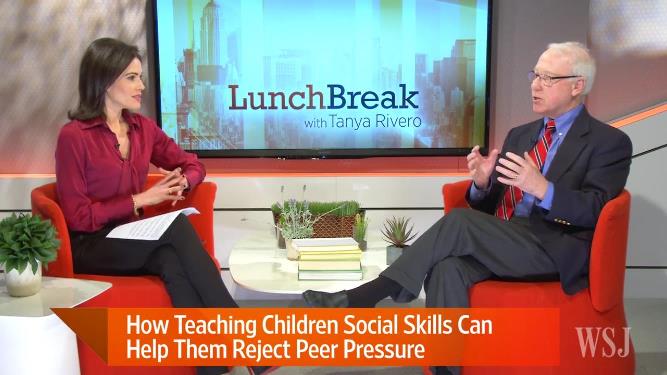
Dr. Botvin

In a recent lesson on assertiveness, fifth-grade teacher Faith Keidan says she first defined the difference between passive, aggressive and assertive responses, and then asked students to role-play them. The scenario: responding to a sibling who borrowed a videogame without asking.

Then she explained why being assertive is a good thing: because it helps people know what to say to get out of bad situations.

In another lesson on resisting cigarettes and marijuana, the kids discussed the economic history of tobacco and how it gained acceptance by being a big part of the economy. She also asked students to suggest five laws that would decrease tobacco use.

Joanna Klopfer, assistant director for student services in the district, says it tested the Botvin program in its fifth-grade classes before extending it to fourth and sixth grades, with plans for seventh and eighth grade down the road.

More Information: Read Full Article

WSJ: Schools Step Up Efforts to Fight Opioid Abuse

WSJ

Many U.S. schools are ramping up campaigns to prevent opioid abuse among students as evidence mounts of a growing problem.

Some are inviting pharmacists to schools to convey the dangers of prescription pills. Others are offering emergency counseling via text message. In some regions, schools are teaching a substance-abuse-prevention program developed at Cornell University to students as young as fourth grade.

The widening crisis of addiction to heroin, prescription painkillers and other opioids “has been very scary, very serious,” says Michael Lubelfeld, superintendent of an elementary- and middle-school district in Deerfield, Ill. “We want to do everything as a community to start addressing it at age 10, 11, 12, so when they are 23 they aren’t going to be addicted.”
Dr. Botvin

The Jordan Michael Filler Foundation, established by the family of a young man who died of a heroin overdose in 2014, helped finance the cost of the texting service for eight schools in Highland Park and Deerfield, Ill. The foundation also helped fund a substance-abuse-prevention program, called Botvin LifeSkills Training, in the schools.

Botvin LifeSkills Training was developed by Gilbert Botvin, a professor emeritus at Weill Cornell Medical College in New York. Conducted in as many as 15 sessions over several weeks, the program teaches kids the traits they need to resist pressure to abuse substances, including self-esteem and strong problem-solving and decision-making skills.

One study in middle-school children in Iowa and Pennsylvania found that use of the Botvin program “significantly reduced” the chances of students taking prescription opioids for nonmedical purposes by grade 12, compared with a control group that didn’t receive the training, according to results published in 2014 in the journal Preventive Medicine.

Julie Filler, the mother of the young man who died, said it took a while to convince some of the schools to accept the help. “The communities don’t want to talk about it because they want people to buy houses here, ” she says of drug addiction.

More Information: Read Full Article

Botvin LifeSkills Training Addresses Opioid Crisis with New Prescription Drug Module

WHITE PLAINS, N.Y. — Schools and communities are searching for new tools to combat the prescription drug and opioid crisis, now regarded as a national emergency. National Health Promotion Associates (NHPA), the researchers behind Botvin LifeSkills Training, have risen to the challenge of helping youth avoid the dangers of prescription drug or opioid misuse/abuse and are excited to announce the release of a Prescription Drug Abuse Prevention Module.

The new LST Prescription Drug Abuse Prevention Module gives teens the skills and knowledge necessary to help them avoid the misuse/abuse of opioids and prescription drugs.  It will be available in a variety of formats that will allow for both online and classroom delivery. The new module is ideal for school districts, community-based organizations, and agencies serving students ages 11 – 14. The module is flexible enough to enhance the award-winning Botvin LifeSkills Training program or to be integrated into existing prevention programming.

The new module is designed to further enhance the effectiveness of the LST Middle School program, which has been proven to reduce opioid and prescription drug misuse.   A study funded by National Institute on Drug Abuse (NIDA) showed that the LST Middle School program delivered in 7th grade classrooms helped students avoid misusing/abusing prescriptions opioids and other drugs throughout their teen years. NHPA researchers say that the addition of this new module will reinforce the already effective LST program.

“NHPA is a leader in quality, effective evidence-based prevention education.  While our core Middle School program already has evidence demonstrating its effectiveness in reducing opioid and prescription drug misuse and abuse, the addition of this new module will help to specifically address the epidemic facing our nation.   The LST program has been tested through more than 30 years of rigorous scientific research and has identified prevention approaches that are effective, produce lasting results, and can save taxpayers a good deal of money,” said Dr. Gilbert J. Botvin, professor emeritus at Cornell University’s Weill Medical College and developer of the LST program. “Let’s stop prescription opioid abuse before it begins. Now is the time to unleash the power of prevention.”

More than 35 federally funded studies have demonstrated that LST protects teens against tobacco, alcohol, substance use, and other problem behaviors such as delinquency and violence. According to a 2013 report on the economic benefit of evidence-based prevention programs, LST produced a $38 benefit for every $1 invested in terms of reduced corrections costs, welfare and social services burden, drug and mental health treatment; and increased employment and tax revenue. LST had the highest return on investment of all substance abuse prevention curricula studied.

NPR: New Drug-Use Prevention Program Comes to Pueblo, CO
New Drug-Use Prevention Program Comes to Pueblo, COThere’s a new drug-use prevention program aimed at middle schoolers in Pueblo. The new program comes from Botvin LifeSkills, a national organization that focuses on substance abuse prevention. The program will be implemented throughout Pueblo County’s School District 70 middle schools this fall.

Katie Davis directs Operations and Health Promotion at the Pueblo City-County Health Department, which is introducing the program in the schools. She says it has a different approach from other curriculums, encouraging youth investment in community, school, and family.

“Really, this program promotes healthy alternatives to risky behavior instead of just teaching about the dangers of drug use,” she says.

Rates of drug use, tobacco use, and binge drinking among Pueblo County high school students are all currently higher than the state average, according to the Colorado Department of Public Health and Environment. Davis says there is a spike in these behaviors after students enter high school, so the county hopes to instill skills early, before students leave middle school.

Fundraiser for Drug, Alcohol, and Bullying Prevention 

CARBONDALE — The Carbondale PROmoting School – community – university Partnerships to Enhance Resilience (PROSPER) team is holding a holiday vendor fair on Saturday, November 5 at the Carbondale Area Elementary School.

The event will provide customers with a one stop holiday shopping experience and raise funds for PROSPER drug and alcohol and bullying prevention programs.

The PROSPER project is an innovative model for bringing evidence based prevention programs to communities in order to strengthen youth, families, and the community. The focus is on strengthening parent-child relations and problem-solving, building youth life skills, and teaching youth to avoid peer pressure or dangerous behaviors.

The Carbondale Area School District has participated in the PROSPER project for more than fifteen years. A team which consists of Penn State Extension, school personnel, students, families, community leaders, health and social service providers, and others work together to implement and sustain scientifically-proven programs that meet the needs of family and youth in the Carbondale and the Greater Upper Valley area.

Currently, three prevention programs are being implemented in the community – The Strengthening Families Program for Parents and Youth 10-14, LifeSkills Training and Promoting Alternative Thinking Strategies (PATHS).

LifeSkills Training is a fifteen lesson curriculum implemented in the eighth grade at Carbondale Area. It is designed to prevent the early stages of substance use by influencing risk factors associated with substance abuse, particularly occasional or experimental use.

More Information: Read Full Article

Greene County Superintendents Applaud LifeSkills Sponsors

Superintendents of the five Greene County, PA school districts recently met with sponsors of the Botvin LifeSkills Training substance abuse curriculum. Sponsor contributions fully funded the program, which will reach an estimated 2,750 students in third through ninth grades throughout the county this year.

The Coalition for a Brighter Greene led the project by hiring a certified Botvin LifeSkills trainer to provide classroom training. Forty-five principals, teachers, guidance counselors and nurses from the county schools, plus four Greene County Health and Human Services employees, received the training and became certified to teach the LifeSkills Training program. Sponsors of the program paid for all teacher manuals and student workbooks, as well as the two-day training for educators.

More Information: Read Full Article