

Category Archives: Prevention News
Delaware DPH Launches Middle School Pilot Program to Prevent Addiction & Violence
DOVER – Today, the Division of Public Health (DPH) announced the launch of a life-skills pilot program at eight middle schools across Delaware to teach students the skills they need to prevent addiction, promote positive decision-making and reduce violence.
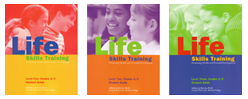
DPH is partnering with the Department of Education to bring the Botvin LifeSkills® curriculum to the classroom. The Botvin LifeSkills® Training Program (LST) is a comprehensive, evidence-based program, which provides adolescents and young teens with the con¬fidence and skills necessary to successfully handle challenging situations.
“Adolescents tend to try substances due to peer pressure, family problems, or low self-esteem, and can easily become addicted,” said DPH Director Dr. Karyl Rattay. “We wanted to provide teachers with the resources and supports this curriculum offers, to integrate life-skills building and substance use prevention in schools while also helping them to achieve their health education requirements.”
“The impact of substance use has far-reaching effects on our students, including hampering their ability to learn and interfering with their ability to function both in school and at home,” said Department of Education Secretary Susan Bunting. “It is critical that we reach students as early as possible and equip them with good decision-making skills, so that they stay on a path that will lead them to achieve their full potential.”
The pilot program kicked off earlier this week with a train-the-trainer session for 10 teachers who will be using the curriculum. Teachers learned interventions to address the social and psychological factors that lead to experimentation with drugs and other undesirable behaviors. Topics covered included self-image, decision-making, smoking, alcohol, marijuana, advertising, violence and the media, coping with anxiety, coping with anger, communication skills, social skills, assertiveness, and resolving conflicts. The LifeSkills® curriculum must be taught by a certified Botvin trainer.
“Our pre-teens need the confidence, social skills and self-esteem to reject peer pressure and lower their risk for addiction and violence,” said Representative Ruth Briggs King, who welcomed the teachers to the training session held at the University of Delaware Kent County Cooperative Extension office in Dover. “One way to help communities is to initiate prevention, and the school setting is ideal. Research suggests that universal lessons to all children – not only to those at higher risk – strengthen children’s self-esteem, decision-making and communication skills.” DPH paid for the train-the-trainer course and curriculum materials.
DPH selected middle schools in the Capital, Indian River, Red Clay, and Seaford school districts because they are located in areas with high overdose numbers. Through games, discussion, role-playing, and other exercises, students practice refusing drugs, communicating with peers and adults, making choices in problem situations, and confronting peer pressure. Materials range from worksheets and posters, to videos and online content. Schools will decide individually how to best incorporate the 15 class sessions that run 30 to 45 minutes.
“Capital School District is committed to meeting the needs of the whole child. Health education and skill-building so our students can say ‘no’ to heroin, prescription painkillers, and other addictive drugs is critical to this mission,” said Michael Saylor, Supervisor of School Success Planning for Capital School District. “We greatly appreciate this level of partnership and support from the Division of Public Health.”
Training will be implemented in the 2017-2018 school year, beginning with sixth-graders and reaching approximately 2,000 students. Students will complete pre- and post-tests, which Botvin will analyze and summarize for DPH.
Like the nation, Delaware is experiencing an epidemic of addiction to opioids, illegal drugs and alcohol. Overdose deaths in Delaware climbed from 172 in 2012 to 228 in 2015, and then jumped to 308 deaths in 2016. First responders administered the life-saving medication naloxone more than 1,535 in 2016. Parents searching for resources and information regarding how to talk to their children about alcohol and drug use can visit HelpIsHereDE.com.
According to the U.S. Surgeon General Report on Alcohol, Drugs and Health, children who use alcohol before age 15 are four times more likely to become addicted to alcohol at some time in their lives, compared to those who have their first drink at age 20 or older. Nearly 70 percent of children who try an illicit drug before age 13 develop a substance use disorder within seven years. Substance use disorders among children are associated with deteriorating relationships, poor school performance, loss of employment, diminished mental health, and sickness and death from motor vehicle crashes, poisonings, violence, and accidents.
Schools offering the Botvin LifeSkills® curriculum are:
- Red Clay School District: Brandywine Springs Middle School
- Capital School District: William Henry and Central middle schools
- Seaford School District: Seaford Middle School
- Indian River School District: Selbyville, Millsboro, and Georgetown middle schools and the Delaware School of the Arts
Brown County Schools ‘Get Real’ After Overdose Deaths
Brown County High School students are packed into the school auditorium. The freshmen and sophomores listen as three community members bluntly share how drugs have impacted their lives.
Barb Foley’s son Kyle, a graduate of the school district, died from an overdose in July.
“Meth and heroin are killers,” Foley tells the students. “Don’t think you can just try them one time walk away from it. Heroin stole my son’s last breath. It left a big hole inside of me. A big part of me is gone that can never be replaced.”
Samantha Taylor, formerly addicted to drugs, dropped out of high school when she was in 10th grade. She shared her story and didn’t hold back.
“I started doing heroin at 16, and it just went on from there,” Taylor says.
In the last few months, two Brown County High School graduates have overdosed and died. Superintendent Laura Hammack says it sent shock waves through the community and the hallways where the students walk to and from class.
“It’s surreal to go to those funerals, to see pictures of these students who lived such vibrant lives and now are lost,” Hammack says.
The deaths hit close to home, but Sheriff Scott Southerland says the community rallied and is calling for action.
“There was a movement started for Brown County to do something, instead of talking about the drug problem, let’s do something about it,” Southerland says.
The school corporation and sheriff’s department decided to hold what they say is a bold and honest conversation with students. It doesn’t stop there though. The assembly is just the starting point.
The school district also received a grant from AT&T for $10,000 to implement a new curriculum called Botvin LifeSkills. It’s an evidence-based program that aims to prevent drug and alcohol addiction, but it also touches on other social and emotional behaviors.
The program is being rolled out for students in grades nine through 12, but Hammack says the school district hopes to get funding to expand it.
“The curriculum starts in the third grade, so we would be able to then have the entire expanse of this curriculum in place grades three through 12, which is wonderful,” Hammack says.
More Information: Read full article
New York Times Recommends Botvin LifeSkills Training to Combat Opioid Crisis
This weekend The New York Times Editorial Board highlighted prevention and Botvin LifeSkills Training (LST) as part of its 8-Step Program to combat America’s opioid epidemic. They suggest starting young with prevention as research shows LST in schools lowers the risk for opioid misuse.A version of this editorial appeared in print on Sunday, October 1, 2017, on Page SR8 of The New York Times print edition with the headline: Breaking America’s Opioid Addiction.

![]()
Opinion | EDITORIAL
America’s 8-Step Program for Opioid Addiction
Opioid addiction has developed such a powerful grip on Americans that some scientists have blamed it for lowering our life expectancy.
Drug overdoses, nearly two-thirds of them from prescription opioids, heroin and synthetic opioids, killed some 64,000 Americans last year, over 20 percent more than in 2015. That is also more than double the number in 2005, and nearly quadruple the number in 2000, when accidental falls killed more Americans than opioid overdoses…
…Families across the United States are demanding that more be done to end the despair and devastation of addiction. Here are eight steps to take – now. (click here for the full list)…
…START YOUNG WITH PREVENTION A 2015 study by the National Institute on Drug Abuse found that LifeSkills Training for seventh graders helped them avoid misusing prescription opioids throughout their teenage years. Research suggests that life skills programs work better than traditional antidrug abuse lectures by strengthening children’s self-esteem, decision making and communication skills.
School District Board Opts for Botvin LifeSkills in Sixth-grade Curriculum
DAGSBORO, DE – Indian River School District is turning to acclaimed expertise of an Ivy League faculty member in efforts to help better prepare pre-teens for the game of life.
By a 10-0 vote, IRSD’s board of education at its Sept. 25 meeting cast support to implementing the Botvin LifeSkills Training as part of the sixth-grade curriculum.
LifeSkills Training, which features 18 segmented lessons, is the product of Dr. Gilbert J Botvin, a longtime Cornell University faculty member who is viewed worldwide as one of the leading experts on tobacco, alcohol, and drug abuse prevention.
“Our children today are so de-sensitized by so many things that they see, whether it be on television or whether it be in social media or just in life. And we need to prepare them a little bit better for that,” said 37th District State Rep. Ruth Briggs King, R-Georgetown.
“It would take the place of similar lessons that are built into our curriculum. As you know we studied health curriculum long and hard for a good bit of time a couple of years ago and developed a very rigorous curriculum for our health teachers,” said Dr. LouAnn Hudson, IRSD’s director of curriculum and instruction.
Botvin LifeSkills Training lessons will “cover many of the same materials that are found in our tobacco, alcohol and drug prevention book for sixth grade or for middle school. Some of the lessons are contained in our emotional and mental health portions of the curriculum and some also touch on the bullying and violence/injury prevention segment of our curriculum,” said Dr. Hudson, adding that some similar materials found in the current health curriculum are “not quite as updated with the new information on the opioid/heroin epidemic that we find ourselves in today.”
Botvin LifeSkills is part of a statewide pilot. Two Sussex County school districts – Indian River and Seaford – are among the districts in the pilot project. The two downstate districts were selected because of “what is going in the community,” Rep. Briggs King said.
“What it does is it seeks to teach life skills in different areas. It is not a health education program. Instead of saying, ‘no to drugs, no to tobacco,’ safe sex, ‘no, no no’ … this starts at an earlier age before it’s too late. It teaches them some healthy skills; how to make decisions …,” said Rep. Briggs King. “The good news about the program is it provides drug-resistant skills, some general social skills and some self-management skills that the students can develop so when they are faced with what’s next … today it might opiate and heroin. Two years ago, it could have been something else. The bottom line here is to give them some abilities to cope and to learn how things can feel good maybe through exercise or something else.”
Initial discussion a year or so ago incorporated the state department of health, the department of education as well as Drug Enforcement Administration and local law enforcement “to talk about what we can do to stem the tide,” said Rep. Briggs King, who attended trainer programs put on by the University of Delaware.
“This program is a little bit different in that it is a comprehensive program that begins in sixth grade and it can continue all the way through to gradation,” said Rep. Briggs King. “The program structure is for sixth grade. It can be taught in sequence. The good thing is some after-school providers are already engaging in the program so they (students) are going to hear a repetitive message about good choices.”
IRSD board member Jim Fritz asked if teachers have had the opportunity to see the LifeSkills curriculum. Dr. Hudson said they have not at present, due to time constraints.
Rep. Briggs King noted, however, that some school counselors were at the training sessions which she attended.
Since this is a pilot, the state will provide all training and materials at no additional cost to participating school districts, Rep. Briggs King said.
More Information: Read Full Article
SUPERINTENDENT’S CORNER: Our pledge to ‘do something’ about drug epidemic
By LAURA HAMMACK, guest columnist
I am writing this column from a place of profound sadness, coupled with a little bit of anger and mixed, thankfully, with a whole bunch of resolve.
When you are a principal or a superintendent, you are blessed with the opportunity to attend a lot of happy occasions in the lives of our school family, like weddings and baby showers.
As well, you are given the important responsibility of attending many occasions for which school family members are experiencing profound sadness, at funerals or celebrations of life.
Last night (Sept. 10), I attended a celebration of life for a young man who was a father, son, grandson, brother, nephew, friend and graduate of Brown County High School. His life ended entirely too early, as it was stolen by the realities of the drug epidemic that is plaguing our community, our state and our nation.
On the morning of this past Labor Day, I was a member of a group of individuals who gathered on the front steps of Brown County High School to respond to the loss of this young man and other young people in our community. The group gathered to pray for the loss of these amazing young lives, to acknowledge the impact that drugs are having on our community and to respond with action and love to prevent another brilliant life being taken from our community too soon.
The rallying cry that has been locally adopted for our community in response to the loss of our sons and daughters to this terrible epidemic is “Do Something.”
The idea is that it’s time for us to get real about the impact that these drugs are having on our community.
The idea is that it’s time for us to work together to make positive change happen in the lives of young people, so that none of us experience the loss that has been experienced by families in our community when their children are taken too soon.
Brown County Schools is ready to work together with our community partners to respond.
Through a grant from AT&T, we are excited to deliver a comprehensive evidenced based model to our students in Grades 9 to 12 called the Botvin LifeSkills program. The curriculum is designed to strengthen student abilities in the following areas: 1. Personal self-management skills where students develop strategies for making healthy decisions, reducing stress, and managing anger; 2. General social skills where students strengthen their communication skills and learn how to build healthy relationships; and 3. Drug resistance skills where students understand the consequences of substance use, risk-taking and the influences of the media. We are hopeful to expand this program or others with similar efficacy across other grade levels to enhance these skill sets in our students.
More Information: Read Full Article
As Opioid Epidemic Rages, Fight Comes to the Classroom
CECIL COUNTY — With Cecil County averaging more than an overdose a day, the fight against the opioid epidemic is now entering new territory: the classroom.
While drug education has long been a staple of school curriculum, this school year both Cecil College and Cecil County Public Schools will introduce new lessons and new resources specifically aimed at addressing the opioid epidemic. Both entities have also expanded the availability of naloxone — an opioid overdose reversal drug better known by its brand name, Narcan — at their facilities.
These new initiatives in many cases build on longstanding existing partnerships that both entities have with local organizations, including the Cecil County Sheriff’s Office, the Cecil County Health Department, Voices of Hope for Cecil County and the Cecil County Drug Free Communities Coalition. This collaboration among county organizations is essential as CCPS and Cecil College look to reach students in a variety of ways in many different settings, CCPS Superintendent D’Ette Devine said.
“There isn’t one single strategy that you can use,” she said. “You have to come at students over a period of years through a multitude of venues to make the case.”
These local efforts mirror efforts on the state level to teach students across Maryland about the dangers of opioids and other powerful drugs. The Start Talking Maryland Act, which went into effect in July, requires public schools to incorporate information about the dangers of heroin and other opioids into their curriculum as well as have Narcan — and staff trained to use it — in schools. Public colleges and universities are also required to have a heroin and opioid prevention plan that includes education for incoming full-time students and Narcan training for public safety officers.
That law takes effect several months after Gov. Larry Hogan declared a state of emergency and announced $10 million in new funding to fight the epidemic, which officials believe led to some 2,000 deaths statewide last year.
At the local level, the statistics are equally grim. As of Sept. 1, 299 people had overdosed in Cecil County, 41 of them fatally, an average of more than one heroin-related overdose a day. Ten of those fatal overdoses occurred in August alone, the deadliest month so far this year, according to CCSO statistics.
To turn those number around, information is key, said Sgt. Todd Creek, who supervises CCSO’s school resource officers (SROs) unit. Cigarettes, he noted, have never been outlawed and yet, thanks in a large part to information campaigns about the dangers of smoking, it’s now much less socially acceptable to smoke than it was decades ago.
“Like the sheriff always says, you’re not going to arrest your way out of this heroin problem,” Creek said. “It’s information and prevention, that’s what we have to do.”
That prevention and information campaign will now start with the county’s youngest students thanks to changes that were made to the school system’s drug prevention curriculum over the summer, said Sean Cannon, CCPS director of student services.
CCPS is now entering its third year of using the Botvin LifeSkills Training program in grades three through 10. The program, which is administered by three dedicated teachers who travel to all county schools, focuses on teaching students the skills needed to resist drugs and alcohol; teaching social skills and life lessons alongside factual information about these substances.
More Information: Read Full Article
Schools Giving More Attention to ‘Soft Skills’ as a Way to Head Off Behavior Problems
NEW PORT RICHEY — Deer Park Elementary had a problem.
Its discipline referrals and warnings were on the rise, with 433 incidents last year for 574 students, which didn’t bode well for the school’s academic performance.
“There is a direct correlation between disruptions in the classroom and how well students learn,” said principal Margie Polen, who pointed to the Pasco County school’s C grade from the state, just shy of a B.
“A lot of our (behavior) problems were in fifth grade,” she said, “and that’s where our low scores were.”
Her faculty decided to tackle the issue with a new social-emotional learning system. Their goal: Decrease disruptions and referrals by 10 percent.
The approach, called “Discipline Without Stress, Punishment or Rewards” by Marvin Marshall, nearly flopped on entry. Parents saw posters with catch phrases in their children’s classrooms before getting any information, and several raised concerns.
They particularly bristled at a poster that seemed to suggest a student who “conforms to peer pressure” is a good student. “How Orwellian,” one dissenter suggested in a feisty Facebook thread.
Polen quickly agreed to revise the language, and make it more approachable.
But nearly lost in the flap was the role such programs are playing on a larger scale. Across the Tampa Bay area, Florida and the nation, a movement is rising to counter years of slavish attention to test performance.
“During that focus on scores, what you lost sight of was the focus on other life skills,” said Karen Bierman, director of The Pennsylvania State University’s Child Study Center.
Those include the ability to work through conflict and persist when frustrated. “Schools are saying they see students need help with those skills,” Bierman said.
But it’s not just schools. Even the federal government, which has insisted for years on test-based accountability, mandated in the 2015 Every Student Succeeds Act that non-academic aspects of a school’s climate be included in new improvement plans.
For the first time in years, the social and emotional would share footing with the academic as a required indicator of success.
The move in that direction had long been coming, said Michael Krezmien, associate professor of student development at the University of Massachusetts Amherst.
Schools are using ideas that originated in special education and grew into wider use. Their inclusion in law has driven researchers to seek methods that work not only for unsuccessful children, but for all, Krezmien said.
If teachers can prevent the need for additional services later by attacking behavior issues early, he said, they can pay more attention to academics. Many times, he noted, children are not behind because they are unable to perform, but rather because they have not learned what to do.
That holds true for behavior as much as reading, Krezmien said.
The programs are in schools all over the Tampa Bay area. Many in Hillsborough, Pasco and Pinellas use some form of “Positive Behavior Support,” a project based at the University of South Florida.
Some layer other ideas on top of that system, or tailor more specific guidelines, to give them a more local flavor.
Hillsborough County recently added Botvin LifeSkills Training to its middle schools, with a goal of providing the “soft skills” that people need beyond school — things like setting goals and meeting deadlines.
Too often, people assume children learn these behaviors from home or elsewhere, said Julia Sarmiento, Hillsborough’s social-emotional learning coordinator. “We decided, let’s stop the assuming and let’s ensure it.”
More Information: Read Full Article
New Program to Help Suspended Students
Duncan Public Schools (DPS) and Youth Services for Stephens County are working together to bring a program to the county that gives students who have been suspended from school an option to work through their suspension, as well as skills to help with some of their underlying issues.
Sara Orellana-Paape, Executive Director of Youth Services, said when she first took the position she met with community leaders. One was Melonie Hau, DPS Superintendent, and together they saw a need to assist an underserved student population — suspended youth.
Both entities worked to create a program that would benefit the schools, the community — and most importantly, the youth, according to Orellana-Paape.
“Children who are not in school are losing valuable instruction time. We wanted to create a way for instruction time to be maintained in a safe location and have the opportunity to work with the youth to empower them with tools to allow them to better communicate their feelings and needs,” Orellana-Paape said. “Currently, suspension rates are higher than what school officials would like [and] with this data, the need was identified and work began on the construction of the program.”
Hau said by working with Youth Services, the district could offer more to students and their families.
“Youth Services will provide a way for students to still be off-campus, but pair discipline with counseling and reinforcement for building stronger communication and coping skills,” Hau said. “Often times, students who reach the level of out-of-school suspension need additional mentoring to improve social skills. Educators are trained to help build these skills, but Youth Services provides additional expertise and support for students who require more in-depth interventions.”
As of right now, students who participate in the program will head to the Bill Phelps and Elaine Jones Community Resource Center (CRC) where they will have a meal, time to complete school assignments, participate in a community meeting and in the Botvin LifeSkills Training curriculum. Students who are recommended to the program may voluntarily participate with a parent or guardian in a “First Offenders” class, which aims to strengthen communication between families.
Orellana-Paape said a set of guidelines for how students will take part in the program were currently being created.
“When school staff feel this is the best fit for the student, it will be offered to the parents,” Orellana-Paape said. “We do encourage parents to ask for this option when it is available, but the ultimate decision lies with the schools. Some offenses will not qualify for this program, as it is a pilot year.”
The goal for the program is to help students with other needs, as well as academic.
“My ultimate hope, is to eventually not need the suspension prevention program,” Orellana-Paape said. “Short term, I would like students to be able to identify their emotions, put them into words and learn coping skills to deal with the emotions. We hope to see less detentions, office calls and suspensions for every student. My personal goal is for students to learn self-regulation and emotional intelligence.”
Hau said this was something DPS could do to help their students.
“Schools that help students learn strong communication and coping skills have better attendance, decreased discipline referrals and higher graduation rates,” Hau said. “Students are more engaged. Students are happier and they thrive. We hope the partnership with Youth Services helps us keep students and families on the right track. The more students who are successful in this program, the better for the community. Our intent is to keep more students in school and increase our graduation rate. I hope the public sees this as a step in the right direction for keeping kids focused on their education, rather than falling victim to patterns of violence, abuse and addiction.”
New Prescription Drug Module to Shield Teens from Opioid Crisis
WHITE PLAINS, N.Y., Aug. 23, 2017 /PRNewswire/ — Schools and communities are searching for new tools to combat the prescription drug and opioid crisis, now regarded as a national emergency. National Health Promotion Associates (NHPA), the researchers behind Botvin LifeSkills Training, have risen to the challenge of helping youth avoid the dangers of prescription drug or opioid misuse/abuse and are excited to announce the release of a Prescription Drug Abuse Prevention Module.
The new LST Prescription Drug Abuse Prevention Module gives teens the skills and knowledge necessary to help them avoid the misuse/abuse of opioids and prescription drugs. It will be available in a variety of formats that will allow for both online and classroom delivery. The new module is ideal for school districts, community-based organizations, and agencies serving students ages 11 – 14. The module is flexible enough to enhance the award-winning Botvin LifeSkills Training program or to be integrated into existing prevention programming.
The new module is designed to further enhance the effectiveness of the LST Middle School program, which has been proven to reduce opioid and prescription drug misuse. A study funded by National Institute on Drug Abuse (NIDA) showed that the LST Middle School program delivered in 7th grade classrooms helped students avoid misusing/abusing prescriptions opioids and other drugs throughout their teen years. NHPA researchers say that the addition of this new module will reinforce the already effective LST program.
“NHPA is a leader in quality, effective evidence-based prevention education. While our core Middle School program already has evidence demonstrating its effectiveness in reducing opioid and prescription drug misuse and abuse, the addition of this new module will help to specifically address the epidemic facing our nation. The LST program has been tested through more than 30 years of rigorous scientific research and has identified prevention approaches that are effective, produce lasting results, and can save taxpayers a good deal of money,” said Dr. Gilbert J. Botvin, professor emeritus at Cornell University’s Weill Medical College and developer of the LST program. “Let’s stop prescription opioid abuse before it begins. Now is the time to unleash the power of prevention.”
More than 35 federally funded studies have demonstrated that LST protects teens against tobacco, alcohol, substance use, and other problem behaviors such as delinquency and violence. According to a 2013 report on the economic benefit of evidence-based prevention programs, LST produced a $38 benefit for every $1 invested in terms of reduced corrections costs, welfare and social services burden, drug and mental health treatment; and increased employment and tax revenue. LST had the highest return on investment of all substance abuse prevention curricula studied.
More Information: Read Full Article
Clark County Schools Make Changes Due to Drug Crisis
SPRINGFIELD, OH —Several Clark County school districts have made changes to address the expanding drug crisis, including one district that now keeps overdose revival drugs at its schools and more prevention efforts in the classroom.
A survey of six public Clark County school districts revealed one overdose incident that took place on school property last year — an overdose in the parking lot of Indian Valley School during its latchkey program.
The Southeastern Local School District now has naloxone kits — the drug used to revive overdose victims better known by its brand name Narcan — at both Southeastern High School and Miami View Elementary School as a proactive measure, Superintendent David Shea said.
Southeastern is the lone district in Clark County with Narcan on site.
“My initial thoughts were to have this for student in case, God forbid, something happened, that we have this on hand,” Shea said. “Through further discussions (we thought) what about parents or someone attending an event? That really hadn’t entered into my mind as much as a student.
More education
The Clark County Combined Health District’s 2015 Middle School Youth Risk Behavior study showed about 24 percent of middle school students surveyed said they tried alcohol at least one time, while another 11 percent tried marijuana and 6 percent tried cocaine.
More than 34 percent of high school students said they tried marijuana, according to the 2015 high school study. The study also showed more than 5 percent of students had tried heroin one or more times.
An updated study will be completed later this year, Clark County Health Commissioner Charles Patterson said. More education can help students make better choices, he said, but it’s difficult to find resources to implement programs.
“One of the things we have to realize is that it’s not on the state test,” Patterson said. “The schools are being pulled in lots of different directions.”
Research shows children who use drugs at an early age are more likely to use as adults, he said.
“It’s not a good place for those kids to be,” Patterson said.
The Ohio Joint Study Committee on Drug Use Prevention Education released in February its list of recommendations on options for implementing age-appropriate substance abuse education in schools across all grade levels.
The 15 recommendations included required reporting for schools on substance abuse education, social and emotional content standards, expanded drug abuse education across all curriculum and continuing D.A.R.E. programs.
More awareness is always better, Silvus said. Some one-time programs that have been used aren’t as effective as they’ve been in the past, he said. Rather it needs to be a regular, ongoing part of a student’s education over the years, Silvus said.
“It’s just not something that’s going to go away,” he said.
Greenon recently purchased new health textbooks that address issues with opioids, Silvus said.
“The scary part is trying to figure out where we put that,” Silvus said. “If we put it some place, what are we taking out? We have to find ways to do that but it’s definitely something we’re looking at.”
It’s also important for parents to reinforce the lessons taught by these types of programs by speaking with children about the effects of illicit drugs, Northeastern’s Kronour said.
“Parents need to talk to their kids about drug usage and the damages that it creates, not only for their own personal lives but society in general,” he said.
Botvin LifeSkills
A new program — Botvin LifeSkills — will be piloted in two schools in Clark County, said Hill, who also serves as president of the Family Children’s First Council.
“Anything we can do from a curriculum standpoint to further educate our students, we’ll continue to look at,” Hill said.
While data for middle school children using drugs is trending downward in recent years, Family and Children First Council Executive Director Leslie Crew wanted to find a way to decrease the numbers even more.
Local schools are stretched with preparing kids to take state tests, she said, leaving no time for character building.
“The day-to-day isn’t about manners or being appropriate in relationships,” Crew said.
It led her to research Botvin LifeSkills, an evidence-based curriculum used in 23 counties across Ohio, including all five districts in Champaign County.
The program will be used in health classes, Crew said, which includes sections on social and emotional resiliency, drug and alcohol prevention and peer relationship skills. It takes place over three years, meaning it can be implemented in third through fifth grades and sixth through eighth grades.
The program will be done in addition to the D.A.R.E. program, she said. It costs about $2,600 and will be paid for through grants from the Mental Health and Recovery Board of Clark, Greene and Madison Counties, the Community Health Foundation and United Way. It’s also been endorsed by the Clark County Substance Abuse Task Force.
It will kick-off this year in third grade classes at Miami View Elementary, she said, as well as sixth grade at Tecumseh Middle School. She hopes every district in Clark County will offer the program in the future.
Greenon will examine how it can use the Botvin curriculum, Silvus said.
The earlier the skills can be learned, Crew said it will help students resist the temptation to use drugs.
“That exposure is just so crazy right now that they need anything they can get to say: ‘I want to have a future. I don’t want to make poor choices for myself,’” Crew said. “It also helps them in a judgment-free environment to understand there might be people in your family that do (drugs), but here’s how you can avoid doing that … Having the conversation in regular day-to-day life is a good thing.”
More Information: Read Full Article


