

Category Archives: Prevention News

Schools Combat Opioid Crisis with Botvin LifeSkills Training‘s New Rx Module

WHITE PLAINS, NY – Schools and communities are implementing a new module to combat the prescription drug and opioid crisis, now regarded as a national emergency. National Health Promotion Associates (NHPA), the researchers behind Botvin LifeSkills Training, developed a Prescription Drug Abuse Prevention Module to help youth avoid the dangers of prescription drug or opioid misuse/abuse.

The new LST Prescription Drug Abuse Prevention Module gives teens the skills and knowledge necessary to help them avoid the misuse/abuse of opioids and prescription drugs.   Available in a variety of formats that allows for both online and classroom delivery, the new module is ideal for school districts, community-based organizations, and agencies serving students in grades 6 – 9. The module is flexible enough to enhance the evidence-based Botvin LifeSkills Training program or to be integrated into existing prevention programming.

The new module is designed to further enhance the effectiveness of the LST Middle School program, which has already been proven to reduce opioid and prescription drug misuse. A recent study funded by National Institute on Drug Abuse (NIDA) showed that the LST Middle School program delivered in 7th grade classrooms helped students avoid misusing/abusing prescriptions opioids and other drugs throughout their teen years. NHPA researchers say that the addition of this new module will reinforce the already effective LST program.

“NHPA is a leader in quality, effective evidence-based prevention education.  While our core Middle School program already has evidence demonstrating its effectiveness in reducing opioid and prescription drug misuse and abuse, the addition of this new module will help to specifically address the epidemic facing our nation.   The LST program has been tested through more than 30 years of rigorous scientific research and has identified prevention approaches that are effective, produce lasting results, and can save taxpayers a good deal of money,” said Dr. Gilbert J. Botvin, professor emeritus at Cornell University’s Weill Medical College and developer of the LST program. “Let’s stop prescription opioid abuse before it begins. Now is the time to unleash the power of prevention.”

More than 35 federally funded studies have demonstrated that LST protects teens against tobacco, alcohol, substance use, and other problem behaviors such as delinquency and violence. According to a 2013 report on the economic benefit of evidence-based prevention programs, LST produced a $38 benefit for every $1 invested in terms of reduced corrections costs, welfare and social services burden, drug and mental health treatment; and increased employment and tax revenue. LST had the highest return on investment of all substance abuse prevention curricula studied.

More Information: View module

Fairbanks Foundation to invest $12M in drug prevention training for Marion County schools

The Richard M. Fairbanks Foundation on Tuesday will announce a $12 million initiative to support drug prevention education in Marion County schools over the next three years.

The Prevention Matters initiative will try to address the opioid crisis for the next generation by giving schoolchildren the tools they need to avoid substance use. Fairbanks officials hope the training will also decrease the use of drugs such as methamphetamine and marijuana as well as tobacco.

“Wouldn’t it be wonderful if we could avoid the tragedy of people becoming addicted,” said Claire Fiddian-Green, Fairbanks president and chief executive officer. “We know that substance use is hurting children and adults all over the country.”

The initiative is part of a multi-pronged effort by the Fairbanks Foundation to combat the opioid crisis. In addition to prevention, the broader initiative aims to expand access to treatment and other services.

Many local schools already have some form of substance abuse in place, but only a fraction are evidence-based, according to a survey Fairbanks conducted. About 31 percent of the schools surveyed in Marion County had a substance use prevention program, but only 11 percent of schools had a program that was evidence-based.

Prevention Matters funding will be divided into two forms. Planning grants will be available this spring to help schools find a program that’s best for them. Later in the spring, Fairbanks will make a round of competitive grants to support the programs.

All 300 or so schools in Marion County are eligible to apply for both grants.

The $12 million isn’t enough to fund every school, but Fiddian-Green said that it could help many schools in the county.

Two entities, the Indiana Prevention Resource Center at Indiana University School of Public Health and the Education Development Center will work with schools during the planning period to help each school identify a program that fit its needs.

A plethora of evidence-based programs exist; so selecting the one that’s best for a particular school may not always be easy, said Kathleen Ratcliff, a research associate and community prevention specialist with the IU center.

“The challenge is we want to make sure we’re doing the best we can and putting the best in place,” she said.

Often the programs don’t deal overtly with substance use issues but provide students with skills that will not only help them make better personal choices but can also improve students’ behavior and academic performance.

Botvin LifeSkills Training, a program developed more than three decades ago as a smoking prevention curriculum, is frequently cited as a model.

An estimated 50,000 teachers have trained in the program, which has been used for more than 3 million students in about 10,000 schools, said Paulina Kalaj, director of communications for National Health Promotion Associates, the New York-based group that administers the program.

Based on a cognitive behavioral therapy model, LifeSkills Training teaches students about self-improvement, goal-setting, coping with anxiety and anger among other skills. Studies have found that students who participate in these programs are almost 30 percent less likely to smoke six years after participation and 66 percent less likely to use marijuana after three years than their peers who did have the program.

“It’s really about equipping the kids with these skills so they make healthier decisions,” Kalaj said. “It continues to be tested and it works time and time again.”

In recent years, the Eminence Community Schools in Morgan County have been using this program in their classrooms.

Originally the program was implemented at the middle school level, but the school district decided to expand it to start in third grade, said Ashley Wilcoxen, kindergarten through 12th health teacher for the district.

At first, the school district had a grant for the program but once it expired, they decided to continue offering it. It focuses not on learning about the worst drugs in the state but on teaching students about the long-term effects of substance use and how to say no when faced with temptation.

“We really like the program and think it’s a great fit for our community,” Wilcoxen said.


More Information: Read full article

LifeSkills Training Now Aligned to CASEL’s Social & Emotional Competencies

Botvin LifeSkills® Training and SEL

Botvin LifeSkills® Training (LST) is an internationally recognized, evidence-based program that supports the decrease of risky behaviors such as drug and/or alcohol use, violence, aggression, and delinquency.  By providing youth with effective social skills and self-management skills, such as communication and anxiety management, LST decreases the motivation to use drugs and the vulnerability to social influences that support drug use.  LST provides foundational skills for successful youth development through its alignment with CASEL’s five core SEL competencies. Its cognitive behavioral approach uses a variety of teaching techniques to facilitate discussion, which provides key knowledge, coaching, and behavior skill practice. LST should be considered an approach that can be used effectively in both schools and youth-serving organizations to support the social and emotional development of youth.

What is SEL?

The Collaborative for Academic, Social, and Emotional Learning (CASEL) is a Chicago based non-profit organization that for over 20 years has been leading the nation in the area of social and emotional learning.  CASEL provides a unique combination of research, practice, and policy to support its mission to help make evidence-based social and emotional learning (SEL) become an integral part of education from preschool to high school.

SEL is the process through which children and adults acquire and effectively apply the knowledge, attitudes, and skills necessary to understand and manage emotions, set and achieve positive goals, feel and show empathy for others, establish and maintain positive relationships, and make responsible decisions.  CASEL has identified five core SEL competencies:  self-awareness, self-management, social awareness, relationship skills, and responsible decision making.

Why is SEL important?

Short-term benefits

  • More positive social behaviors and attitudes
  • More empathetic
  • Ability to manage stress and depression
  • Improved classroom behavior
  • Better attitudes about themselves, others, and school
  • Fewer conduct problems

Long-term benefits

  • Higher academic achievement
  • Decreased high school drop out rate
  • Fewer arrests
  • Fewer mental health disorders

More Information: Click to view alignment

Stemming the Tide of the Opioid Crisis in NorthHampton

NORTHAMPTON — Tucked upstairs in a building just off Northampton’s Main Street, Liz Whynott sits in a tidy office lit by a cold November morning. A soft buzzer rings when the front door opens.

Each person who enters is warmly welcomed to the Tapestry Health needle exchange center, an orderly space with bins of medical supplies, syringes and red biohazard waste cans where counseling and clean needles are offered with no moral judgments.

Just down nearby Center Street, Northampton Police Chief Jody Kasper shakes the hand of a man who recently lost his son to an overdose. She waves goodbye and then walks to her office, where she lets out a long sigh.

“Is it working?” she says quietly when asked about the opioid prevention efforts by her department. “It really depends how you define ‘working.’ There’s some good news out of all the efforts being put in, but we still have this massive epidemic.”

From the police headquarters it is a short walk across Main and Pleasant streets to the Northwestern district attorney’s office, where Cherry Sullivan and Lynn Ferro study a spread of charts and reports.

Sullivan is director of Hampshire HOPE, a regional opioid prevention coalition. Ferro, director for Opioid Research and Recovery Support Services in the DA’s office, coordinates efforts by officials and lawmakers looking for ways to fight the epidemic.

Whynott and Kasper, Sullivan and Ferro are soldiers fighting to blunt the region’s opioid epidemic, which has made the wave of death and addiction all too commonplace.

In Northampton, a team of dedicated women are taking the lead on finding solutions for the opioid problem.

Whynott at Tapestry Health works to help those struggling with addiction to develop solutions, while trying to keep them as safe as possible.

Chief Kasper and Sullivan of Hampshire HOPE look for ways to reduce the dangerous stigma of addiction through programs such as Northampton’s Drug Addiction Response Team and implementing health curriculums to educate students around Hampshire County.

Ferro coordinates the efforts of the DA’s office, lawmakers and constituents to create legislation and programs like MassPAT, the prescription drug monitoring database that provides the detailed information needed to deal with overprescribing clinicians and doctor-shopping patients.

Ferro and Sullivan of Hampshire HOPE say they’ve also seen a shift in the community as a whole to focusing on educating and preventing people from misusing or abusing prescription drugs to begin with, before it ever reaches addiction.

For young people, Ferro and Sullivan said there is a new emphasis on teaching emotional resilience and coping to students so they never have to reach for a drug to deal with emotional pain in the first place.

A national program called LifeSkills Training implemented in a number of Hampshire County schools focuses on teaching kids to build self esteem, deal with difficult relationships and manage their emotions in a healthy way.

“If you don’t have resilience and you don’t have coping ability, that’s it, what are you gonna do?” Ferro said. “You need comfort, right now. And that’s going to be alcohol or drugs or smoking… whatever addiction you choose.”

More Information: Read full article

COMPACT 2020 to Work on New Anti-drug Prevention Programs

In response to the national opioid epidemic, COMPACT 2020 was created in the summer of 2016 to combat substance abuse, which was leading to a large number of overdose deaths in Shelby County.

Alan Miller, director of COMPACT 2020, said that the first efforts of the program were working to find adolescents who were engaging in substance abuse and reaching out to their parents so that the substance abuse could be treated while the user was still at a young age.

“As wonderful as all of that is, it’s still just intervention,” Miller said.

While intervention is important in COMPACT 2020’s mission, the next step in their anti-drug program is working on prevention. An idea that COMPACT 2020 has had since it was established is implementing an anti-drug curriculum in Pelham, Alabaster, Hoover, and Shelby County schools.

“[COMPACT 2020 looked] at evidence-based curriculums across the country,” Miller said. “The one that was mentioned time and time again was the Botvin LifeSkills curriculum.”

Miller said that he was met with an overwhelmingly positive response when he reached out to each school systems involved in COMPACT 2020. Teachers spent the fall semester training for the program, and the schools will begin implementing the LifeSkills curriculum in 6th grade classrooms during the spring semester of 2018.

“I cannot say enough positive things about the superintendents and the school systems,” Miller said. “That’s not an easy thing for them to do, to shift their curriculum like that over the course of one summer.”

While there have been several anti-drug programs that have been circulating schools across the nation for decades, Miller said he believes that LifeSkills is different because it focuses on the real impacts of substance abuse.

“Instead of talking to the kids about it being a moral decision, it teaches them the health issues associated with substance abuse,” Miller said.

The program also includes coping skills, exit strategies and how to recognize and deal with anxiety. All of these issues revolve around substance abuse, and Miller said that by being able to have these candid conversations with students, it can help them prepare for these situations that the may face in the future.

“A lot of things like that are included in the curriculum that have not been included in anti-drug programs previously,” Miller said. “I think that’s part of what makes the program so effective.”

Beyond the education being provided through LifeSkills, COMPACT 2020 is also using new community prevention teams to help raise awareness.

“We’re reaching out to each one of our communities within the county to start up location prevention teams, made up of people from all walks of life,” Miller said. “We [want to] have as much awareness and information shared as possible.”

More Information: read full article

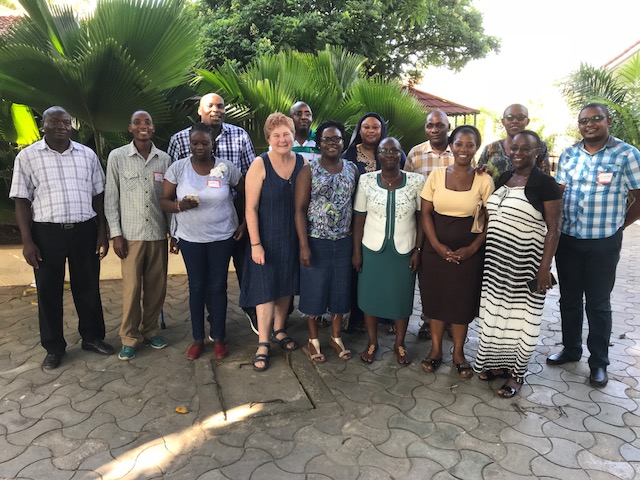
Congratulations to the new LifeSkills TOTs in Kenya

The United Nations Office on Drugs and Crime (UNODC), Regional Office for Eastern Africa (ROEA) along with the National Authority for the Campaign against Alcohol and Drug Abuse (NACADA) helped bring the Botvin LifeSkills Training program to teachers and students in Kenya. During this two-day course led by Alayne MacArthur, National Health Promotion Associates (NHPA) Lead Trainer, participants learned how to deliver and conduct Lifeskills Provider Training Workshops for their respective organizations. LifeSkills TOTs in Kenya
Customizable training services are available through National Health Promotion Associates, Inc. (NHPA), a health consulting, research, and development firm founded by Dr. Botvin, the developer of the LifeSkills Training (LST) program.

LifeSkills Provider Training Workshops prepare teachers, school counselors, prevention specialists, police officers, community youth educators, and other program providers to effectively implement the state-of-the-art prevention education activities and teaching strategies found in the LST program.

Each workshop plays an important role in enhancing the confidence and skill capacity of participants, resulting in optimal implementation of the LST program. While training is not required, it is highly recommended in order to achieve optimal program results. Training increases the effectiveness of the program and assists providers to develop implementation strategies for the programs comfort and fit in individual sites.

Wilmington Public Schools Addresses Opioid Epidemic with Botvin LifeSkills

WILMINGTON — Wilmington Public Schools is the recipient of a mini-grant in the amount of $10,000 for a program on behavioral health.

The Wildcat Project Part 3 is composed of three goals and objectives: prescription opioid misuse education for student athletes; implementation of Botvin LifeSkills curriculum; and mental health and substance use education to parents, staff and community members.

Intended outcomes include:

— Improving understanding of substances on the adolescent brain and knowledge of social host laws.

— Increasing knowledge of prescription opioid misuse among student athletes.

— Building awareness and support of mental health issues.

— Increasing knowledge of key risk and protective factors.

Recent Massachusetts legislation requires student athletes, school nurses, athletic directors, coaches and athletic trainers to receive education on the dangers of opioid use and misuse. According to the Centers for Disease Control, opioid-related deaths continue to increase in the United States. From 2000 to 2015, more than half a million people died from drug overdoses, which equates to 91 American deaths every day from an opioid overdose. In 2016, the state Department of Public Health reported an estimated 8 percent increase in the number of unintentional opioid-related overdose deaths among Massachusetts residents from 2014 to 2015. Middlesex County was noted to have the highest number of deaths during this time frame.

The Wildcat Project Part 3 is a collaborative effort between the Wilmington Public Schools, Wilmington Board of Health and the Wilmington Substance Abuse Coalition.

This program was funded through a grant in partnership with Lahey Hospital and Medical Center.


More Information: Read full article

Advocates Recommend Botvin LifeSkills Training to Replace DARE (PBS NewsHour)

In declaring a public health emergency over the opioid epidemic, President Trump called for the creation of a national media campaign to reduce drug use among young people.

As part of PBS NewsHour’s America Addicted series, William Brangham speaks with Gary Mendell of Shatterproof about what should be done to prevent addiction.

“For example, there is a program called LifeSkills that’s in about 3 or 4% of our middle schools. It has great research behind it that shows that it works. Alternatively, there’s research that shows that DARE, which is in about 75% of our middle schools, doesn’t work. So, if we can move our middle schools from [to] using LifeSkills, instead of DARE, the opportunity to reduce the number of our teens who ever use drugs is substantially higher.”  – Gary Mendell, Shatterproof

Interested in learning more about the evidence-based Botvin LifeSkills Training program? Request sample lessons, or register to attend an overview webinar presentation.

Resources Available to Help Those Coping with Epidemic of Opioid Misuse

To the Editor:

In the wake of the most recent heroin related deaths in South County, many people in our community are experiencing deep loss, grief, helplessness, anger and a strong sense of outrage. To everyone that is touched by this issue: you are not alone. We talk with people weekly, and even daily, who have lost someone, are struggling to know how to help a loved one, or are seeking support for their own recovery and in other ways, surviving with an opioid use disorder.

As a community – as a county, a state, and country – we have a lot of work to do to make it possible for more people to heal. To better prevent anyone from becoming addicted in the first place. To make it so that anyone who needs help can and does get it. And to stop overdoses before they become fatal.

In this time of grief and intense loss, we wanted to share with the community in South County some of the resources that are available and make connections to community efforts to address the issue. There is still more that is needed. We hope that in sharing these resources and efforts, we can collectively do more for our community.

In Our Schools: Both the Southern Berkshire Regional School District and Berkshire Hills Regional School District incorporate a substance abuse prevention curriculum called LifeSkills in their health classes. The LifeSkills Curriculum is an evidence-based curriculum that has been shown to effectively prevent both drug and alcohol use among teens. At the high school level, both districts also utilize a screening tool called SBIRT (Screening, Brief Intervention, and Referral to Treatment), to help identify students who may have a problem with drug or alcohol use early and get them support and treatment.  Evidence-based prevention, early intervention and referral to treatment is provided by the Brien Center in schools as well.

Starting Prevention Early: South Berkshire Community Health Coalition is focused on reducing alcohol and other drug use among young in our community. Hosted by Railroad Street Youth Project, the coalition is made of up a wide range of community organizations and individuals, and includes representatives from both South County school districts and police departments. Early alcohol or drug use, impacts brain development and increases the risk for addiction later in life. The longer a young person delays use of alcohol and other drugs, the less risk they have for a substance use disorder later. For more information about the Coalition or their projects, email jayne@rsyp.org.

There are many more treatment options, resources and community efforts happening throughout the county and beyond. And as long as we are losing friends and family to heroin, opioids and other drugs in our communities, we know it is not enough. But, we hope that as a community, together we can build on what is already underway to make the change we need.