Category Archives: Prevention News

Volunteer coalition pushes back against opioid epidemic

More than 2½ years ago, several hundred residents, law enforcement officers and other representatives packed the Greene County Courthouse for a standing-room-only town hall focused on saving the rural county from its worsening epidemic of drug and alcohol addiction.

“It was the first time I saw the county stand up and say, ‘We have to do something,'” Greene County resident Jonathan Johnson said.

But while the meeting acknowledged the problem, some left frustrated at what they felt was a lack of planning offered to address it.

So the Coalition for a Brighter Greene was formed.

The all-volunteer organization has been working ever since to help alleviate drug abuse in the county.

It sponsored a March for Greene, which on a rainy day in May 2016 attracted approximately 1,400 marchers through Waynesburg, some who displayed signs indicating they’d lost loved ones to drugs.

It installed a substance-abuse prevention program called Botvin LifeSkills Training at all five school districts in the county for grades 3 through 9.

It is working with Steps Inside, a Waynesburg-based recovery club, to set up a hotline for those in need of addiction help.

And it’s also targeting societal side effects of addiction.

St. Luke’s Substance Abuse Block grants tol help educate Weiser and Nampa students

NAMPA, ID – Two Substance Abuse Block grants from the Department of Justice through Idaho’s Office of Drug Policy will help St. Luke’s continue their youth drug prevention programs.

The grants will help with the continuation of St. Luke’s youth drug prevention programs in Weiser and will begin a new drug prevention program in Nampa, according to a press release from St. Luke’s. The funding from the grant will provide the LifeSkills Training program, a comprehensive in-school drug prevention program, to seventh and eighth graders in Weiser and Nampa.
The St. Luke’s Coalition for Drug Free Youth is coming up on its three years of existence. The coalition addresses the issue of youth prescription drug and alcohol abuse by providing information and support while enhancing access/reducing barriers and changing policies related to drugs and alcohol.

Diverse groups being brought together in fight against opioids

JOHNSTOWN, PA — As the opioids problem intensified and spread into the small communities and rural areas of Cambria County, agencies began rolling out programs to address the growing epidemic.

Schools, health-care agencies, social services, businesses and law-enforcement communities were attacking the scourge on different fronts.

Nothing seemed to be making a dent, so leaders began looking for a way to join forces.

A united effort was launched with formation of the Cambria County Drug Coalition in September 2016, with Ronna Yablonski serving as executive director.

“There are already several entities working on the problem of drug abuse in our region,” Kelly Callihan, district attorney for Cambria County, said at the time. “The coalition will allow us to coordinate and expand their efforts as we work to address this growing problem through prevention, law enforcement and treatment.”

The 1889 Foundation, United Way of the Laurel Highlands, Lee Foundation and Community Foundation for the Alleghenies provided funding to support the new approach that involved agencies and organizations from all sectors of the community.

“They felt like like they needed to do something different,” Yablonski said. “Even among themselves, they felt like it was a tidal wave they just couldn’t rise above.”

Agencies represented at the first planning sessions included Cambria County’s drug task force, prevention coalition, transit authority, drug and alcohol commission and the district attorney’s, coroner’s and county commissioners’ offices.

They were joined by representatives of the Girl Scouts of America, 1889 Foundation, Johnstown Police Department, Central Cambria School District, United Way, Conemaugh Health System, Mainline Pharmacies and Alliance Medical Services of Johnstown.

The new alliance developed a website, www.cambriacountydrugcoalition.org, to communicate events and share information about related programs. Partnerships with local media outlets were formed, and a new column series — “Coalition Corner” — was recently launched in The Tribune-Democrat to help educate the community on the group’s work.

The Cambria County Drug Coalition has focused its efforts in four areas: improving care and treatment, fostering education and prevention, reducing the drug supply and obtaining funding to continue the response.

“All sectors of the community were feeling the effect,” Yablonski said. “This approach is a lot different. It’s purposeful, aligned action.”

Coalition leaders identified the nationally recognized Drug Free Communities program to develop a local model, Yablonski said.

“There was not one comprehensive plan,” she said. “This model brings all these different sectors into an organized structure.”

The opioid epidemic sweeping the nation has been severe in Cambria and Somerset counties, and the response has presented challenges never seen before. Cambria is among the state’s leaders annually in fatal overdoses per capita.

“Law enforcement is being asked to become providers and administer (overdose antidote) Narcan,” Yablonski said, noting that in 2017 police gave Narcan to 63 overdose patients, saving 60 lives in the county.

“That’s different. Never in history has that been part of the job,” she said.

On the health care front, emergency room doctors, neonatal staff and pain management professional are receiving additional training.

The evidence-based Botvin LifeSkills Training program has been introduced as a prevention tool in school districts across the county, and the Conemaugh Valley Ministerium brought in the Living Free seminar to help community leaders, teachers, parents and others learn to deal with addicts and those affected by addiction.

An educated, understanding community can grow into a support circle for others dealing with the same troubles, Grace Brethren Church Pastor Rick Horner said.

“We are making sure people can find the information they need to get the help they need,” Yablonski said.

Read full article

Schools Search For New Ways To Address Opioid Use With Students

News article by Kelly Burch, The Fix


Traditionally drug education in schools has been focused on teaching students to “Just Say No.” However, many of those programs, including the original iteration of the widely-used D.A.R.E. model from the ’80s, were found to be ineffective. Now, schools are looking to respond to drug abuse in a more proactive way, against the backdrop of the opioid epidemic.

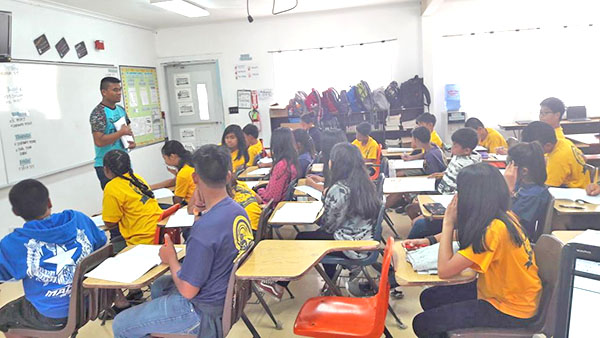
teacher addressing students in classroom“Schools are the ideal setting in order to intervene in a child’s life and ensure that they’re getting the services and attention that they need,” Diana Fishbein, a Penn State University professor of human development and president of the National Prevention Science Coalition to Improve Lives, told U.S. News and World Report.
Today, schools are dealing with issues much bigger than teens smoking pot behind the bleachers. They’re trying to educate teens in a world where deadly synthetic opioids can lead to swift overdose deaths, and the first exposure to drugs can come from the medicine cabinet.

At the same time, researchers and school administrators are realizing that scare tactics traditionally used in drug education don’t actually address substance abuse among students.

“The programs that frighten people, that shock, that intimidate—those do not work,” said Janet Welsh, an assistant professor at Penn State, who runs the Prevention Center in the College of Health and Human Development.

Kellie Henrichs, a trainer at Prevention First, a nonprofit based in Springfield, Illinois, that trains community organizations to encourage drug-free youth, agrees.

“Kids don’t want to sit in an inactive classroom or an inactive assembly and be lectured at,” she said. “They’re not interested in hearing about long-term health effects. Their brains simply don’t work that way.”

Instead, educators are looking to challenge students through a new approach. One program that has proven to be effective is Botvin LifeSkills Training, which teaches kids how to manage their emotions, resist peer pressure, and understand the immediate effects of drug use.

Middle school students who take the program are “dealing with their emotions, communicating effectively, being more assertive,” said Paulina Kalaj, communications director at National Health Promotion Associates, the research and development firm behind the Botvin LifeSkills Training curriculum. “When you teach kids these skills, they’re more likely to engage in healthy behavior across the board.”

In other schools, teachers are asking students to think critically about drug addiction. In the Hampton Township School District in Pennsylvania, Thomas Brophy, a local addiction medicine doctor, explained the science of opioid addiction to students in chemistry class. Then, he presented them with a question: “Is it a choice, or is it a disease?” He followed with a second question: “Does it matter?”

The unique approach is just one way that the district hopes to continue conversations about opioid addiction.

“We’re not going to pretend that Hampton, or the North Hills, doesn’t have a problem with this,” said Superintendent Michael Loughead. “This is an epidemic, this is a serious problem, and we’re trying to hit it head-on.”

Read full article

When grandparents take over as legal guardians

ESCANABA, MI – When because of a variety of serious family problems, grandparents feel they must take over, even adopt grandkids, there are a number of issues to address and places to go for help.

First, what all experts agree is grandparents must swing into protective mode. Protect your grandchildren and protect yourself — your physical and mental health, safety, legal status, and financial status. Check with an attorney for a variety of custody arrangements in your state before going any further.

Grandparents taking on the task of raising grandchildren are very courageous. That said, here is what can help with the day-to-day care. Although every family is slightly different, there are protective factors to help the new grandfamily prosper. Grandparents can borrow the knowledge based on many years of study by Drs. David Hawkins and Richard Catalano of risk factors and protective factors for preventing problems.

Grandparents can find out more about the Botvin Life Skills Training, an evidence-based prevention program for schools, families, communities, and places of faith. The information about life training skills is at www.lifeskillstraining.com.

In your own grandfamily, experts suggest finding prosocial involvement in the community like Scouts, organized sports, the Y, 4-H, faith-based clubs, other youth groups, and volunteer to help. Grandkids need recognition for prosocial involvement and behavior. Prosocial means having a positive helpful view toward other people in general.

Grandparents can develop a strong family unit with reasonable rules, duties, organization, and responsibility. Provide opportunities for prosocial involvement like helping with the work load around the house, playing, volunteering, discussing together. Provide recognition for prosocial involvement like praise and hugs. Control technology use.

In school, grandparents can participate, volunteer, check homework and school notes and communicate with the teachers. Be a part of school organizations. Be alert. Ensure children have opportunities for participation in prosocial learning, volunteering, working hard, studying, helping others, and being involved in many activities that nurture their talents and potential. Find ways for children to receive recognition.

Are grandkids learning and using social skills? Establish a moral order of right and wrong in the family. Teach grandkids your faith. Join faith groups and be active as a grandfamily. Search for a school that teaches self-control, self-discipline, responsibility, respect, and helping others.

Do the grandkids interact with prosocial peers? Some grandparents are taking parenting classes, switching schools, and even moving to a different area. However, the change must come from within or grandkids will seek out the same problem peers.

——

Karen (Rose) Wils is a lifelong north Escanaba resident. Her folksy columns appear weekly in Lifestyles.

Read full article

Group Targets Schools for Substance Abuse Prevention

Saipan Tribune – A non-profit organization created in 2013 is partnering with the William S. Reyes Elementary School and Hopwood Middle School to pilot as substance abuse prevention program for schools, families, and communities.

Achieve CNMI Inc. is working on spearheading the evidence-based program called Botvin LifeSkills Training, better known as LST, which hopes to build the community’s resistance to drugs.

Hopwood Middle School teacher James Jucutan introducing the program to 6th grade students. (Contributed Photo)

Under a grant awarded by the Substance Abuse and Mental Health Services Administration, Achieve CNMI, Inc. will work with CHCC’s Community Guidance Center-Substance Abuse Prevention Services Unit to accomplish the LST program learning objectives, in which participants gain skills in personal self-management, social competency, and resistance to drugs.

Personal management skills involve students developing skills that enhance their self-esteem, develop problem-solving skills, help them reduce stress and anxiety, and manage anger.

Students gain skills to meet personal challenges such as overcoming shyness, communicating clearly, building relationships, and avoiding violence in social competency. Finally, students build effective defenses against pressures to use tobacco, alcohol, and other drugs.

The first cohort of instructors is composed of teachers, a counselor and an administrator from the participating schools. All instructors have undergone a provider training online, showing their commitment and dedication to help students gain valuable skills needed to accomplish the program learning objectives.

The instructors were required to complete three sessions in the early morning hours due to the time difference between Saipan and New York. The first session was a trainer-led live workshop. The self-paced course was completed on their own time before the third and final trainer-led live session.

WSR is currently implementing the LST this summer for students and parents.

Achieve CNMI, Inc., hopes to send four of its members to attend the Training of Trainers this August in Lakewood, Colorado to build local capacity and program sustainability. For more information about our program or if you are a teacher who would like to implement LST at your school, email achievecnmi@gmail.com. 

Read full article

Coalitions in Action: Partnering for Prevention with Local Law Enforcement

Via @CADCA

Leading up to Mid-Year Training Institute, CADCA is highlighting the amazing work of coalitions! This week, CADCA will be highlighting the Substance Abuse Free Indian River (SAFIR) coalition.

“We are very proud of our initiatives: SAFIR Rx, Talk, They Hear You, No One’s House and Friday Night Done Right, but we are particularly excited about Know the Law, which is conducted by law enforcement officers (LEOs) in the classroom,” said Robin Dapp, Executive Director. “It helps bring students and officers together.”

At the beginning of each school year, school resource officers provide the Know the Law classes to incoming high school freshmen. The project explains the common offenses committed by youth on a regular basis. The program is designed to make our local youth and young adults aware of the laws and the consequences of breaking the law.

“When they make decisions about their behavior, they should always consider the law and think about the consequences before they act.  ‘Ignorance of the law’ is never an acceptable excuse for breaking the law.  It is important for you to know that, as a member of our society, you have rights, responsibilities and privileges that are established by law.  Remember that your actions now will have a great impact on your future.  You alone are responsible for your behavior, not your family or friends.”

Dapp notes that a significant environmental strategy that has been embraced by local law enforcement is Civil Citation, an initiative that can make a big difference in youth’s futures. The coalition serves four towns: Vero Beach, Sebastian, Fellsmere, and Indian River Shores. Most of the county is unincorporated, meaning the County Sheriff’s Office has a large jurisdiction.

“Civil Citation was a very slow process but after years of community work we have achieved incredible outcomes. Over 60 percent of all eligible youth are offered Civil Citation instead of an arrest,” said Dapp. With the citation, an intervention is put in place to assist the youth and family.

In addition, another project that the coalition has been focusing on is a very comprehensive prevention strategy for our middle school youth. All middle schools in our community receive Botvin LifeSkills Training program, beginning in 6th grade through 8th grade. The curriculum is delivered by the Substance Awareness Center, and consists of a total of 30 lessons.

“Stick with it – don’t give up!” said Dapp. “This is a process that takes patients and time.”

Dr. Williams Completes Harvard Clinical Scholar Research Program

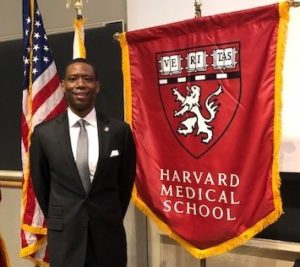
Congratulations to National Health Promotion Associates’ Christopher Williams, Ph.D. who received a certificate of completion with honors from Harvard Medical School’s Global Clinical Scholars Research Training Program.

The year-long program provides researchers and clinicians with advanced training in the conduct of clinical trials with emphasis in biostatistics and epidemiology. The program draws scholars from around the globe and encourages collaboration to address critical public health concerns. Through a blended learning approach including traditional face-to-face teaching sessions, online lecture supported by interactive webinars, and team and individual assignments, scholars are trained in statistical analysis and the design of clinical trials.

When Dr. Williams was asked to reflect on completing the training, he replied, “The program was rigorous and intellectually stimulating.  I was most impressed by the drive and passion of Harvard faculty and my fellow scholars.  Regardless of previous training or specialty, everyone has the same goal of improving health outcomes, and reducing disease burden through evidence-based research and practice.”

Dr. Williams is Senior Vice President at NHPA, the training and development firm for the Botvin LifeSkills Training program, a college lecturer, and serves as principal investigator on National Institutes of Health-funded trials.

About National Health Promotion Associates

Established in 1985, National Health Promotion Associates (NHPA) is a dynamic health and wellness firm located in White Plains, New York. Dedicated to promoting behavioral health, NHPA focuses on developing, evaluating, and providing training to educators and health professionals on a range of health and wellness programs. An area of particular interest relates to the prevention of health risk behaviors among adolescents and young adults, including substance abuse, violence, bullying, and sexual violence. For more information visit: www.lifeskillstraining.com.

Read full article

School in Micronesia Hosts LifeSkills Training Camp

WILLIAM S. Reyes Elementary School is conducting a summer camp that focuses on teaching children life-skills that can help prevent them from engaging in behavior that puts them at risk.

About 60 WSR students —  third, fourth and fifth graders — are participating. The facilitators are counselors and teachers who took the eight-hour online Botvin LifeSkills Provider Training workshop.

William S. Reyes Elementary School counselor Rebecca J. Flores discusses life-skills lessons with fifth graders during the second week of the summer camp program. Photo by Lori Lyn C. Lirio


According to WSR principal Naomi Nishimura, the program is funded by a grant from the Commonwealth Healthcare Corp. and the Substance Abuse Prevention Services of the Community Guidance Center.

The program, she added, is coordinated by Achieve, a private, non-profit organization committed to promoting healthy lifestyles and social and emotional wellness.

One of the facilitators, WSR counselor Rebecca J. Flores, said the summer program aims to promote healthy alternatives through activities designed to help the youth resist social pressures to smoke, drink alcohol and use illegal drugs.

The program’s curriculum  includes lessons to develop self-esteem, self-mastery and self-confidence. In addition, the students are taught to cope with social anxiety, and they learn about the immediate and long-term consequences of substance abuse.

William S. Reyes Elementary School counselor Rebecca J. Flores discusses life-skills lessons with fifth graders during the second week of the summer camp program. Photo by Lori Lyn C. Lirio

Moreover, the program enhances their cognitive and behavior competency to reduce and prevent a variety of behaviors that put their health at risk.

Nishimura said this is the first time they have implemented the program for three grade levels.

“We are trying to build a community of students who will stay away from unwanted behavior and from its influence. We are piloting this program in hopes that we can incorporate it in our yearly activities,” Nishimura said, adding that the life-skills summer camp will run for 15 days. It started on June 11.

In the previous school-year, the program was presented to fifth graders. Flores said  29 fifth graders completed the eight sessions of the life-skills curriculum.

“The Botvin LifeSkills Training program is an evidence-based, substance-abuse and violence-prevention program used in schools and communities throughout the U.S. and in 39 countries around the world,” she said. “It has been extensively tested and proven to reduce tobacco, alcohol, and illicit drug use by as much as 80 percent. It is effective when implemented with different delivery formats, when taught by different providers, and when delivered to different populations. It works with elementary school, middle school, and high school students. Long-term, follow-up studies show that it produces prevention effects that are durable and long-lasting.”

Nishimura said the group of students who are participating in the program will be tracked year by year all the way to Hopwood Middle School, WSR’s grant co-recipient. Hopwood has the same program for its students.

“So we will be able to collect data and see where we will be at with this program,” Nishimura said.


School-based prevention works, but choose your program wisely

As opioids and tobacco continue to claim Hoosier lives, many are looking toward K-12 school-based prevention programs to stem the tide.

One of the most well-known prevention programs is Drug Abuse Resistance Education, or D.A.R.E. At its height, D.A.R.E. was implemented across the world, with more than $750 million spent on the program annually. But study after study has found little evidence for the impacts of D.A.R.E. on drug use.

This is a common problem: Keeping kids off drugs and alcohol is not easy. As a result, not every intervention works.

The good news is there are school-based prevention programs with strong evidence for positive impact. These include programs like LifeSkills Training, Project Towards No Drug Abuse, Positive Action and others certified as evidence-based by the Substance Abuse and Mental Health Services Administration (SAMHSA), the U.S. Surgeon General and, in Indiana, the Family and Social Services Administration (FSSA). Scientific research shows these programs cause substantial reductions in the use of tobacco, alcohol and other drugs—and even improvements in academic outcomes in some cases.

Unfortunately, these programs are often crowded out by D.A.R.E. or homegrown programs that lack evidence. National surveys indicate that only 8-10 percent of schools use evidence-based programs. While there is no comprehensive survey of school-based prevention in Indiana, anecdotal evidence indicates D.A.R.E. is still in use.

This is a problem. Every dollar of funding or hour of time spent on a program without evidence is a dollar or an hour that could be spent on a program with a track record of lowering drug use.

Of course, we should be open to supporting the development of innovative, new school-based prevention programs. But any new programs should have clear value added over existing programs to justify trying something that may turn out not to work – especially when effective, evidence-based programs do exist and could simply be replicated and scaled broadly. And, of course, any new programs should be rigorously evaluated, too.

School-based programs are an essential part of a comprehensive approach to preventing substance use disorder and smoking. Inspiring behavior change and creating lasting impact should start with prioritizing programs with strong evidence for positive outcomes.

Read full article: School-based prevention works