





Helping children make healthy choices
December 13, 2019
How the Barnardo’s LifeSkills programme is giving children the skills and resilience they need to thrive
As featured in Medium:
“My name is Alexandra, and I coordinate the LifeSkills programme in Waltham Forest which aims to improve the emotional health and wellbeing of children across the borough, by building their resilience and sense of self-worth so that they have the tools to deal with any stressful situations that may arise in the future.
I’m a local resident that lives in Leytonstone, having moved to London three years ago. My background is as a primary school teacher, a job I loved since I’ve always wanted to help children and young people live their best possible lives. However, my current role with Barnardo’s allows me to do this on a bigger scale — over the next three years I’ll be working with around 10,000 young people in years 4, 5 and 6.
LifeSkills is a long-term programme, and if there’s a challenge for me, it’s that I want to be able to solve problems as quickly as possible. But I keep in mind that what we’re doing is even more important — helping to stop children ever getting to the point that they face serious danger.
What is the LifeSkills Programme?
There are nearly 30 primary schools that are part of the programme. In each school, pupils in Years 4, 5 and 6 each receive eight one-hour lessons delivered by a teacher on things like dealing with stress, social skills and assertiveness.
The lessons are highly interactive and engaging, designed to be friendly and fun — as any programme is only effective if young people are engaged with it. The lessons are dynamic and interesting, using a range of teaching techniques such as listening to the teacher, talking with partners and rehearsing behaviours.
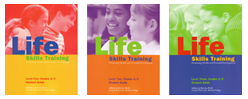
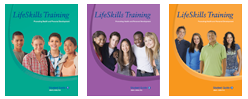
One of the nicest parts of the programme is that every child gets a lovely glossy workbook to keep every year that includes all the materials and their workings. Importantly, these books are not marked by a teacher — it’s one of the few parts of school life where what young people write is not judged. Children are just encouraged to write how they feel.
We aim to encourage children to recognise their own self-worth and to improve their ability to deal with stressful situations. Just knowing the information isn’t enough, or nobody would ever make dangerous decisions. We help children to identify different ways that they might be able to deal with stressful situations that may arise, from using deep breathing techniques to practising different ways to say ‘no’. This can then be applied to any situation, and can play a role in building resilience against violence — a key part of the borough’s Violence Reduction Partnership.
“I learned that you should think about your choices before you make them. I now know how to ‘Stop, Think, and Go’ when making a decision.”
Young person after LifeSkills lessons
Long-term impact
We know the programme works because we measure the changes in knowledge of young people before and after they take the classes. We can see how their knowledge, skills and attitudes have changed over the duration of the programme.
The headline figure is impressive: Children that complete the programme can reduce the likelihood of them smoking, drinking or taking drugs by 75%, , with effects lasting 12 years.
Initial results in Waltham Forest are promising: the evaluation of first group of nearly 2000 pupils shows they have demonstrated the best progression results seen in the UK with this delivery model.
LifeSkills has three distinct areas that it measures against — Knowledge, Attitudes and LifeSkills. These are the three components necessary to change children’s behaviour. This demonstrates the effectiveness of the programme in places where English is not always the first language.
The programme also works well when targeted at those more vulnerable young people. We run the programme at local pupil referral unit and they have seen the best results of any school in the borough — really positive evidence that the programme works for all children.
We’re now looking to expand the programme into a few local secondary schools, where Year 7 pupils will take part in the programme — a more developed and age-appropriate programme where other topics are covered such as violence in the media.
Positive feedback
I’ve been so pleased about how on board the schools have been. Although Barnardo’s provide the materials and training, schools have committed a lot of their own time to make the programme accessible and workable in their classes — no small feat given competing pressures on them.
Feedback from schools has been really positive; they mainly wish the programme was longer. We say to schools that this is the starting point and that teaching the lessons can give teachers a chance to open up a wider conversation about wellbeing which can highlight where there may be further specific things to focus on.
Parents have been really supportive too. Some parents initially had concerns about the programme, but being able to go and speak with them to allay any fears has been a really positive thing to. The huge evidence base behind the programme is very convincing! Mostly, I’m pleased that children love the classes. As a former primary school teacher, making learning fun and engaging is really important to me, and Botvin LifeSkills definitely does this!
Working with these primary schools has been a real privilege, getting to meet lovely pupils and hardworking teachers. I’m really looking forward to the next couple of years.
Read original article: