





LST College
Program Overview
New! LifeSkills Training for College (LST College) is based on an evidence-based prevention approach that has been extensively tested and proven effective when implemented in classrooms by teachers and health professionals. LST College provides teachers, parents, and students with an engaging and flexible prevention approach that can be used at home, in class, or in hybrid learning environments.
LST College is a groundbreaking substance abuse and violence prevention program based on more than 35 years of rigorous scientific research. LifeSkills Training is comprehensive, dynamic, and developmentally designed to promote mental health, social-emotional (SEL) skills and positive youth development. In addition to helping young people resist drug, alcohol, and tobacco use, the LifeSkills Training High School program also effectively supports the reduction of violence and other high-risk behaviors.
LST College’s innovative approach allows teachers to have a “virtual team-teacher”; the program covers the introduction to the skills (Facilitation), models the skill (Coaching), and gives feedback on students’ interactions with the skills-related content. Skills practice (Behavioral Rehearsal) is then conducted by the teacher so that teachers can use face-to-face time to focus on skill practice for acquisition.
Self-paced content introduces:
-
- lesson topic and skill
- skills model
- feedback on student knowledge
Teacher-led skills practice:
-
- can implement in person or remotely
- behavioral rehearsal / skills practice
Target Audience
Incoming college students
Learning Objectives
- Personal Self-Management Skills – Students develop skills that help them enhance self-esteem, develop problem-solving abilities, reduce stress and anxiety, and manage anger for better mental health.
- General Social Skills – Students gain skills to meet personal challenges such as overcoming shyness, communicating clearly, building relationships, and avoiding violence.
- Drug Resistance Skills – Students learn skills that help them build effective defenses against pressures to use tobacco, alcohol, and other drugs.
Program Structure
- LST College consists of 11 e-learning modules and three skills practice sessions
- Each lesson is divided into 30 minutes of online interactive content followed by 45-60 minutes of ‘live’ skills practice.
- Taught either on an intensive schedule (two to three times a week) until the program is complete, or on a more extended schedule (once a week).
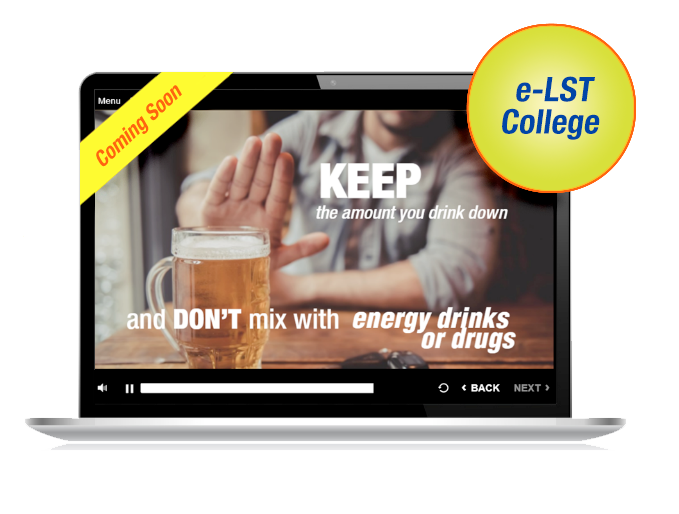
Engaging and flexible prevention approach
Can be used at home, in class, or in hybrid learning environments
Promotes mental health, social-emotional (SEL) skills, and positive youth development