






Case Study: Community Change Through the Power of Collaboration
In a concerted effort to combat drug use, Cambria and Somerset counties in western Pennsylvania joined forces in 2011 to implement the Botvin LifeSkills Training program. Over the last six years, classrooms across the region have received the evidence-based program thanks to strategic focus and funding by the United Way of the Laurel Highlands, 1889 Foundation, Twin Lakes Center, Cambria County Drug Coalition, Somerset Drug Free Communities, Pennsylvania Commission on Crime and Delinquency, and the University of Colorado.
 To date, more than 7,000 eligible students in all 24 school districts have learned the skills necessary to avoid substance use.
SOCIAL CHANGE INITIATIVE
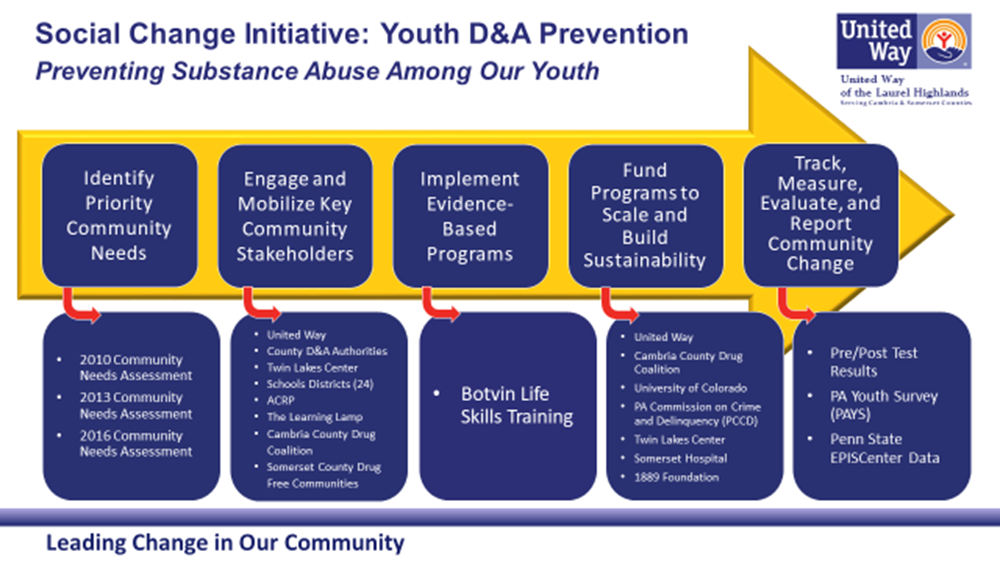
The Botvin LifeSkills Training program was first introduced in a county-wide approach that used the Enhanced Community Impact Model© developed by the United Way of the Laurel Highlands as the foundation of “how” to accomplish this work. The model creates positive social change by addressing priority community needs. Throughout the process, progress is tracked, measured, evaluated, and reported.
“This systematic approach is unique. It’s practical and promotes purposeful, aligned action,” said Ronna Yablonski, Executive Director, Cambria County Drug Coalition.
RESULTS
The completion of the 2015-2016 school year marked the first cohort of 8th grade students who had successfully completed 3 consecutive years of the Botvin LifeSkills Training program. The results were impressive.
The data extracted from the Pennsylvania Youth Survey showed significant decreases across all areas surveyed, including alcohol, tobacco, and marijuana. All 18 risk factors measured showed a significant reduction (48% on average) in risky behaviors, including binge drinking, marijuana usage, and prescription misuse.
Significant decreases have been measured in the top 3 critical areas where abuse is most prevalent—Alcohol, Tobacco, and Marijuana (both 30-Day & Lifetime usage).
“It’s so important we have this program sustained for a long period of time. We’re looking 5 years, 10 years, 20 years out… to make sure we’re able to see the long-term benefits,” said Bill McKinney, CEO United Way of the Laurel Highlands.