







Summer 2024

Points on Prevention
Young-Adult Study Shows Long-Term Effects of LST
By Gilbert J. Botvin
Researchers, educators, and public health professionals have been on a quest for nearly four decades to discover how to prevent drug abuse. While some prevention programs can produce a positive impact on knowledge and attitudes, few can actually impact behavior. And as rare as it is to find a prevention program that works, it’s truly rare to find a prevention program that can produce effects that are durable and long-lasting.
The LST program is one of those very rare programs. Rather than relying on teaching health information about the negative effects of drug use, LST uses a positive youth development approach designed to enhance social and personal competence – life skills.
LST has been rigorously tested in numerous well-designed and well-executed studies that time after time have proven it works. Evidence published in over 30 top scientific journals convincingly show that it can prevent tobacco, alcohol, and illicit drug use. But do the effects last? Thanks to the results of a recently published study, we now have the answer.
A new study, published in the Journal of Public Health Research, examined long-term follow-up data from a large-scale randomized trial testing LST. Over 2000 students who received LST in the seventh grade were followed up in their mid-20s, some 13 years later. Rates of illicit drug use were significantly lower for the students who had received LST compared to the control students who received the usual health education program offered by their schools. Rates of marijuana use, marijuana intoxication, and non-medical pill use were also significantly lower for the LST students than for the students in the control group.
Numerous studies show that LST works. And the results of this new study show that the effects are durable and long-lasting. This study, together with the large body of evidence supporting the effectiveness of LST, make a strong argument for the widespread implementation of LST. It also begs the question: why isn’t every school providing their students with such a powerful prevention program?
Trainer Tip
How can I assess whether my students are learning and applying the concepts and skills I’m teaching in the LST program?

A common dilemma for LST providers is whether to assess participant competency in LST lessons. The continuum of options ranges from no assessment to a participation credit to unit quizzes and tests. Beginning with an understanding of the policies and practices of your organization and best practices in your profession, consider how assessment can encourage participants and providers to:
- clarify the goals and objectives of each LST lesson
- increase participant readiness to learn and transfer to like situations
- facilitate engagement in discussions and skill practice
- assure each participant succeeds
What Should I Assess?
In the broadest sense participants in the LST Program should understand facts and concepts, and demonstrate skills and behaviors, that reduce substance use and violence. Each lesson in the LST program lists the specific learning goals and objectives that are the targets for assessment.These goals and objectives are found on the lesson overview page in Teacher’s Manual.
What types of assessment are appropriate for LST?
Assessment is those methods facilitators use to appraise learning progress and achievement – their own and their participants. There are two types of assessment commonly used in educational settings – formative and summative. Formative assessment refers to frequent, interactive methods for gathering snapshots of students’ development and to adjust teaching style or methods. Summative assessment evaluates student learning at the end of a lesson or unit by comparing it against criteria, most commonly using graded quizzes or tests. It’s common to use a mixture of these methods.
Both types of assessment are appropriate for LST. The most effective assessments are those that use a balance of formative and summative techniques.Consider mixed use of visual, verbal, written, digital and kinesthetic methods.
What are some examples of formative and summative assessments? The LifeSkills Training program, with its emphasis on skill practice and application of concepts to real world events, lends itself to practices and techniques in formative and summative assessment. Here are some examples of formative and summative assessment methods.
Examples of Assessment Activities
| Formative | Summative |
| Hand Signals: Designate a hand signal for indicating understanding based on discussions. EX; Thumbs up or down. | End of unit tests or quizzes: An exam where students select the correct answer from several options. Usually graded. LST MS Quizzes |
| Entry and Exit Card: Written responses to open questions posed at the beginning or end of a class. | Presentations: Individual or group, written, oral or poster presentations demonstrating understanding. |
| One Minute Essay: A one-minute,written essay question focused on a specific goal of the lesson. | Written Essays: written submissions that ask students to demonstrate their understanding and analysis of a topic. |
| 1 minute Brain Drain: Share reflection on concepts or skills with a partner using stems such as, “I changed my attitude about…I related to…I became more aware of…etc.” | Portfolios: Collection of a student’s work over a period, demonstrating learning, progress, and achievement. |
| Concept Map: Graphical organizers that illustrate understanding of the relationships between concepts through diagramming key words or concepts. | Project based: Project-based assessment evaluates students’ abilities to apply knowledge to real-world challenges through extended projects. |
| Journaling: Students record in the LST Student Guide their understanding of the topic, concept or lesson taught. | Rubric: An objective scale of performance standards and criteriaLST Evaluation Tools and LST Provider Self Check |
| Behavioral Rehearsal: Demonstrations of LST skills with feedback | |
| Polls: Survey student responses using digital apps | |
| LST Companion Website: Digital assessment activities LST MS Companion Website LST HS Companion Website. | |
| Behavioral Homework: Students practice the skills and concepts learned to their real world and complete a response card on results. |
Summary
Effective assessment, whether formative or summative, provides both the student and provider with insight into their progress and achievement towards learning goals. Broad targets for assessment in the LST program include understanding of pro-health concepts and demonstration of pro health skills. Select the mix of methods that work best at your site and which communicates to your students the value of what you are assessing.
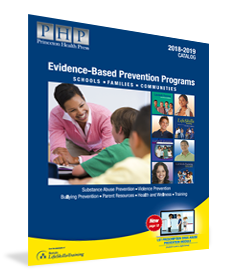
Get Your Copy of the LifeSkills Training Catalog
Exciting products that will boost your prevention education efforts!
FEATURED

LST Site Spotlight: One Step Further, Inc.
In this edition, we are pleased to spotlight One Step Further and our conversation with Jennifer Shoe, Program Director.
About One Step Further:
- One Step Further is a non-profit agency that helps adults, youth, parents and families take positive steps in their lives during times of personal crisis and conflict.
- The agency’s staff of 30 trained, experienced professionals offer conflict resolution, life skills training, anger management services, mediation services, teen court proceedings, and food security initiatives in Greensboro and High Point, North Carolina.
- Their work aims to help keep young people out of the criminal justice system, resolve conflicts among adults and families, lower rates of repeat offenses and diffuse violence before it happens. It also supports families and individuals with grocery assistance, jobs skills training, and other services.
Description of your program:
- The Junior-Senior Advanced Life Skills Program is a 20-hour class using an evidence based curriculum to provide youth from 10-18 years of age who have had difficulties at school, their home, or in the community to encourage improving oneself and make healthier choices in their everyday lives.
Why did you choose Botvin LST?
- We felt that the topics that are covered in the LST High School and LST Transitions programs match perfectly with skills they need to learn at their age. When we conduct intakes with the clients and their parents, the parents always end up saying one or two of the topics they want their child to learn without knowing we provide those topics.
Tell us about your implementation of Botvin LST?
- We have trained facilitators that love what they do. We offer classes once or twice during the week or on Saturdays for a 2-hour class period.
Please tell us more about the student experience.
- Students can be hesitant about the classes in the beginning because they sometimes view it as school work. However, once they start attending the class their attitude changes, they end up loving the class, enjoying the interactions with not just the instructor but with the other students. They find community within that class and end up saying they will miss the class. We see them stop and think about their actions and apply what they are learning to their situations.
TRAINING & SERVICES

Provider Training Workshops prepare you to effectively implement the state-of-the-art prevention education activities and teaching strategies found in the LST program. Register for an online training or contact us to schedule your online or on-site workshop. Workshops fill up quickly so check back for future dates. View schedule
TOOLS YOU CAN USE

Explore our detailed LST Fidelity Checklists, tools that can be used to assess that teaching objectives are covered and that the program is being taught the way it was designed to be delivered. LST Fidelity Checklists can be used to help support an effective implementation. We provide checklists for all levels of our program Elementary, Middle School, High School, Transitions, and Prescription Drug Abuse Prescription Module. View the LST Fidelity Checklists here.
KEEP UP WITH LIFESKILLS

Subscribe to stay up-to-date on the latest in prevention news, funding alerts, training workshops and updates.
By submitting this form, you are consenting to receive marketing emails from: . You can revoke your consent to receive emails at any time by using the SafeUnsubscribe® link, found at the bottom of every email. Emails are serviced by Constant Contact